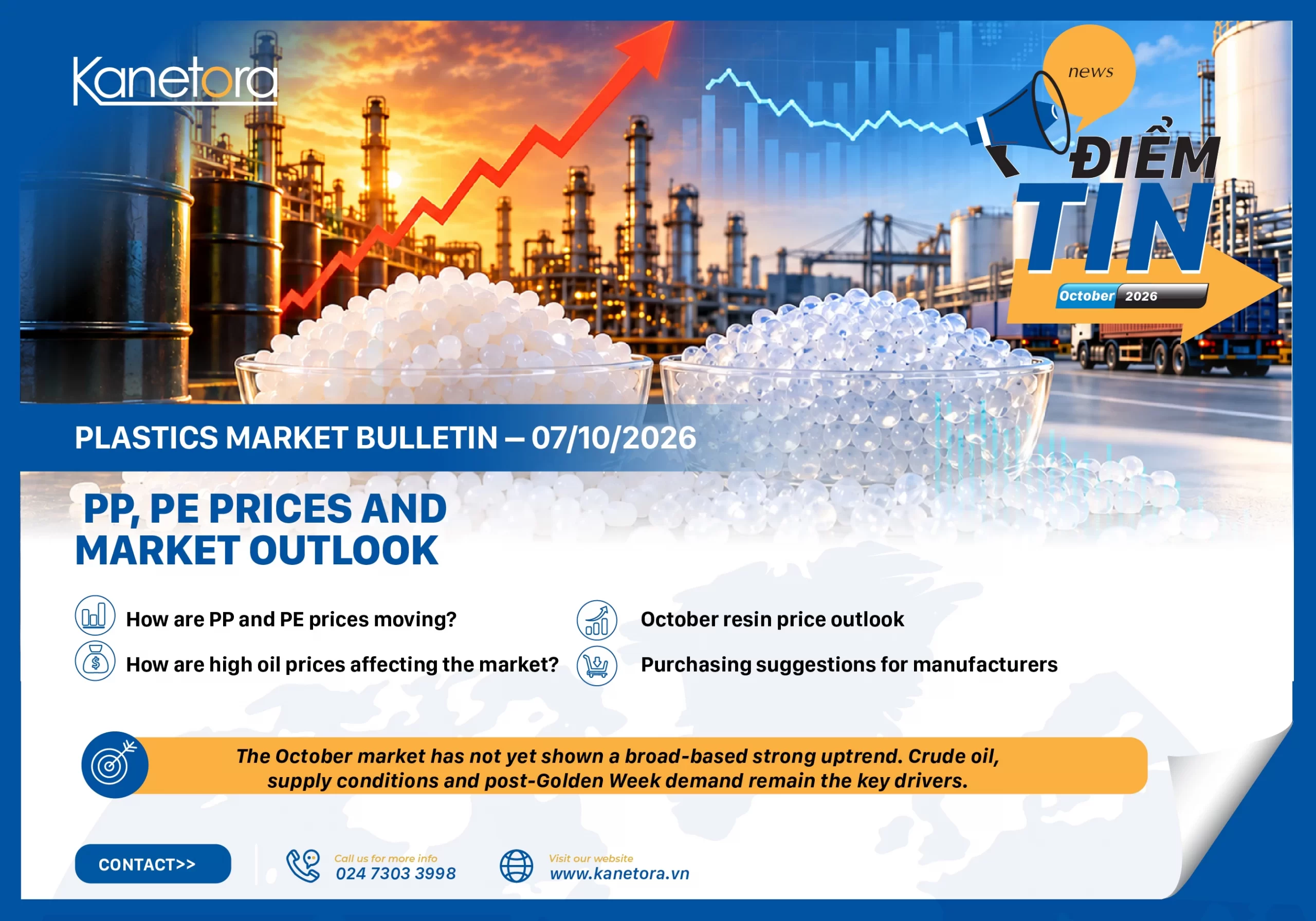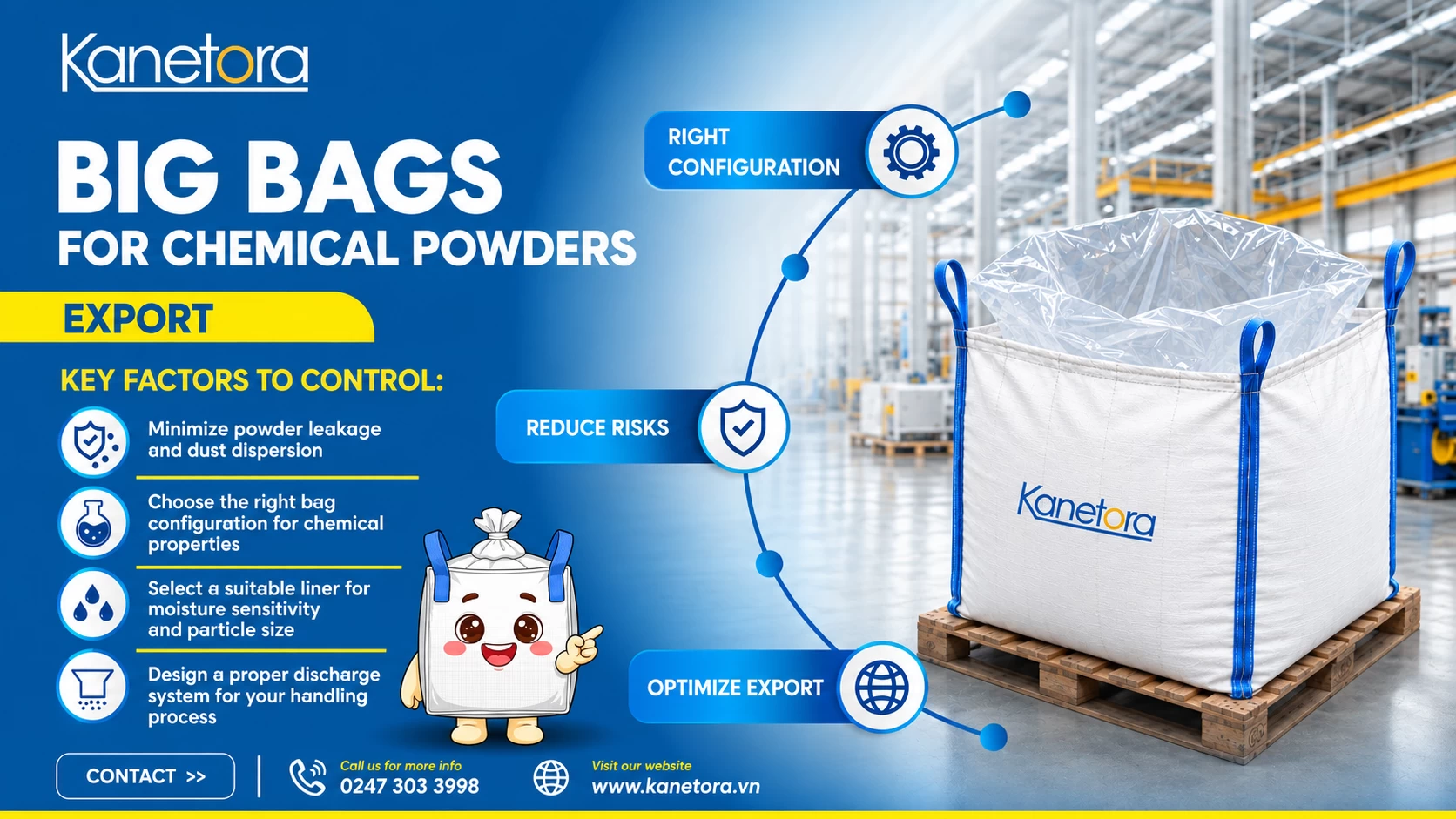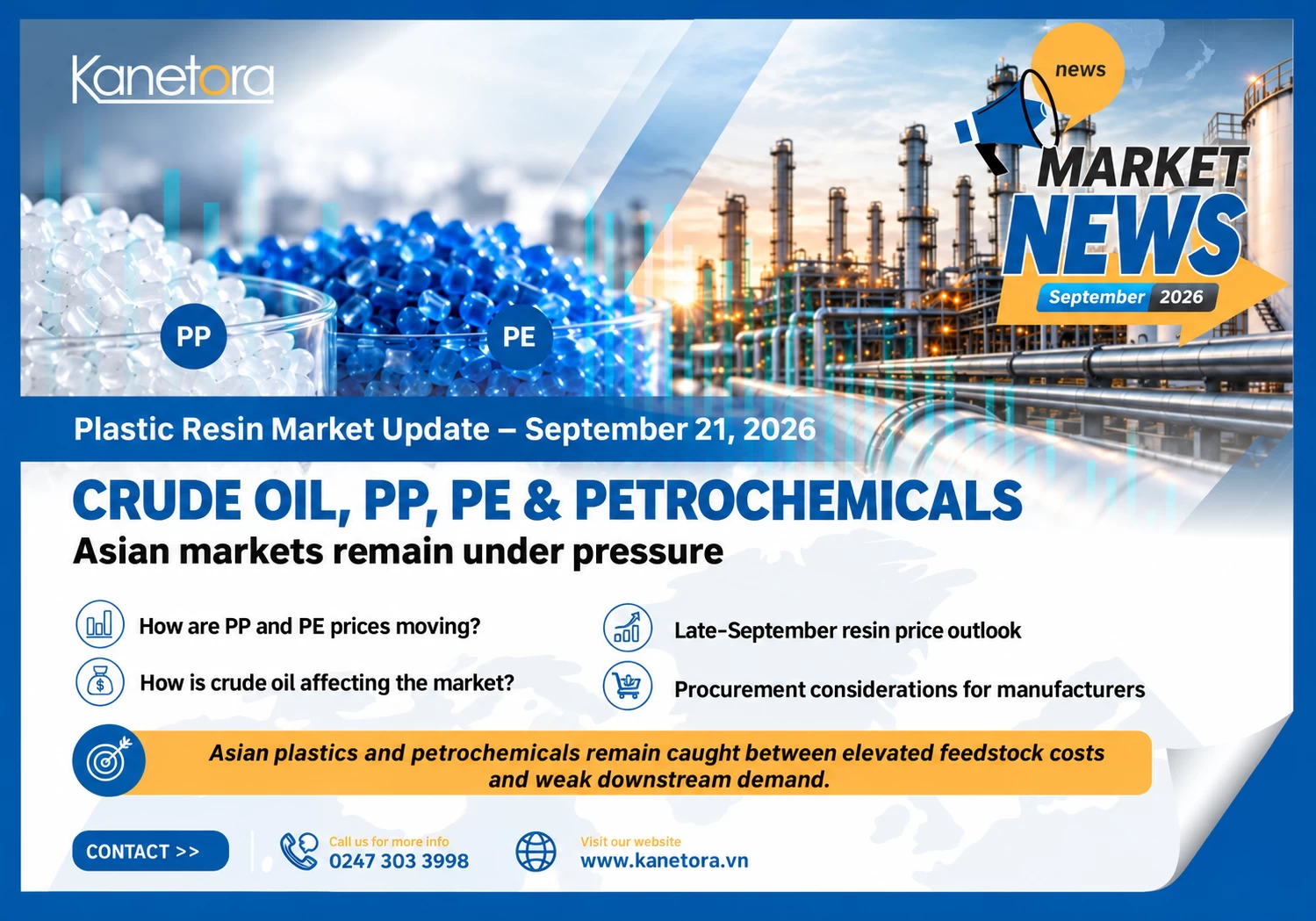


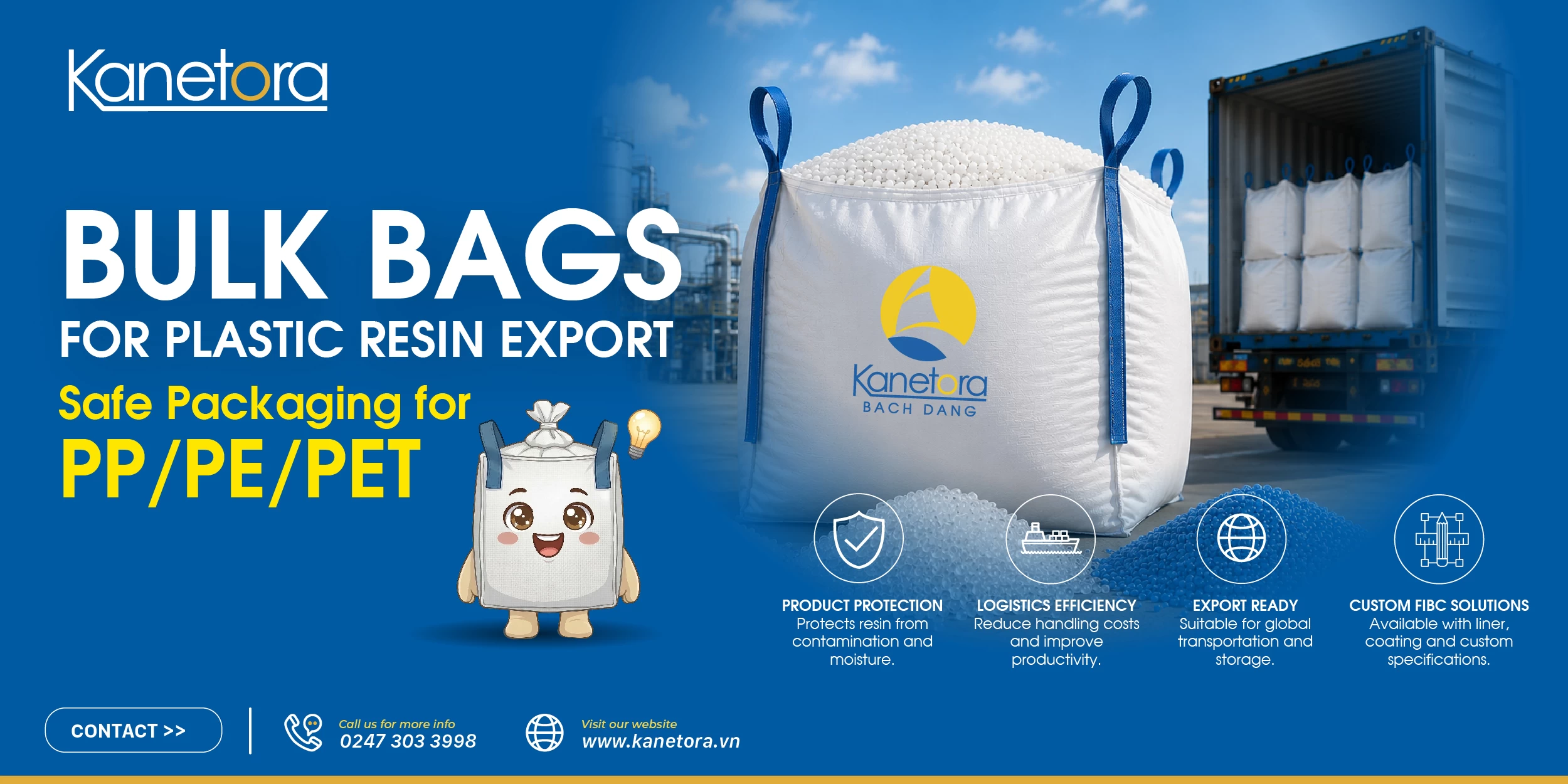
Plastic resin export is not only about moving materials from one country to another. It is about protecting product quality, improving loading efficiency, reducing contamination risks and ensuring that every shipment arrives in a stable, usable condition.
For resin producers, compounders, distributors and international buyers, packaging plays a direct role in supply chain performance. A poorly selected bag may lead to moisture exposure, pellet leakage, unstable stacking, difficult discharge or higher handling costs. In global trade, these small packaging issues can quickly become quality claims, shipment delays or additional logistics expenses.
That is why bulk bags, also known as FIBC bags, have become one of the most widely used industrial packaging solutions for plastic resin export. With high loading capacity, flexible design and strong compatibility with container shipping, bulk bags are suitable for many resin types, including PP, PE, PET, EVA, PVC, ABS, HIPS and recycled plastic materials.
This article explains how to choose the right bulk bag for plastic resin export, what specifications buyers should consider and how a suitable packaging solution can support safer and more efficient international shipments.
Quick Answer: What Is the Best Packaging for Plastic Resin Export?
For most plastic resin export shipments, bulk bags are an efficient packaging option because they can handle large volumes of pellets, flakes, powders or regrind materials while reducing manual handling and improving container loading efficiency.
The best bulk bag specification depends on:
- Resin type: PP, PE, PET, PVC, EVA, ABS, HIPS or recycled resin
- Material form: pellets, powder, flakes or regrind
- Moisture sensitivity
- Static control requirements
- Filling and discharge method
- Container loading plan
- Destination market and customer requirements
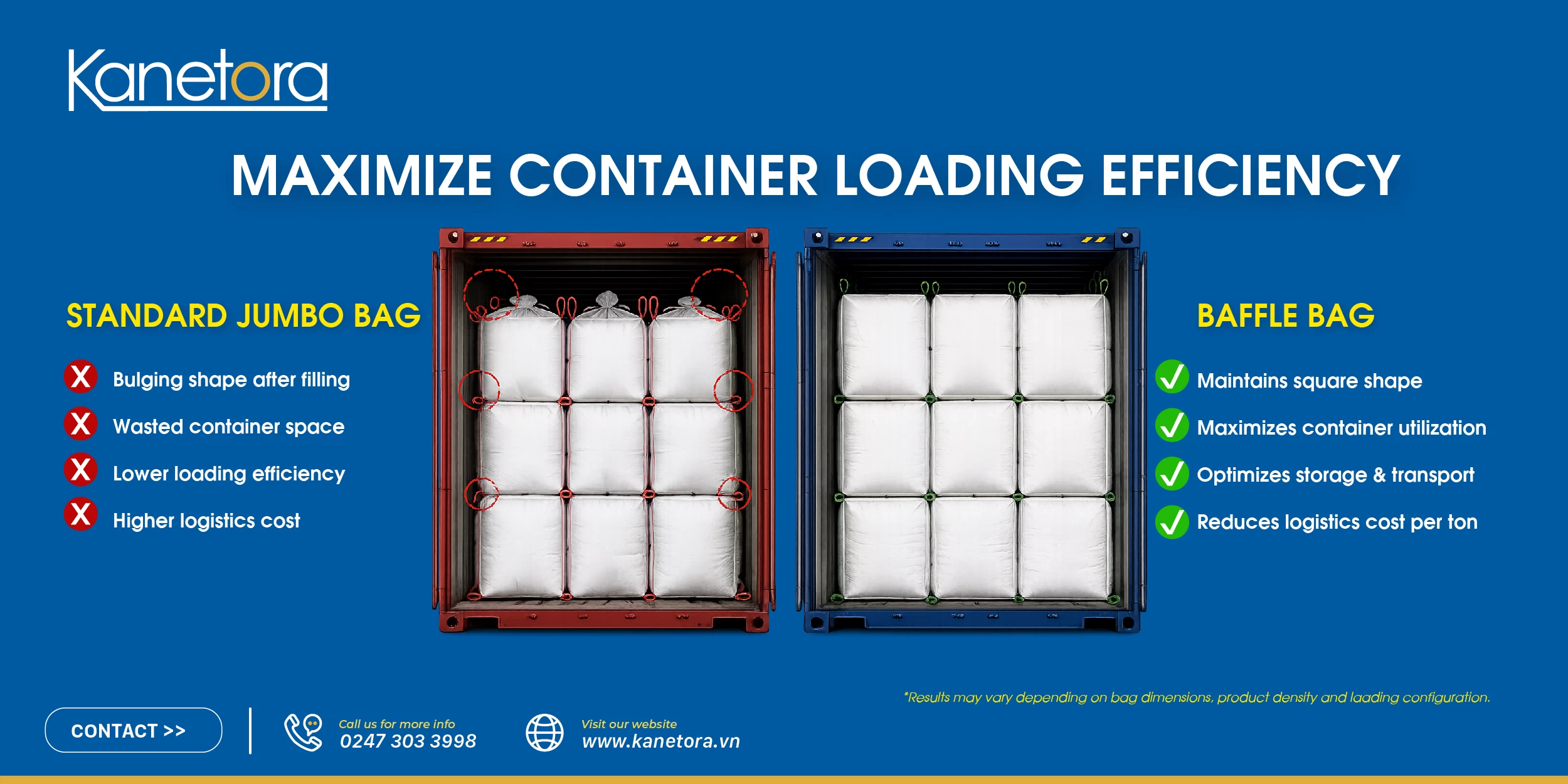
For moisture-sensitive or high-value resin, a bulk bag with an inner liner is often recommended. For container optimization, baffle bags may help reduce bulging and improve pallet or container space utilization.
Why Plastic Resin Requires Specialized Bulk Packaging
Plastic resin may look simple from the outside, but from a packaging perspective, each resin type has different handling characteristics. Pellets may flow easily but can leak through unsuitable seams. Powders may generate dust. Recycled materials may have irregular shapes. PET and some engineering plastics may require stronger moisture protection.
During export, resin packaging must withstand multiple stages of handling:
- Filling at the production site
- Internal warehouse movement
- Forklift lifting and stacking
- Container loading
- Long-distance sea, road or rail transport
- Destination unloading
- Storage before entering the customer’s production line
At each stage, packaging failure can affect both product quality and operational efficiency.
Common risks in plastic resin export include:
- Moisture exposure during storage or transportation
- Dust and foreign matter contamination
- Pellet leakage from seams or discharge points
- Bag deformation during stacking
- Static electricity during filling or discharge
- Inefficient use of container space
- Difficult product discharge at the destination
A well-designed bulk bag helps reduce these risks by combining the right fabric, liner, coating, lifting structure, filling top and discharge bottom.
Why Bulk Bags Are Widely Used for PP, PE and PET Resin
Bulk bags are commonly used for resin export because they offer a practical balance between strength, flexibility and cost efficiency.
Compared with small bags such as 25 kg packaging, bulk bags allow businesses to move larger volumes with fewer handling steps. This improves productivity in warehouses, reduces labor intensity and helps optimize container loading.
For resin exporters, the main advantages include:
- Higher loading capacity per packaging unit
- Faster filling and discharge
- Easier forklift handling
- Lower packaging waste compared with small bags
- Better compatibility with containerized export
- Flexible customization for different resin grades
- Optional moisture and contamination protection
- Suitable for automated or semi-automated filling systems
In many cases, switching from small bags to bulk bags can improve the total cost of export, not only by reducing packaging cost per ton but also by improving operational speed and reducing handling complexity.
Which Plastic Resins Can Be Packed in Bulk Bags?
Bulk bags can be used for a wide range of plastic resins and polymer materials. The most suitable specification depends on the resin’s form, density, flowability and protection requirements.
| Resin Type | Common Form | Typical Packaging Consideration |
|---|---|---|
| PP Resin | Pellets, granules | General bulk bag, liner optional depending on customer requirement |
| HDPE | Pellets, regrind | Strong fabric, stable lifting loops, liner for moisture-sensitive shipments |
| LDPE | Pellets | Smooth discharge design, liner optional |
| LLDPE | Pellets | Suitable for bulk packaging and export shipments |
| PET Resin | Pellets, flakes | Moisture protection is often important |
| EVA | Pellets | Clean packaging and stable discharge design |
| PVC Compound | Pellets, powder | Dust control and anti-static consideration may be required |
| ABS | Pellets | Clean handling and stable stacking |
| HIPS | Pellets | General industrial bulk packaging |
| Recycled Resin | Flakes, regrind, pellets | Strong construction and customized discharge design |
For high-value or sensitive resin grades, buyers should evaluate the full packaging system instead of looking only at bag size and price.
Key Risks in Resin Cargo and How Bulk Bags Help Reduce Them
1. Moisture Risk
Moisture can affect resin quality, especially for PET, recycled flakes, engineering plastics and certain compounded materials. During export, resin may be exposed to temperature changes, condensation and long storage periods.
A PE inner liner can provide an additional protection layer between the resin and external environment. Depending on the requirement, buyers may choose standard liners, form-fit liners, tabbed liners or aluminum barrier liners.
For a more detailed explanation of liner selection, read: FIBC Bag with Liner: When and Why to Use
2. Contamination Risk
Plastic resin is often used in manufacturing processes that require consistent input quality. Dust, fiber, loose threads or foreign particles can create problems during extrusion, injection molding or film production.
To reduce contamination risk, buyers should consider:
- Clean inner liner
- Coated fabric
- Proper seam design
- Controlled cutting and sewing quality
- Dust removal before packing
- Clear labeling and warehouse control
For food-contact or sensitive applications, additional certification and hygiene controls may be required.
3. Leakage Risk
Resin pellets and powders can escape through unsuitable seams, poor stitching or incorrect discharge design. This creates product loss, warehouse contamination and customer complaints.
Leakage control may require:
- Dustproof seam
- Coated fabric
- Liner with proper fixing
- Controlled discharge spout
- Better closing system
- Suitable fabric density
The right solution depends on whether the material is pellet, powder, flake or fine compound.
4. Static Electricity Risk
During filling and discharge, plastic pellets or powders may generate static electricity. For certain materials and environments, anti-static or conductive packaging may be required.
Static control should be assessed carefully based on:
- Resin type
- Particle size
- Filling speed
- Plant environment
- Presence of flammable vapor or dust
- Customer safety requirements
When static risk exists, buyers should discuss Type B, Type C or Type D FIBC options with their packaging supplier.
5. Loading and Stacking Risk
Export packaging must survive warehouse movement, forklift handling and container loading. If the bag bulges too much or loses shape, it can reduce container loading efficiency and create instability during storage.
For better shape retention, buyers may consider:
- 4-panel bulk bags
- Baffle bags
- Suitable bag dimensions
- Correct filling weight
- Strong lifting loops
- Proper palletizing plan
Baffle bags are especially useful when container space optimization is a priority.
Recommended Bulk Bag Specifications for Plastic Resin Export
There is no single specification that works for every resin shipment. However, most resin export projects should review the following technical elements.
1. Safe Working Load
Safe Working Load, or SWL, refers to the maximum load the bag is designed to carry under specified conditions.
Common SWL options include:
- 500 kg
- 1,000 kg
- 1,250 kg
- 1,500 kg
- 2,000 kg
For plastic resin export, 1,000 kg and 1,250 kg are common choices, but the final decision should depend on bulk density, filling equipment, lifting method and container loading plan.
2. Safety Factor
Safety Factor indicates the relationship between the bag’s tested strength and its rated working load. For single-trip export shipments, 5:1 is commonly used. For multi-trip applications, other requirements may apply.
Buyers should not select Safety Factor based only on price. It should match the intended use, handling frequency and customer requirements.
3. Bag Construction
The main construction options include U-panel, circular, 4-panel and baffle bags.
| Bag Type | Suitable For | Key Advantage |
| U-Panel | General resin pellets | Cost-effective and widely used |
| Circular | High-volume filling | Fewer vertical seams |
| 4-Panel | Better shape and stacking | More stable square form |
| Baffle Bag | Container optimization | Reduces bulging and improves space use |
For general PP and PE pellets, U-panel or circular bags are often practical. For high-volume export where container efficiency matters, 4-panel or baffle bags may provide better performance.
To understand basic jumbo bag structures, read: What Is a Jumbo Bag? Structure and Industrial Applications
4. Top Filling Design
The filling top affects both productivity and contamination control.
Common top options include:
- Open top
- Duffle top
- Filling spout
- Spout with flap
- Spout with tie closure
For resin pellets, a filling spout is often preferred when the filling system needs better dust control and cleaner operation. For fast filling of less sensitive materials, open top or duffle top may be considered.
5. Bottom Discharge Design
The bottom design affects unloading speed, residue control and operator convenience.
Common options include:
- Flat bottom
- Discharge spout
- Discharge spout with flap
- Conical discharge
- Full open bottom
For plastic resin, discharge spout designs are commonly used because they allow controlled emptying into hoppers, silos or production systems.
6. Liner Options
A liner is one of the most important optional features for resin packaging. It provides additional protection against moisture, dust and contamination.
Common liner options include:
- Standard PE liner
- Form-fit liner
- Liner with top and bottom tabs
- Conductive liner
- Aluminum barrier liner
- Baffled liner
For PET resin, recycled flakes or high-value compounds, liner selection should be discussed carefully. A liner that is not properly fixed may move during filling or discharge, causing operational issues at the customer site.
7. Coating and Lamination
Coated fabric can help reduce dust leakage and improve moisture resistance. It is often used when resin is in powder form or when the buyer requires better protection than uncoated woven fabric can provide.
However, coating is not always necessary. For standard pellets, uncoated fabric with a liner may already be suitable. The best choice depends on the material form, storage condition and export route.
8. UV Protection
If bags are stored outdoors or exposed to sunlight during transportation, UV protection should be considered. UV resistance helps maintain fabric strength during exposure to sunlight.
This is especially important for shipments that may experience long port storage, outdoor warehouse conditions or hot-climate destinations.
Resin Packaging Decision Matrix
The table below can help buyers quickly identify suitable packaging directions.
| Resin / Material | Main Risk | Recommended Bag Direction | Optional Feature |
| PP Pellets | General handling | U-panel or circular bulk bag | Liner if required |
| PE Pellets | Moisture and handling | U-panel or 4-panel bulk bag | PE liner |
| PET Pellets | Moisture sensitivity | Bulk bag with liner | Barrier liner if needed |
| PVC Compound | Dust and static | Coated bag or liner bag | Anti-static option |
| Recycled Flakes | Irregular shape | Strong fabric, suitable discharge | Liner or coated fabric |
| Fine Powder Additives | Leakage and dust | Dustproof seam and coated fabric | Spout top and spout bottom |
| Export Resin in Containers | Space optimization | 4-panel or baffle bag | Pallet or non-pallet loading plan |
This matrix should be used as a starting point. Final specifications should be confirmed based on actual resin data, filling conditions and logistics route.
How Bulk Bags Improve Container Loading Efficiency
Container loading efficiency is one of the most important cost factors in resin export. Even when the bag price is competitive, poor dimensions or unstable shape can reduce the number of bags loaded per container.
A suitable bulk bag can help improve:
- Container space utilization
- Forklift loading speed
- Stack stability
- Warehouse arrangement
- Pallet compatibility
- Final delivery efficiency
For example, baffle bags can help the bag maintain a more square shape after filling. This reduces side bulging and allows better arrangement inside containers or warehouses.
However, baffle bags may cost more than standard bags. Buyers should compare the additional packaging cost with potential savings in freight, storage and handling.
Bulk Bags vs. 25 kg Bags for Plastic Resin
Many resin exporters still use 25 kg bags for specific markets or customer requirements. However, bulk bags are often more efficient for industrial-scale shipments.
| Criteria | 25 kg Bags | Bulk Bags |
| Handling | More manual handling | Forklift-friendly |
| Loading Speed | Slower | Faster |
| Packaging Waste | Higher | Lower per ton |
| Warehouse Management | More units to manage | Fewer units |
| Export Efficiency | Suitable for smaller buyers | Suitable for industrial buyers |
| Discharge | Manual or semi-manual | Can connect to hopper or silo |
| Best Use | Small-volume distribution | Large-volume industrial supply |
In many B2B resin supply chains, both formats may be used depending on customer size, destination market and downstream production requirements.
What Buyers Should Prepare Before Requesting a Quotation
A precise quotation requires more than bag dimensions. To recommend the right bulk bag, the supplier needs to understand the resin, the handling process and the export route.
Before requesting a quotation, buyers should prepare:
- Resin type: PP, PE, PET, EVA, PVC, ABS, HIPS or others
- Material form: pellet, powder, flake or regrind
- Bulk density
- Target filling weight per bag
- Bag dimensions if already available
- Filling method
- Discharge method
- Required SWL and Safety Factor
- Liner requirement
- Coating requirement
- UV protection requirement
- Static control requirement
- Printing and labeling requirement
- Destination country
- Container type
- Loading plan: palletized or non-palletized
- Annual or monthly purchasing volume
- Special certification or test requirement
For private-label or customized packaging projects, buyers can also review: OEM & ODM Jumbo FIBC Bags: What Businesses Need to Prepare
Common Mistakes When Choosing Bulk Bags for Resin Export
Choosing Only by Price
The lowest bag price does not always lead to the lowest total cost. If the bag causes leakage, poor stacking or slow discharge, the operational cost may be much higher than the initial saving.
Ignoring Bulk Density
Two resin types may have the same filling weight but different volume requirements. Bulk density affects bag size, shape and filling performance.
Using a Liner Without Proper Fixing
A liner can protect resin, but if it moves during filling or discharge, it can create operational problems. Liner fixing should match the filling and discharge process.
Overlooking Container Loading Plan
Bag dimensions should be selected with container loading in mind. A bag that performs well in the factory may still reduce export efficiency if it does not fit the loading plan.
Not Discussing Static Risk
For certain materials or environments, static electricity can become a safety issue. Buyers should evaluate this risk before confirming specifications.
Quality Considerations for Export-Oriented Resin Packaging
Export packaging requires consistency. A single shipment may include hundreds or thousands of bags, and each bag must perform reliably under the same handling conditions.
Important quality considerations include:
- Consistent fabric strength
- Stable lifting loop quality
- Accurate stitching
- Clean cutting and finishing
- Proper liner sealing
- Reliable top and bottom closure
- Clear labeling and traceability
- Final inspection before shipment
For buyers who need to understand how export-standard FIBC bags are manufactured and inspected, read: Inside the Export-Standard FIBC Jumbo Bag Manufacturing Process
Why Kanetora Is a Suitable Partner for Plastic Resin Packaging Solutions
Kanetora approaches plastic resin packaging from both sides of the supply chain: industrial packaging and plastic materials.
As part of a diversified industrial ecosystem, Kanetora works across packaging solutions, plastics and chemicals, logistics and advanced materials. This gives the company a practical understanding of how resin products are traded, packed, stored and transported in real B2B supply chains.
For plastic resin exporters and buyers, this integrated perspective is important. Packaging should not be treated as a separate purchasing item. It should be selected based on the actual product, loading method, logistics route and end-user requirements.
Kanetora provides packaging solutions for various industries, including plastics and chemicals, agriculture, food, minerals and industrial applications. For resin packaging, the company can support different bag structures, liner options, coating requirements and export-oriented specifications.
Key advantages include:
- Understanding of plastic resin supply chains
- Packaging solutions for PP, PE, PET and other polymer materials
- Customizable bag structure, liner, coating and discharge design
- Export-oriented packaging consultation
- Access to industrial packaging manufacturing capability
- Coordination with logistics partners when needed
- Practical support for B2B buyers and international shipments
When packaging, resin trading and logistics are considered together, businesses can reduce risk and improve export efficiency across the entire supply chain.
For logistics-related export planning, buyers may also refer to KVN Logistics: What Does a Freight Forwarder Do in B2B Trade?
Practical Recommendation for Resin Exporters
If your company exports plastic resin regularly, do not start with the question: “How much is one bulk bag?”
A better question is:
“What packaging specification will protect our resin, fit our filling system, optimize container loading and reduce claims at the destination?”
This approach helps your procurement, production, warehouse and export teams make a better decision together.
For standard PP or PE pellets, a general U-panel or circular bulk bag may be sufficient. For moisture-sensitive PET or recycled materials, an inner liner may be necessary. For high-volume containerized export, a baffle bag may improve space utilization. For dusty or static-sensitive materials, coating, dustproof seam or anti-static design should be evaluated.
The right packaging solution is the one that supports the entire export process, not only the initial packing stage.
Conclusion
Bulk bags are an efficient and flexible packaging solution for plastic resin export. When properly specified, they can help protect PP, PE, PET and other polymer materials from moisture, contamination, leakage and handling damage while improving warehouse and container loading efficiency.
For international resin supply chains, packaging selection should be based on material characteristics, filling method, discharge process, logistics route and buyer requirements. By considering these factors early, businesses can reduce operational risks and build a more reliable export packaging system.
Kanetora supports businesses with practical industrial packaging solutions designed for real supply chain conditions. Whether you are exporting virgin resin, recycled plastic, compounds or specialty polymers, selecting the right bulk bag specification can make your shipment safer, cleaner and more efficient.
Request a Packaging Consultation
Looking for bulk bags for PP, PE, PET or other plastic resin export?
Contact Kanetora to discuss your resin type, filling weight, liner requirement, loading plan and export destination. Our team can help you select a suitable packaging solution for your supply chain.
Kanetora Joint Stock Company
Website: www.kanetora.vn
Email: info@kanetora.vn
Hotline: +84 (0) 247 303 3998
FAQ
Are bulk bags suitable for plastic resin export?
Yes. Bulk bags are widely used for plastic resin export because they offer high loading capacity, forklift-friendly handling, flexible design and good compatibility with container shipping.
What resin types can be packed in bulk bags?
Bulk bags can be used for PP, PE, PET, EVA, PVC, ABS, HIPS, recycled resin, plastic flakes, regrind and many other polymer materials.
Do plastic resin bulk bags need an inner liner?
Not always. Standard pellets may not require a liner, but moisture-sensitive, high-value or contamination-sensitive resin often benefits from a PE liner or barrier liner.
What is the common loading weight for resin bulk bags?
Common loading weights include 500 kg, 1,000 kg, 1,250 kg, 1,500 kg and 2,000 kg. The right loading weight depends on resin density, bag design, handling method and export requirements.
Which bulk bag design is best for PP and PE pellets?
U-panel and circular bags are commonly used for PP and PE pellets. For better shape and container loading efficiency, 4-panel or baffle bags may be recommended.
Can bulk bags reduce resin packaging cost?
Bulk bags can help reduce total logistics and handling costs by increasing loading capacity, reducing manual handling, improving warehouse efficiency and lowering packaging waste per ton.
Are baffle bags useful for resin export?
Yes. Baffle bags help reduce side bulging and maintain a more square shape, which can improve container and warehouse space utilization.
What information is needed to request a quotation?
Buyers should provide resin type, material form, bulk density, filling weight, bag dimensions, filling and discharge method, liner requirement, coating requirement, destination country and expected order volume.