

Updated: November 9, 2026 | Market Analysis by Kanetora
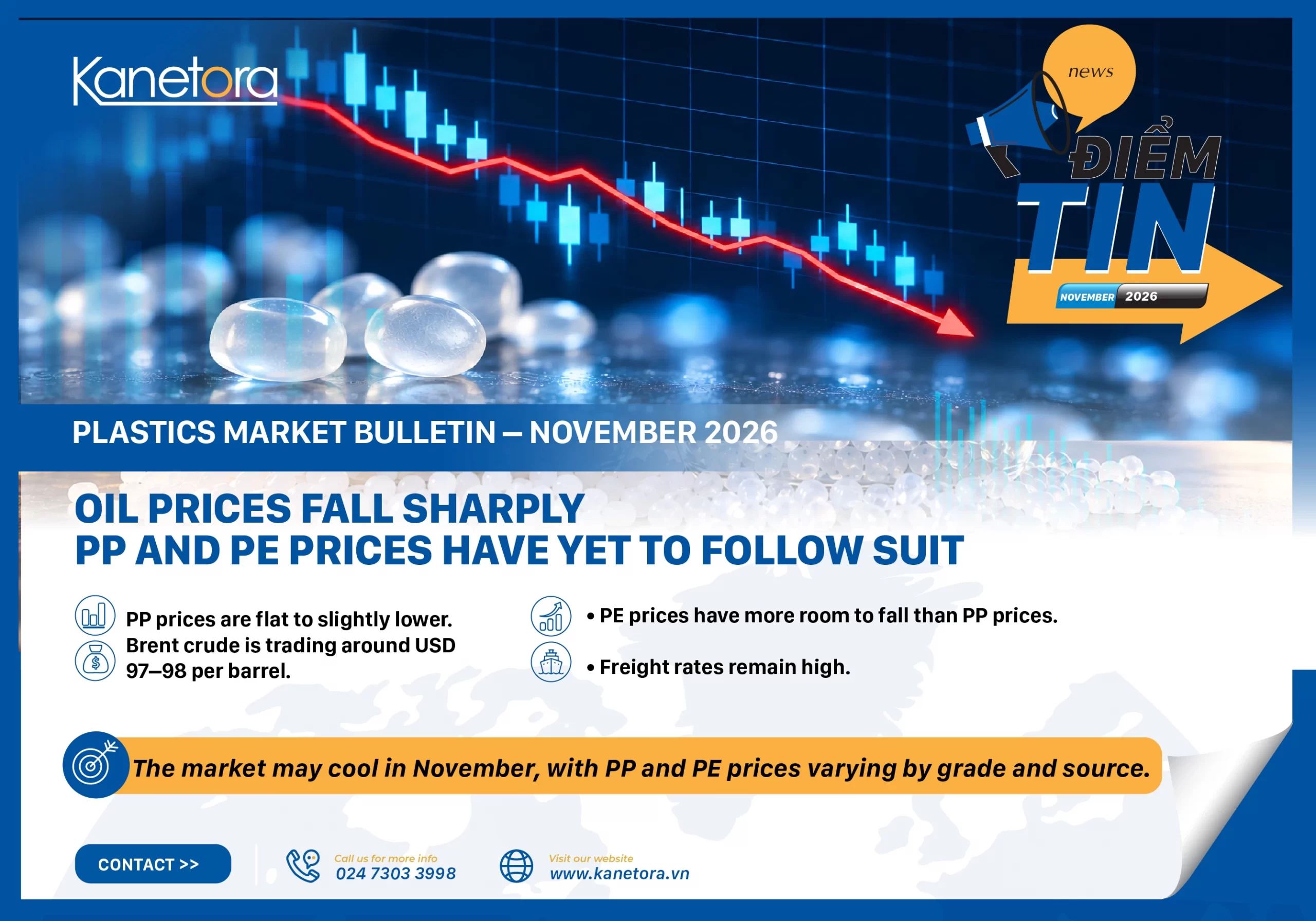
The Asian plastic resin and petrochemical market entered November 2026 with a significant shift in pricing dynamics. Crude oil prices have fallen sharply from their recent highs, but polypropylene (PP) and polyethylene (PE) prices have not declined at the same pace.
Brent crude has retreated toward USD 97–98 per barrel, supported by expectations of reduced geopolitical tensions in the Middle East and improving global oil supply. However, elevated propylene prices, grade-specific PE availability, petrochemical plant maintenance and persistent logistics costs continue to influence polymer pricing.
For manufacturers in Vietnam and Southeast Asia, the key question is no longer simply whether crude oil is rising or falling.
Instead, procurement decisions increasingly depend on the interaction between:
Energy Prices → Petrochemical Feedstocks → Polymer Supply → Downstream Demand → Logistics → Final Landed Cost
This report examines the latest PP and PE market developments as of November 9, 2026, geopolitical risks, China’s expanding petrochemical capacity and the outlook for the remainder of November.
Quick Answer: What Is the PP and PE Market Outlook for November 2026?
The base-case outlook for November 2026 is for Asian PP and PE prices to remain broadly stable or soften moderately, rather than experience a sharp market-wide decline.
- Polypropylene (PP): Stable to slightly lower. Elevated propylene costs and supply constraints may limit the downside despite weaker crude oil prices.
- Polyethylene (PE): Stable to moderately softer, with potential differences across LDPE, LLDPE and HDPE grades.
- China: Expanding domestic polymer capacity remains a major source of medium-term price competition across Asia.
- India: Slower purchasing after the festive season may weaken regional demand.
- Logistics: Port congestion has improved in selected locations, but freight costs and delivery reliability remain important procurement variables.
Kanetora Market Assessment: November is more likely to be characterized by price normalization and grade-specific volatility than a broad-based collapse in resin prices.
This represents a notable change from the conditions discussed in Kanetora’s September 2026 Plastic Resin and Petrochemical Market Update, when elevated crude oil and supply disruptions were the dominant market drivers.
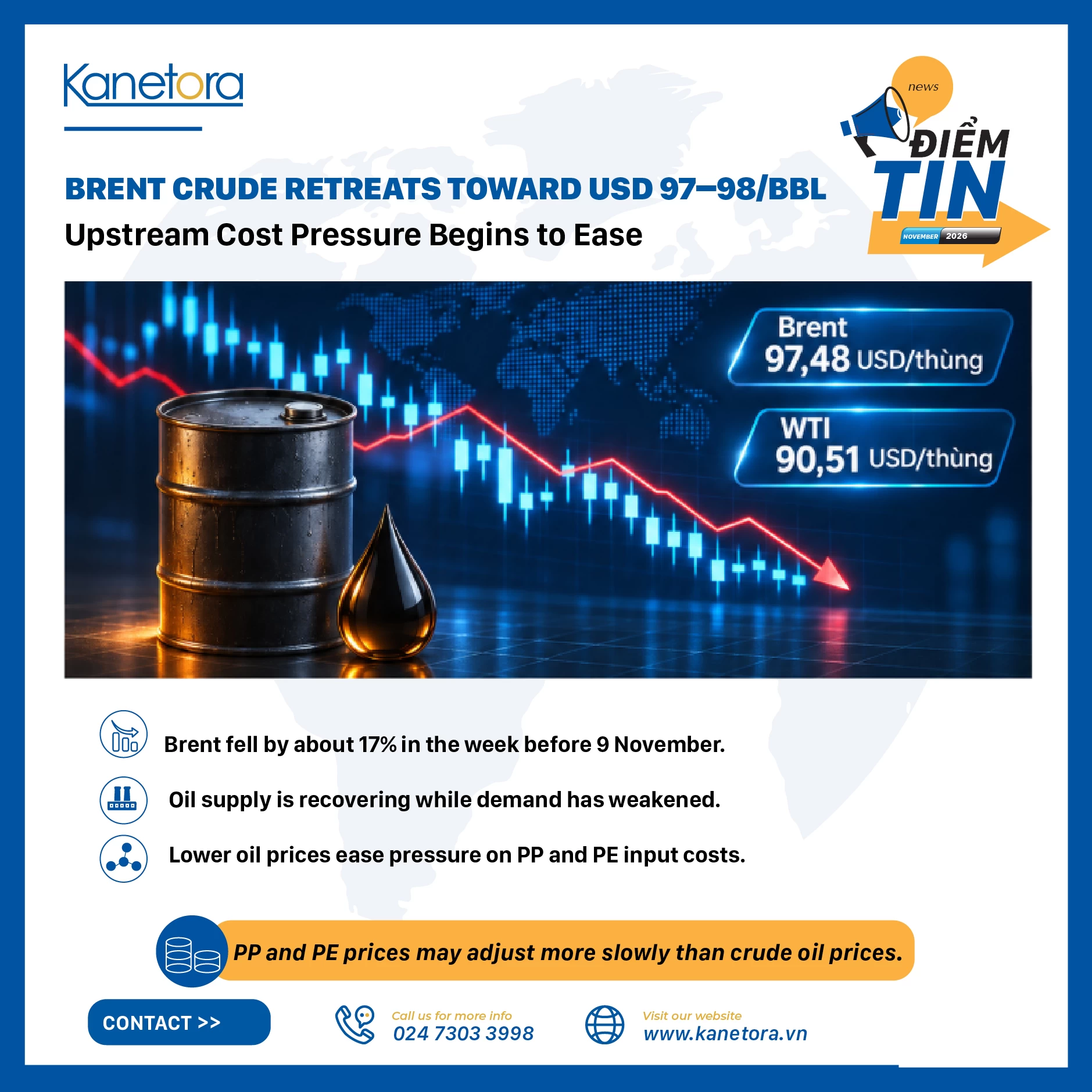
1. Brent Crude Retreats Toward USD 97–98/bbl: Upstream Cost Pressure Begins to Ease
The most significant change in early November has come from global energy markets.
As of November 9, Brent crude was trading around USD 97–98 per barrel, following a sharp weekly decline as investors reassessed geopolitical risks and the global oil supply balance.
Expectations of diplomatic progress between the United States and Iran, combined with improving Middle Eastern oil flows and concerns about weaker consumption, have reduced the geopolitical risk premium previously embedded in crude prices.
For petrochemical manufacturers, this development is important because crude oil influences the cost of naphtha and several other feedstocks used to produce polymers.
The potential cost transmission follows:
Crude Oil ↓ → Naphtha ↓ → Reduced Ethylene and Propylene Cost Pressure → Potential PP/PE Price Adjustment
However, this relationship is not immediate or proportional.
Polymer manufacturers may still be processing feedstocks purchased at higher prices in previous months. Production economics are also affected by inventories, operating rates, monomer availability and transportation costs.
Consequently, a sharp decline in crude oil does not automatically translate into an equivalent reduction in PP or PE prices.
For a detailed explanation of the upstream pricing mechanism, see Kanetora’s How Crude Oil Prices Impact PE Resin Prices.
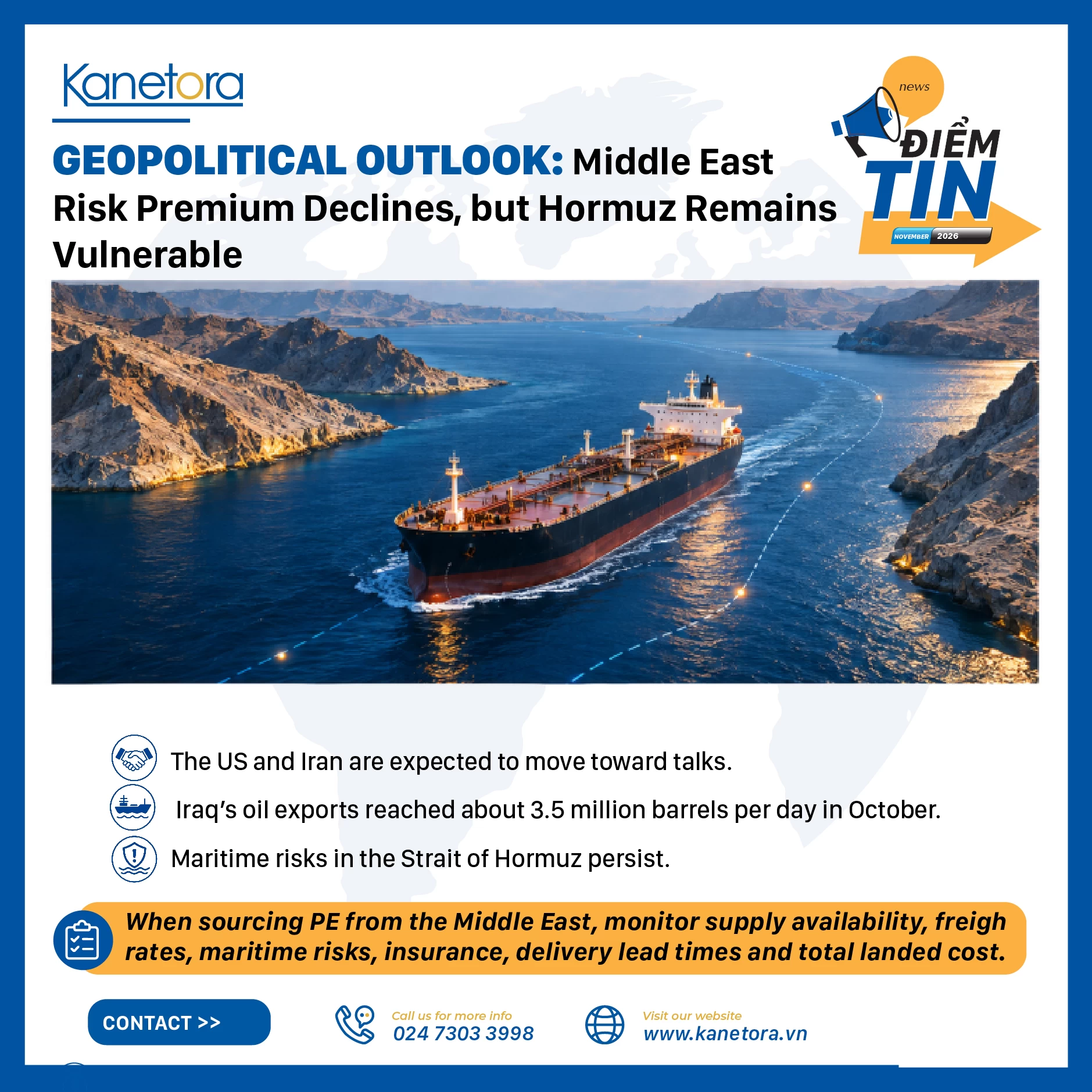
2. Geopolitical Outlook: Middle East Risk Premium Declines, but Hormuz Remains Vulnerable
Geopolitical developments remain among the most important uncertainties affecting global petrochemical trade.
Following the November 3 US midterm elections, market expectations have shifted toward the possibility of renewed diplomatic progress between Washington and Tehran.
Comments from US President Donald Trump on November 8 suggesting that further military strikes against Iran were unlikely if negotiations progressed contributed to the easing of crude oil prices.
At the same time, improving oil exports from regional producers, including Iraq, have helped reduce immediate concerns about energy supply shortages.
Nevertheless, the Strait of Hormuz remains a critical geopolitical and maritime risk.
Disruptions to commercial shipping, security incidents involving vessels and uncertainties surrounding negotiations mean that freight and insurance costs may not normalize as quickly as crude oil prices.
Why does this matter for polyethylene?
The Middle East is a major global production and export hub for polyethylene.
Disruptions affecting its energy infrastructure or shipping routes can influence:
- PE export availability
- Ocean freight rates
- Marine insurance premiums
- Shipment lead times
- Replacement sourcing costs
- Delivery reliability
For resin buyers, the relevant calculation remains:
Resin Price + Availability + Freight + Insurance + Transit Time = Supply Risk Exposure
Kanetora Assessment: The geopolitical environment has shifted toward a potentially less confrontational scenario, but significant uncertainty remains. Any renewed disruption around Hormuz could reverse the recent easing in oil prices and create renewed upward pressure on polymer supply costs.
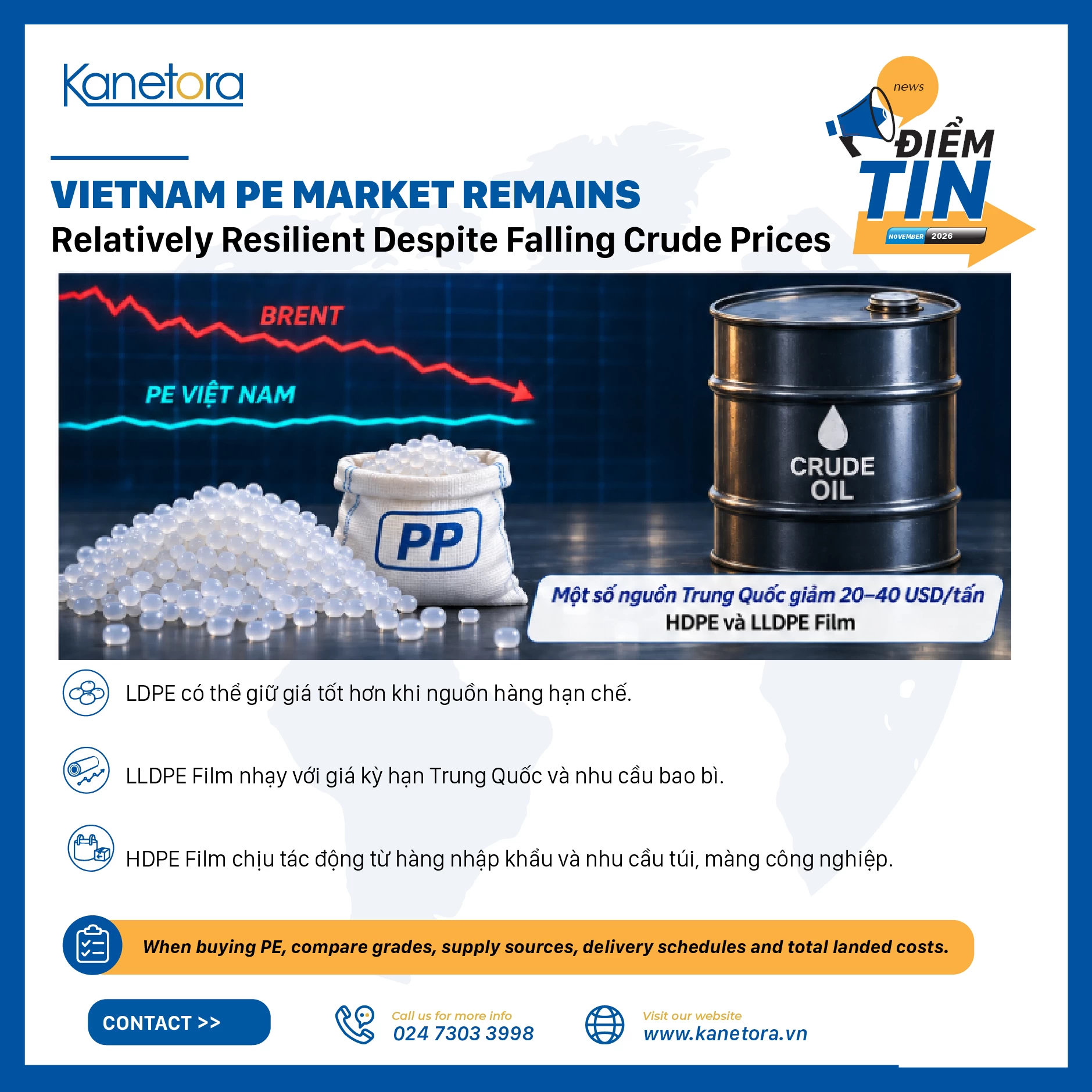
3. Vietnam PE Market Remains Relatively Resilient Despite Falling Crude Prices
One of the most notable developments in early November is the difference between crude oil movements and physical polyethylene prices in Vietnam.
According to CommoPlast market reporting in early November, the Vietnamese PE market remained relatively resilient despite the sharp decline in Brent crude.
Some Chinese suppliers reportedly reduced offers for selected HDPE and LLDPE Film grades by approximately USD 20–40 per tonne, but broader price reductions remained limited.
The difference reflects several market conditions:
- Regional PE availability remains uneven.
- Ethylene costs have not declined as quickly as crude oil.
- Some suppliers continue to face elevated replacement costs.
- Buyers are delaying purchases in anticipation of further reductions.
- Prompt cargo availability differs across grades and origins.
This creates a situation in which buyer sentiment has weakened faster than physical supply conditions.
Buyers may expect prices to fall, but sellers do not necessarily have sufficient inventory pressure to offer substantial discounts.
LDPE, LLDPE and HDPE May Follow Different Pricing Trends
Polyethylene should not be treated as one uniform market.
LDPE: Prices may remain relatively resilient where local or imported availability is constrained. Demand from flexible packaging and liner applications continues to influence purchasing.
LLDPE Film: Prices may be more sensitive to Chinese futures, regional import offers and demand from flexible film manufacturers.
HDPE Film: Pricing depends on competition between regional suppliers, import availability and demand from industrial packaging producers.
HDPE Blow Molding: Demand from bottles, containers and other blow-molded applications may differ from film-grade demand.
For manufacturers, a more effective procurement approach is:
Polymer Family → Specific Grade → Producer → Origin → Availability → Lead Time → Landed Cost
Kanetora discusses these grade-level considerations in its PP/PE Resin Sourcing Guide for Packaging Manufacturers.
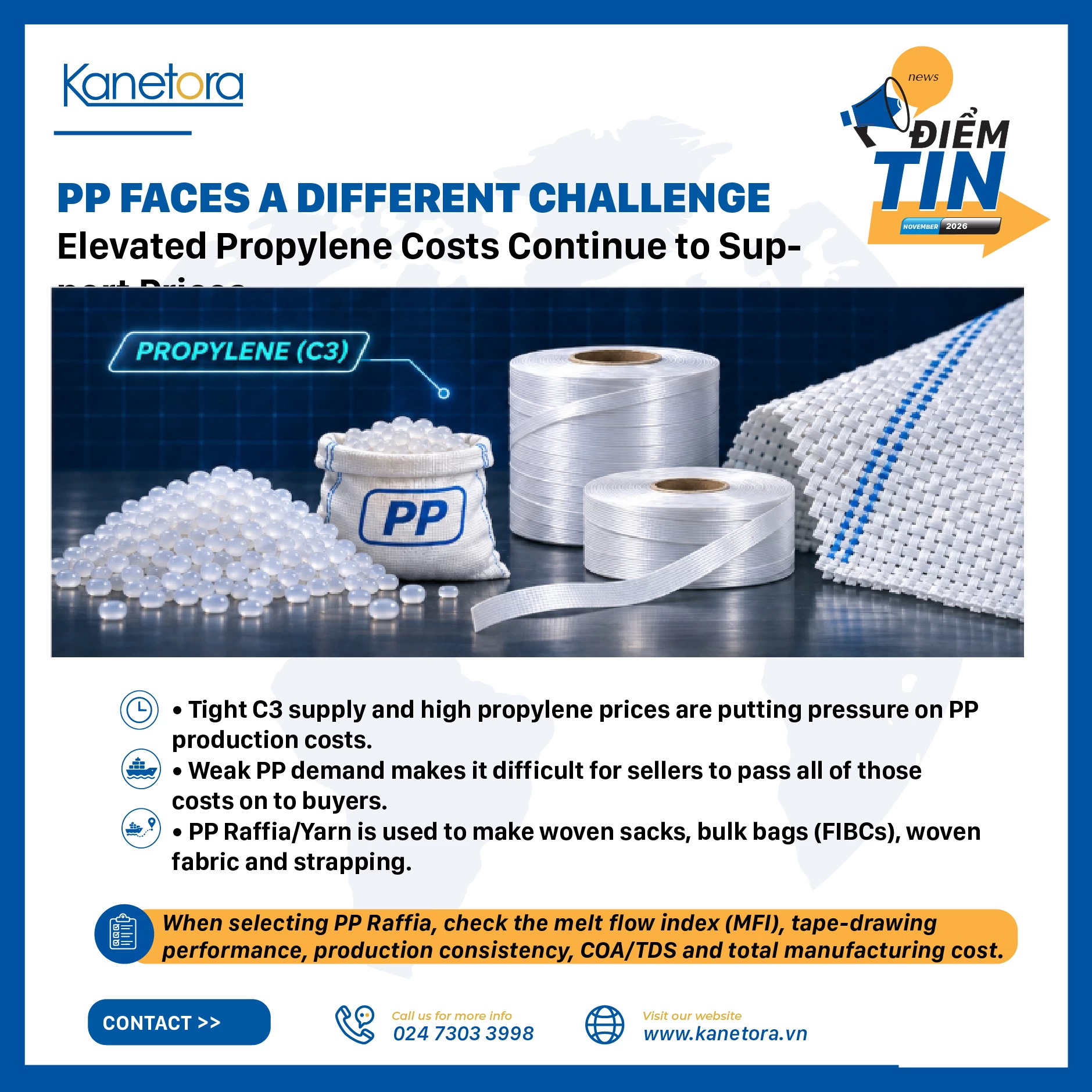
4. PP Faces a Different Challenge: Elevated Propylene Costs Continue to Support Prices
Unlike polyethylene, polypropylene is currently experiencing significant pressure from its upstream C3 value chain.
Although crude oil has declined, propylene prices in China have remained elevated amid tight merchant supply.
ICIS reported in early November that Chinese propylene values had reached unusually high levels as supply constraints affected the regional market.
This creates two opposing forces for polypropylene producers.
On the cost side:
High Propylene Prices → Higher PP Production Costs
On the demand side:
Weak PP Demand → Limited Ability to Pass Costs Downstream
The result is pressure on producer margins and the potential for operating-rate reductions.
For polypropylene buyers, this means lower crude oil prices may create downward pressure, but tight propylene availability can prevent PP offers from declining as quickly.
Impact on PP Raffia, PP Yarn and Industrial Packaging
This situation is particularly relevant for manufacturers of:
- PP woven bags
- FIBC and Jumbo Bags
- Woven polypropylene fabric
- PP yarn and webbing
- Industrial sacks
- Fertilizer and cement bags
For these applications, raw-material price is only one factor in the total production cost.
Resin performance, melt flow rate, extrusion stability, tape-drawing efficiency and batch consistency can be equally important.
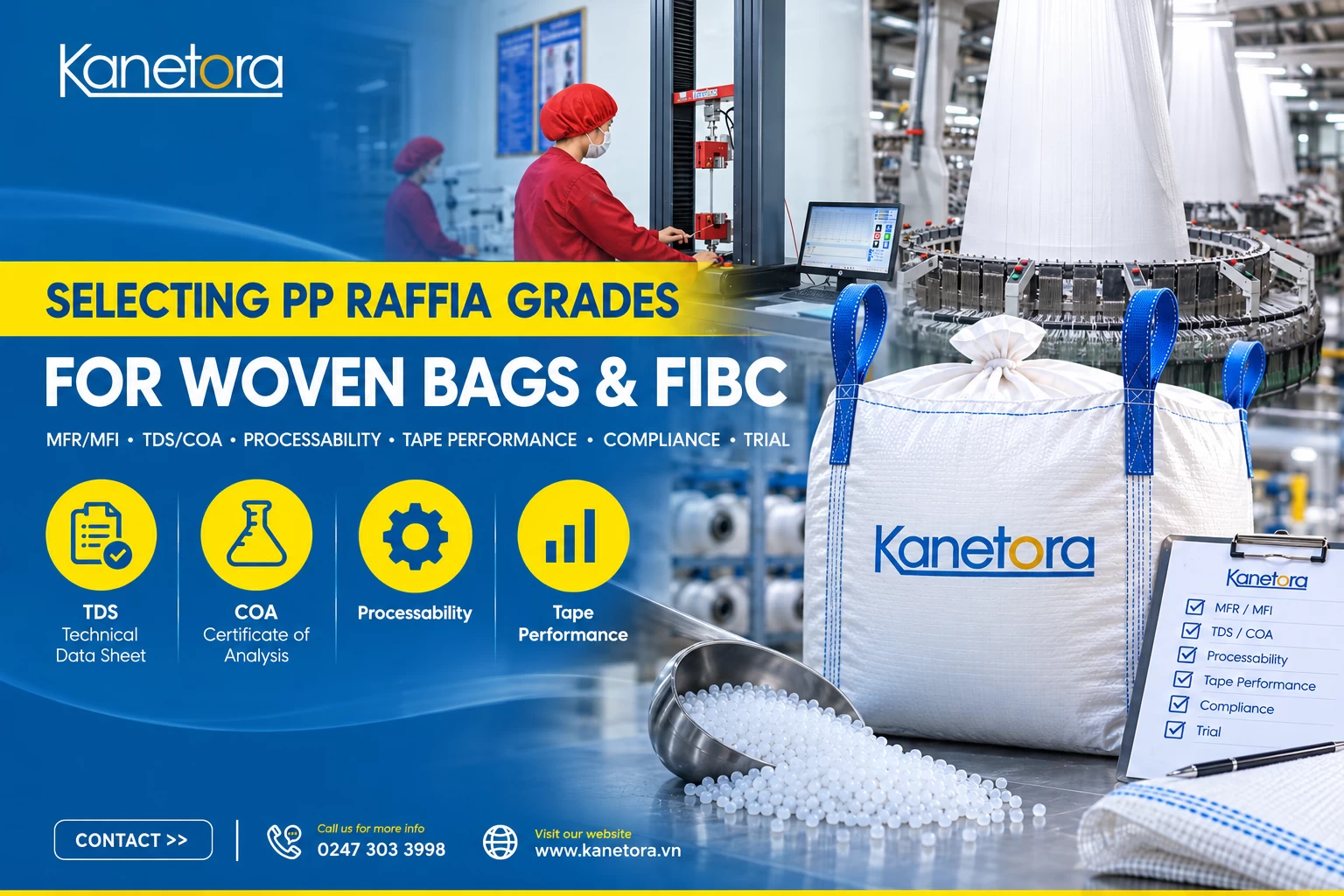
Kanetora examines these technical considerations in its PP Raffia Grade Selection Checklist for Woven Bags and FIBC.
Kanetora Assessment: PP Raffia and selected PP homopolymer grades may prove more resistant to price reductions than some PE film grades during November, especially if propylene availability remains constrained.
5. China Petrochemical Capacity Expansion Remains a Major Medium-Term Risk
Although short-term supply constraints can support PP prices, China’s expanding petrochemical production capacity remains a major structural issue.
Over recent years, China has rapidly increased domestic production of polypropylene, polyethylene and other petrochemical products.
Additional plants have reduced the country’s dependence on imported materials while increasing competition among domestic producers.
When local production expands faster than domestic demand, manufacturers may seek additional export opportunities.
The potential transmission is:
Chinese Polymer Capacity ↑ → Domestic Supply Competition ↑ → Export Availability ↑ → Greater Competition Across Southeast Asia
This is particularly relevant for Vietnam, where imported resin competes with both locally produced materials and supplies from other Asian and Middle Eastern producers.
More Chinese export availability could increase competitive pressure on:
- PP Raffia
- PP Injection
- PP Film
- LLDPE Film
- HDPE Film
- Other industrial polymer grades
However, supply expansion does not guarantee a continuous decline in prices.
Temporary plant shutdowns, maintenance schedules, feedstock availability and export economics can still create short-term price support.
Kanetora Assessment: China’s capacity expansion remains one of the strongest factors limiting the potential for a sustained PP and PE price rally over the medium term.
6. China: Rising Production Costs Meet Uneven Consumer Demand
China’s economic performance continues to play a central role in determining Asian polymer demand.
Recent economic data suggest that producer prices and industrial input costs have increased more quickly than consumer prices.
According to November 9 economic reporting, China’s October Producer Price Index increased by approximately 5.7% year on year, while the Consumer Price Index rose by around 0.7%.
These figures highlight an important challenge for downstream manufacturing.
Higher input costs do not necessarily translate into stronger demand or higher selling prices for finished products.
For plastic converters, this can lead to:
Higher Feedstock Costs → Margin Pressure → Limited Price Pass-Through → Lower Operating Rates
The impact extends beyond PP and PE into sectors such as:
- PVC pipes and construction products
- Household plastics
- Consumer packaging
- Automotive components
- Appliances
- Injection-molded products
China’s property sector remains another important consideration, particularly for PVC and construction-related polymers.
If domestic demand remains subdued while petrochemical production continues expanding, Chinese suppliers may face growing pressure to compete in export markets.
7. India: Post-Diwali Demand May Weaken Regional Polymer Purchasing
India remains one of Asia’s major growth markets for polymer consumption.
Demand from packaging, consumer goods and manufacturing typically receives seasonal support ahead of major festivals.
However, Diwali fell on November 8, 2026, and the end of the festive production cycle may lead to slower purchasing activity during the remainder of the fourth quarter.
ICIS had previously indicated that demand for PE, PP and PET could weaken after the festive season.
This matters for regional suppliers because India is an important destination for imported petrochemical products.
If Indian demand slows:
Regional Export Demand ↓ → More Supply Available for Alternative Markets → Stronger Price Competition
Some producers may respond by offering more competitive prices into Southeast Asian markets, depending on freight, inventory and product specifications.
However, the impact will differ by polymer and production route.
In particular, tight propylene markets may continue to support PP production costs even as downstream purchasing weakens.
8. Logistics: Port Congestion Improves, but Freight Costs Remain Elevated
Logistics conditions have improved in selected Asian ports compared with September.
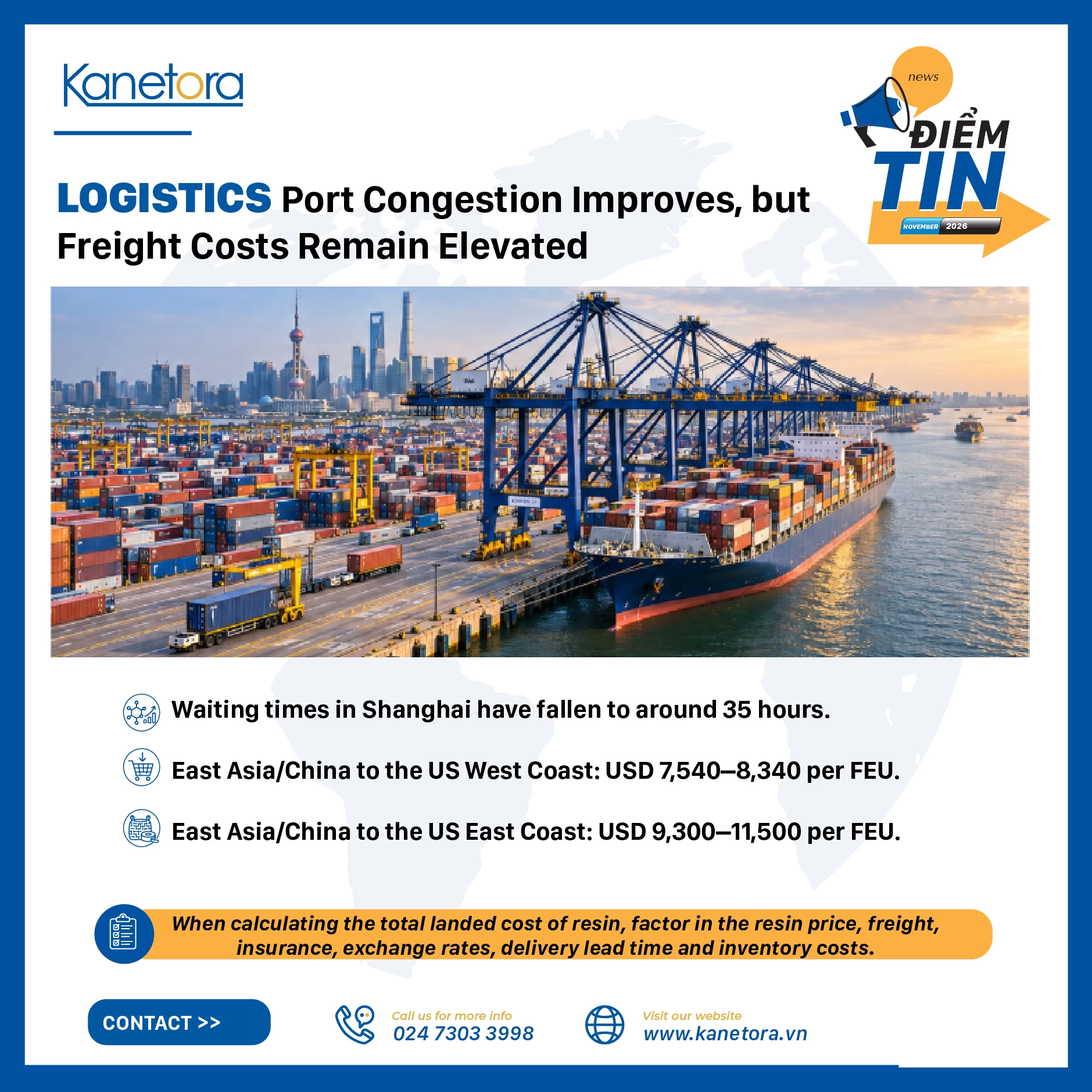
According to ICIS reporting in early November, average waiting times at Shanghai had fallen to approximately 35 hours, supported by better weather and lower shipping demand.
However, container freight costs remain elevated on several major international routes.
As of November 6, reported East Asia/China–US container rates were approximately:
| Route | Indicative Freight Rate |
|---|---|
| East Asia / China → US West Coast | USD 7,540–8,340 per FEU |
| East Asia / China → US East Coast | USD 9,300–11,500 per FEU |
These rates are indicators of broader container-market conditions, not direct freight quotations for PP or PE imports into Vietnam.
Shipping lines continue to use capacity-management measures, including blank sailings, which can affect schedule reliability even when port congestion improves.
For resin importers, this reinforces the importance of comparing suppliers using actual delivered cost.
Resin Price + Freight + Insurance + Import Charges + FX + Financing + Inventory Cost = Effective Landed Cost
A lower FOB price does not necessarily mean a lower total procurement cost.
Within Kanetora’s industrial ecosystem, customers can also explore integrated transportation and supply-chain solutions through KVN Logistics.
9. PVC, PET, Polyester and Engineering Plastics Face Their Own Supply-Demand Challenges
The current petrochemical market cannot be assessed solely through PP and PE.
Several related industries are experiencing different combinations of cost pressure, inventory availability and weak downstream consumption.
PVC and Construction Plastics
PVC continues to face pressure from weak construction-related demand in parts of Asia.
Higher feedstock costs may support producer offers, but competition from Chinese exports and subdued downstream activity can limit sustained price increases.
PET and Polyester
PET and polyester demand may weaken after India’s festive season.
While feedstock costs remain relevant, soft purchasing activity and low downstream margins are important factors to monitor.
ABS, PS and Engineering Plastics
Engineering and styrenic plastics remain sensitive to consumer demand, automotive production, appliances and electronics manufacturing.
Weak demand can limit producers’ ability to pass higher feedstock costs into finished resin prices.
Specialty Chemicals and Electronics
Selected specialty chemical markets may perform differently from commodity polymers.
Demand for high-purity chemicals used in electronics and semiconductor manufacturing can benefit from investments in advanced technologies.
However, growth in specialty applications does not automatically indicate a recovery across the broader petrochemical market.
The key takeaway is that each petrochemical value chain must now be evaluated according to its own supply-demand fundamentals.
Market Snapshot: Asian Plastic Resin Market as of November 9, 2026
| Market Indicator | Current Assessment | Potential Impact |
|---|---|---|
| Brent crude oil | Around USD 97–98/bbl | Lower upstream cost pressure |
| US–Iran relations | Greater expectations of diplomatic progress | Lower oil risk premium |
| Strait of Hormuz | Continued maritime uncertainty | Freight and supply volatility |
| Naphtha | Potential easing alongside crude | Reduced feedstock pressure |
| Ethylene | Mixed regional availability | Neutral to mildly bearish for PE |
| Propylene | Elevated, tight supply | Cost support for PP |
| Vietnam PE market | Relatively resilient despite falling oil | Stable to slightly softer |
| Asian PP market | High feedstock costs, weak demand | Stable to slightly softer |
| China polymer capacity | Continued expansion | Medium-term supply pressure |
| Indian demand | Potential slowdown after Diwali | Weaker regional purchasing |
| Container logistics | Better congestion, elevated freight | Continued landed-cost risk |
Market assessments represent conditions and directional indications, not executable resin quotations.
10. PP and PE Price Outlook for the Remainder of November 2026
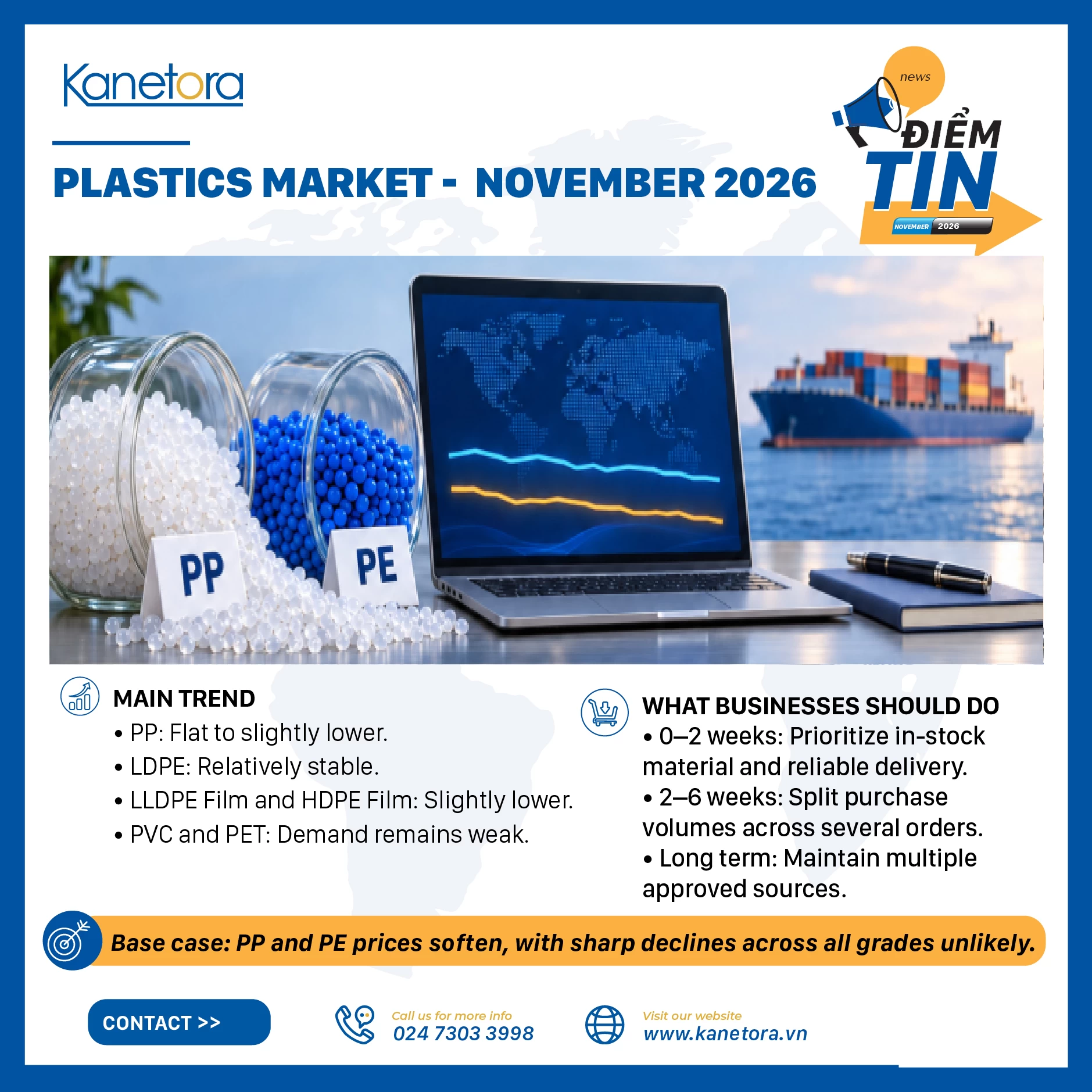
Based on current market conditions, Kanetora’s base-case outlook is for moderate price softening rather than a broad-based collapse.
The outlook remains conditional on energy prices, monomer availability, Chinese exports, regional plant operating rates and geopolitical developments.
| Polymer / Segment | November Outlook | Main Drivers |
|---|---|---|
| PP Raffia / Yarn | Stable to slightly lower | High propylene costs, China supply |
| PP Injection | Stable to slightly lower | Weak demand, cost support |
| LDPE | Relatively stable | Grade-specific availability |
| LLDPE Film | Slightly lower | Chinese offers, softer crude |
| HDPE Film | Slightly lower | Regional competition, cautious buying |
| HDPE Blow Molding | Stable to slightly lower | Downstream demand |
| PVC | Stable to slightly lower | Supply competition, construction demand |
| PET | Stable to lower | Post-festive demand |
| ABS / PS | Stable to slightly lower | Consumer and industrial demand |
| Container Freight | Stable to slightly lower | Seasonal demand, capacity management |
These are directional forecasts rather than guaranteed price movements.
Base Case: Stable to Moderately Lower Prices
This is Kanetora’s central working scenario for November.
The assumptions include:
- Crude oil remains below recent peaks.
- US–Iran negotiations continue without major escalation.
- Downstream demand in China and India remains relatively subdued.
- Regional polymer supply remains broadly adequate.
- Monomer constraints prevent some grades from declining rapidly.
Under these conditions, PP and PE prices may gradually soften, with larger differences emerging between grades and origins.
Upside Scenario: Renewed Geopolitical Supply Disruption
A breakdown in negotiations or a significant disruption to Middle Eastern energy and shipping infrastructure could drive crude oil and freight sharply higher.
In this scenario, PE cargoes originating in the Middle East could be particularly sensitive to shipping and availability risks.
PP would also be affected by higher energy and feedstock costs.
Downside Scenario: Further Oil Weakness and Greater Chinese Export Supply
A sharper decline could occur if three factors develop simultaneously:
Crude Oil Falls Further + Chinese Polymer Export Availability Increases + Downstream Demand Remains Weak
Under this scenario, some PE grades may experience stronger downward pressure.
PP could adjust more slowly if propylene prices remain elevated.
11. What Should Vietnamese Manufacturers Do When Purchasing PP and PE in November?
Under current conditions, attempting to identify the exact bottom of the market may create unnecessary procurement risk.
A more disciplined approach is to align resin purchases with actual production requirements, approved grades and available sourcing alternatives.
Immediate Requirements: Next 0–2 Weeks
Prioritize supply continuity.
Materials needed for confirmed production orders should not be delayed solely because of expectations of lower prices.
Buyers should verify:
- Available stock
- Approved resin grades
- Supplier delivery commitments
- Production consumption
- Critical safety-stock levels
Medium-Term Requirements: Next 2–6 Weeks
Consider dividing purchases into smaller tranches.
This can reduce exposure to a single market price point while maintaining sufficient production coverage.
Continue comparing domestic and imported offers using consistent commercial terms and landed-cost calculations.
Longer-Term Requirements
Maintain flexibility by developing:
- Multiple qualified suppliers
- Approved alternative grades
- Clear technical specifications
- Monthly or quarterly purchasing agreements
- Flexible delivery schedules
- Inventory planning linked to production forecasts
For PP woven bag and FIBC manufacturers, this approach is particularly important.
A cheaper resin that causes more tape breaks, unstable extrusion or higher scrap rates may ultimately increase manufacturing costs.
Kanetora’s PP Raffia Grade Selection Guide explains why melt flow rate, processing stability and finished-product performance should be assessed alongside resin prices.
12. Key Market Indicators to Monitor Throughout November
Resin procurement teams should monitor five groups of indicators.
Energy and Feedstocks: Brent crude, Dubai crude, naphtha, propane, ethylene and propylene.
China Market: PP and LLDPE futures, producer inventories, export offers and operating rates.
Regional Physical Supply: Plant maintenance, shutdowns, production rates and prompt cargo availability.
Logistics: Ocean freight, port congestion, sailing schedules, insurance and transit times.
Vietnam Procurement Conditions: CIF offers, USD/VND exchange rate, local inventory, approved grades and actual consumption requirements.
The goal is not to follow each indicator independently but to understand how they interact.
A useful procurement framework is:
Application → Grade → Approved Supplier → Origin → Feedstock Exposure → Inventory → Lead Time → Landed Cost → Purchase Timing
Frequently Asked Questions: Plastic Resin Market November 2026
Will polypropylene prices decline in November 2026?
PP prices may remain stable or decline slightly under the base-case scenario. Lower crude oil prices create downward pressure, but elevated propylene costs and supply constraints could limit the extent of the decline.
Are polyethylene prices expected to fall in November?
Selected PE grades may soften as crude oil prices decline and buyers remain cautious. However, LDPE, LLDPE and HDPE may behave differently depending on regional supply, origin and import availability.
Why have resin prices not fallen as quickly as crude oil?
Resin prices also reflect previously purchased feedstocks, monomer costs, inventories, operating rates, freight and physical supply availability. These factors can delay or offset the impact of falling crude oil prices.
How does China’s production capacity affect Vietnam’s resin market?
China’s expanding PP and PE capacity can increase export availability, intensifying competition among suppliers serving Vietnam and other Southeast Asian markets. The impact varies by polymer, grade and export economics.
Should manufacturers stockpile PP or PE in November 2026?
Stockpiling solely on the expectation of a price rebound may increase inventory and working-capital risk. Purchasing decisions should reflect confirmed orders, current inventory, supplier lead times and qualified alternatives.
What is the most important price indicator for PP?
Propylene is a particularly important upstream indicator for polypropylene. Crude oil, propane, regional plant operating rates and physical PP availability should also be monitored.
What indicators matter most for PE?
Ethylene, naphtha, grade-specific availability, import offers and crude oil are key indicators. Freight, exchange rates and delivery schedules also influence actual landed costs.
Could geopolitical tensions push PP and PE prices higher again?
Yes. Renewed disruptions affecting Middle Eastern oil production, petrochemical exports or major shipping routes could increase feedstock costs, freight and polymer supply uncertainty.
Conclusion: November Marks a Shift Toward Supply-Demand-Driven Resin Pricing
As of November 9, 2026, the Asian plastic resin market has entered a new phase.
Crude oil is no longer providing the same strong upward pressure seen during September and October. However, this does not automatically mean PP and PE will experience a sharp or uniform decline.
Polyethylene has greater potential for price adjustment as crude oil and market sentiment weaken, although availability remains important at grade level.
Polypropylene continues to receive support from elevated propylene costs and selected supply constraints, while China’s expanding production capacity presents a medium-term challenge.
Logistics conditions are improving in selected areas, but freight and delivery reliability remain significant factors in procurement decisions.
For manufacturers, the most resilient approach is therefore:
Diversified Sources → Approved Alternative Grades → Appropriate Inventory → Staggered Purchasing → Continuous Feedstock Monitoring → Landed-Cost Control
Rather than attempting to predict the exact market bottom, companies should focus on maintaining reliable material supply, stable production quality and competitive total manufacturing costs.
About Kanetora Plastic & Chemical
Kanetora Plastic & Chemical supplies polypropylene, polyethylene and other polymer materials for industrial manufacturing and packaging applications in Vietnam and international markets.
As part of Kanetora’s integrated industrial ecosystem, the Plastic & Chemical business supports manufacturers through raw-material sourcing, commercial expertise and supply-chain capabilities.
Our polymer portfolio includes materials used in PP woven bags, FIBC/Jumbo Bags, flexible packaging, PE films and other industrial applications.
For technical specifications, grade selection, sourcing alternatives and commercial enquiries, visit the Kanetora website or contact our team.
Kanetora Joint Stock Company
Website: https://kanetora.vn/
Email: info@kanetora.vn
Telephone: +84 (0) 247 303 3998
Market Disclaimer: This article provides general market information and analytical perspectives as of November 9, 2026. Price forecasts are scenario-based assessments, not guaranteed outcomes or binding sales quotations. Actual resin prices vary by grade, producer, origin, Incoterms, shipment date and market conditions.