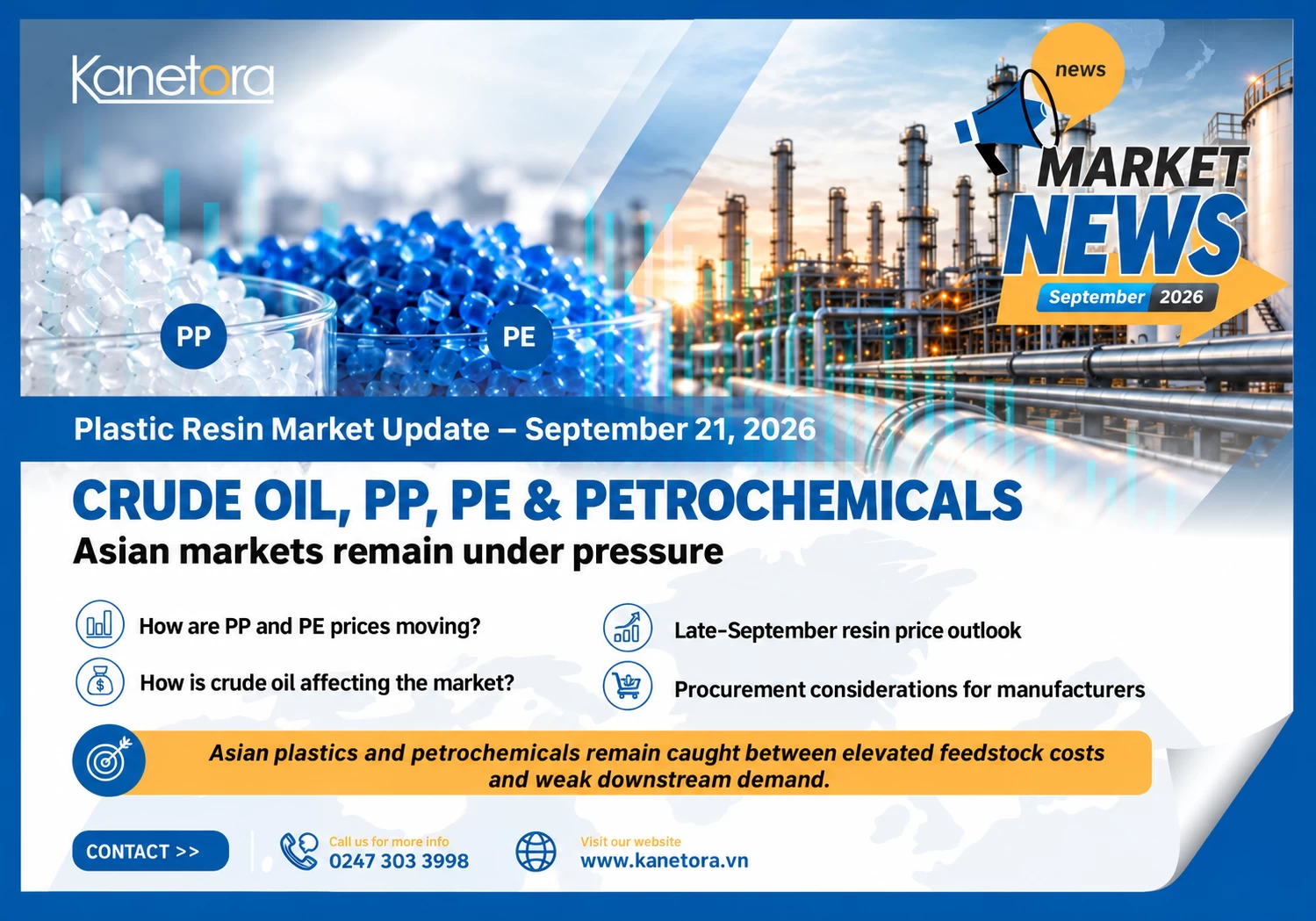


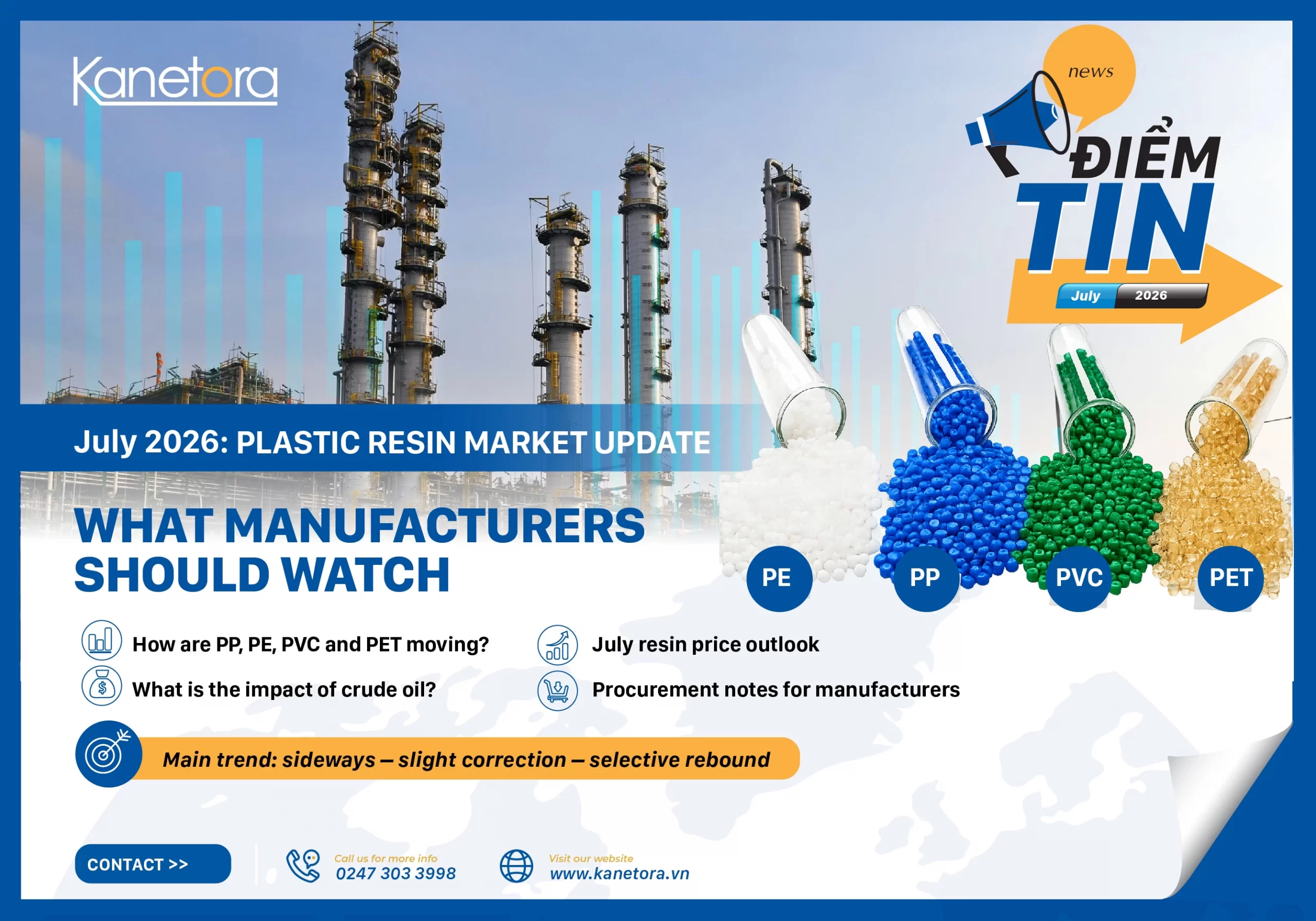
As July 2026 begins, the plastic resin market is moving between two opposing forces. On one side, crude oil, naphtha and petrochemical feedstock costs remain important variables, especially after a period of sharp volatility linked to tensions around the Strait of Hormuz. On the other side, demand in several Asian markets, particularly China, has not shown a strong and consistent recovery, keeping pressure on many resin categories.
By late June 2026, benchmark market data showed both Polyethylene and Polypropylene under downward pressure. Polyethylene was around 6,919 CNY/MT, down 11.20% over the previous month, while Polypropylene was around 7,207 CNY/MT, down 15.24% over the previous month. This reflects cautious buying sentiment, supply pressure and weak downstream demand in some major consuming sectors.
For manufacturers in packaging, woven PP bags, PE film, household plastics, industrial packaging and plastic components, July is not only a month to watch raw material prices. It is also a critical time to review inventory strategy, purchasing timing and price-locking decisions for upcoming production plans.
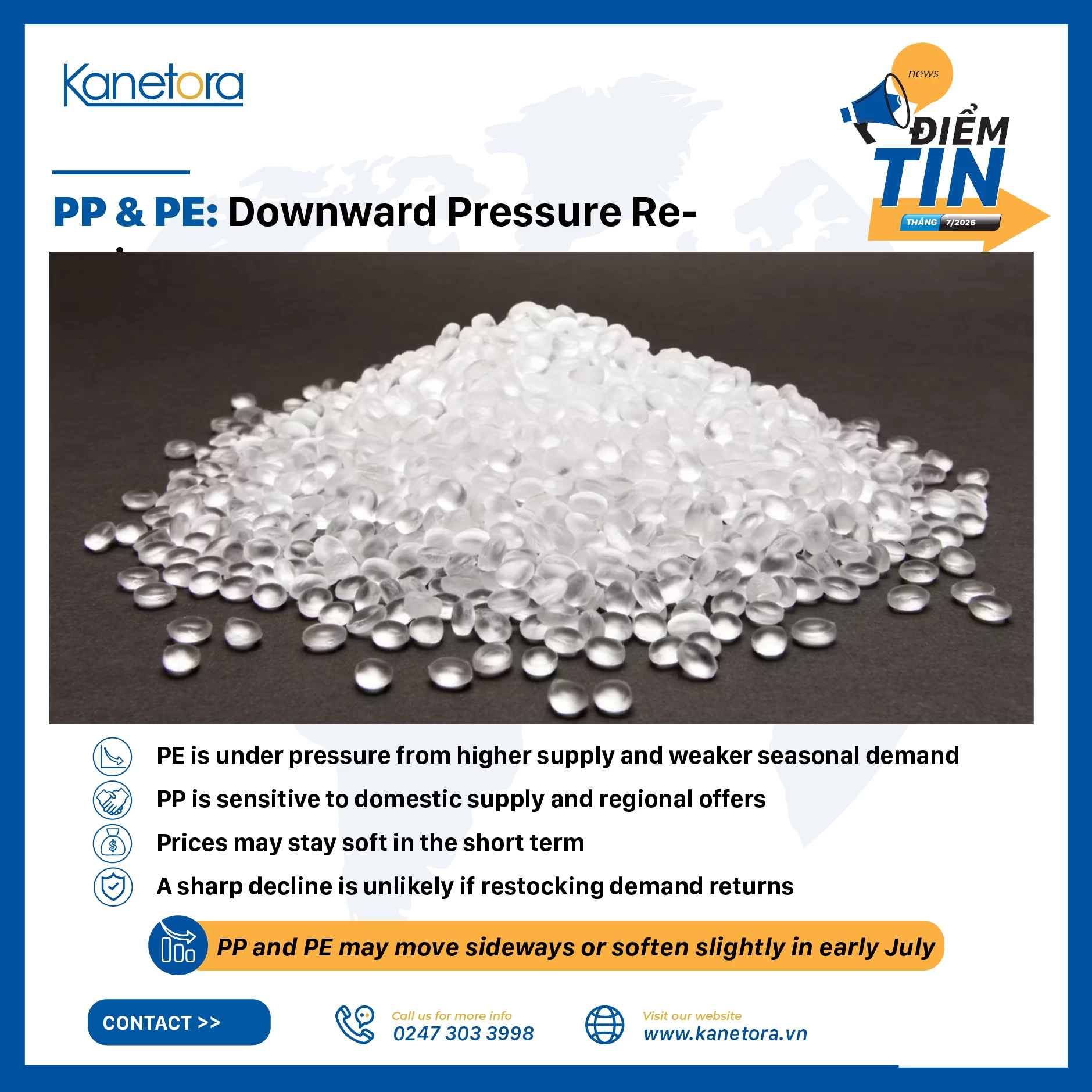
1. PP and PE: Downward Pressure Remains, but the Market May Not Fall Uniformly
PP and PE remain the key focus of the plastic resin market in July 2026. In June, PE prices in China were under pressure as supply increased while seasonal demand remained relatively weak. Market updates from Vietnam’s resin trading community also showed mixed short-term movements in spot resin transactions, suggesting that price changes are not happening evenly across all grades and applications.
For PE, the main pressure comes from inventory levels, regional supply availability and slower buying activity from film, flexible packaging, agricultural film and consumer goods segments. If downstream factories continue to purchase only according to short-term production needs, PE prices may remain soft in the first half of July.
For PP, the situation is more sensitive to domestic supply, local offers and the purchasing pace of downstream producers. In Vietnam, PP demand is closely connected with woven bags, FIBC, injection molding, non-woven fabric and industrial packaging. Any change in domestic supply or import offers can quickly affect buyer sentiment.
However, a deep and broad-based decline is not guaranteed. If crude oil or naphtha rebounds, or if buyers start restocking after a wait-and-see period, selected PP and PE grades may recover in the short term.
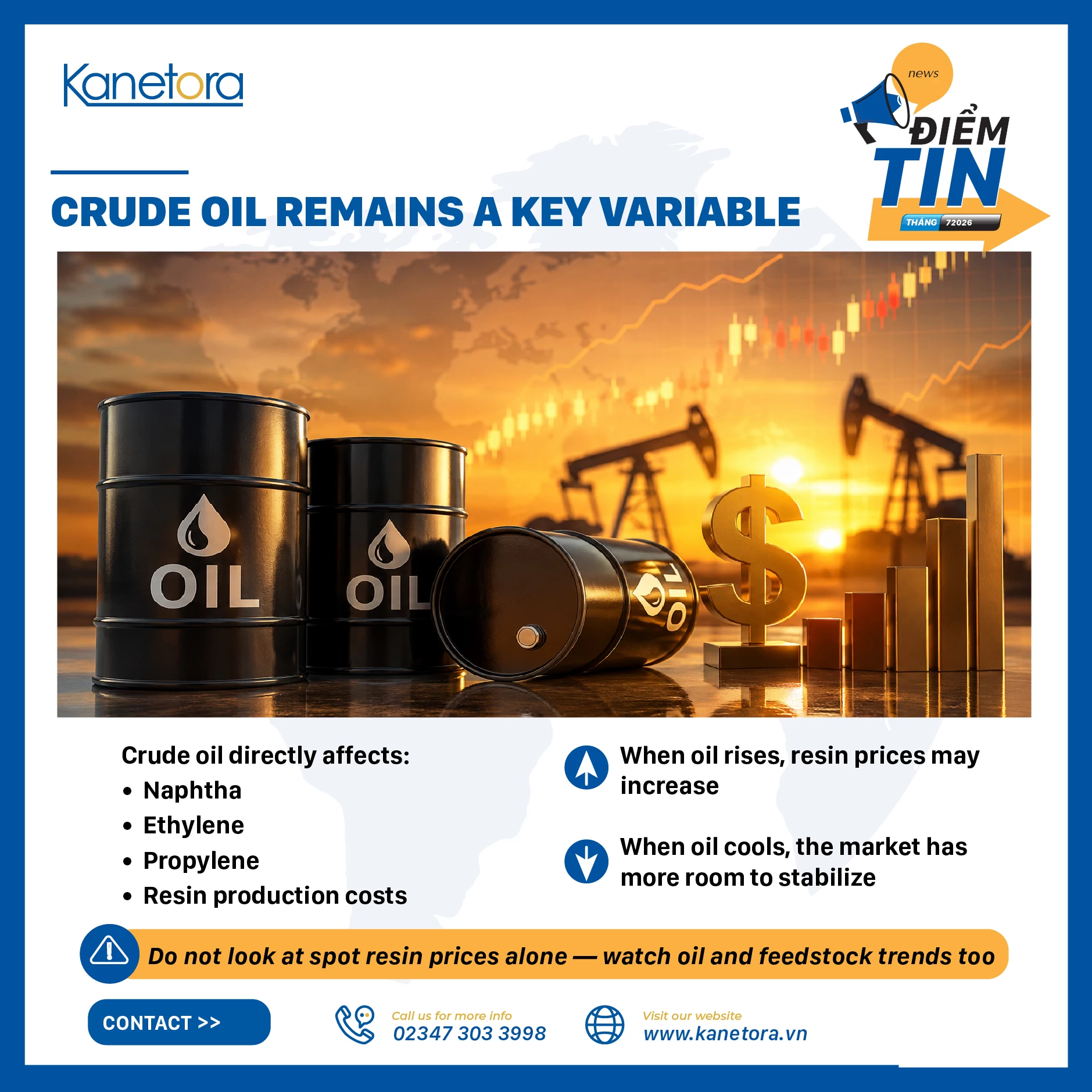
2. Crude Oil: Still a Key Variable for Resin Price Forecasting
Crude oil remains one of the most important indicators for plastic resin price forecasting, especially in petrochemical value chains that depend heavily on naphtha-based production.
In late June, Reuters reported that Brent crude fell to around USD 73.74 per barrel, its lowest level since before the Iran war, as more tankers exited the Strait of Hormuz and supply disruption concerns eased. A Reuters poll also showed that analysts had lowered their 2026 oil price forecasts as the reopening of Hormuz reduced fears of prolonged supply disruption.
For the resin industry, this means July may not immediately enter a strong upward price cycle. However, the market is not fully stable either. Any new geopolitical tension, shipping disruption or sudden energy price rebound could quickly affect naphtha, ethylene, propylene and resin offers.
Manufacturers should therefore avoid looking only at daily spot prices. A more practical approach is to monitor crude oil, naphtha, ethylene, propylene, China futures and Vietnam domestic offers together.
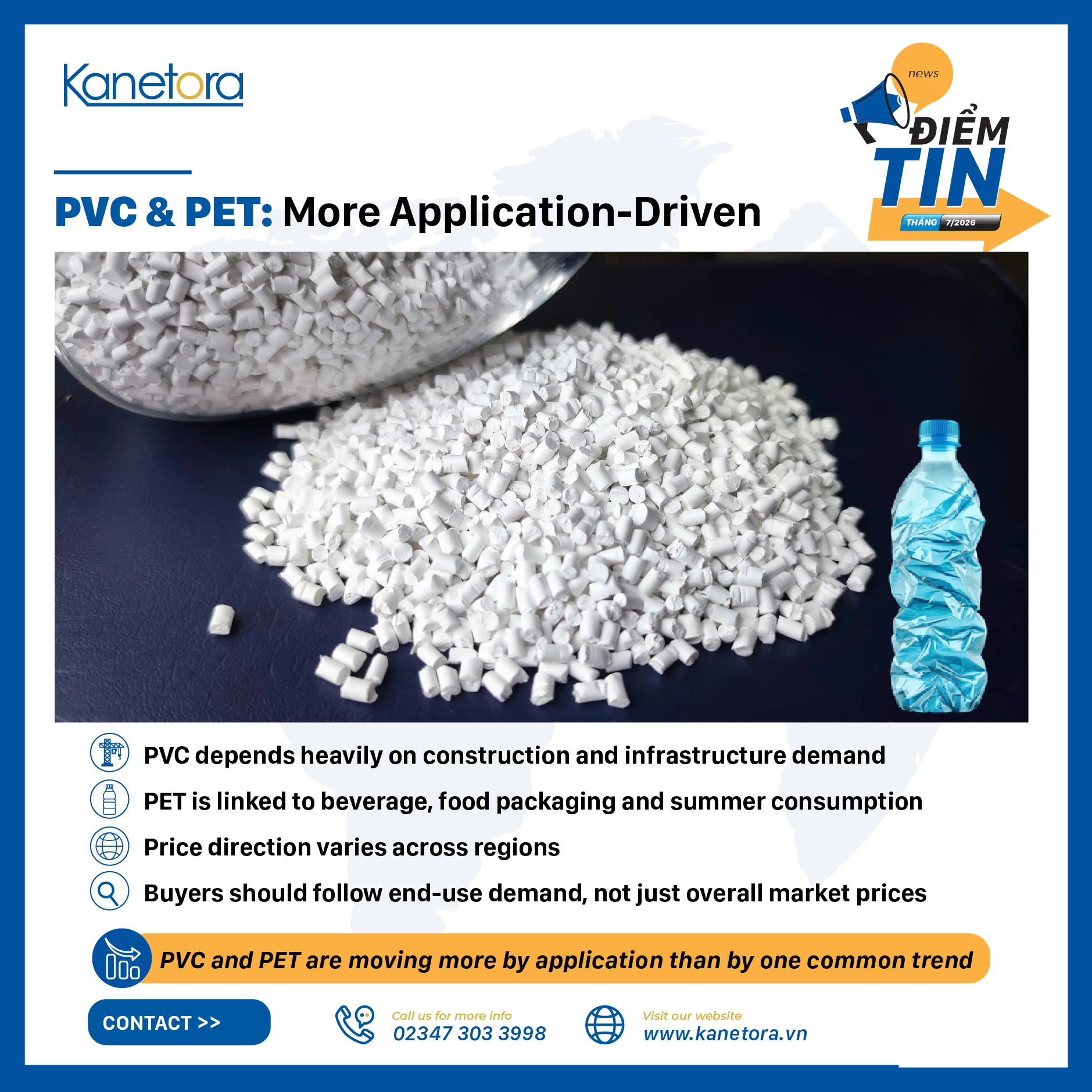
3. PVC and PET: More Application-Driven Price Movements
Unlike PP and PE, PVC and PET tend to move more closely with their downstream application sectors.
For PVC, demand is strongly linked to construction, pipes, profiles, sheets and infrastructure-related products. If construction activity in China and other Asian markets remains weak, PVC may continue to face demand-side pressure. However, short-term movements on Chinese commodity exchanges can still create temporary price rebounds, especially when energy, coal or electricity costs shift.
For PET, demand is more closely connected with beverage packaging, food packaging, bottles, polyester fiber and seasonal consumption. June 2026 PET data showed a mixed regional picture: Northeast Asia was down, while Southeast Asia posted a slight increase. This suggests that PET buyers should not rely on one single global trend, but should track PTA, MEG, freight cost and regional demand conditions.
In July, PET may receive some seasonal support from beverage and food packaging demand, but price direction will still depend on feedstock costs and downstream order momentum.
4. China, India and Asian Supply: Indirect Impact on Vietnam
Vietnam’s resin market is strongly influenced by supply and demand movements across Asia. When China has surplus supply or increases export activity, regional offers often become more competitive. Conversely, if Chinese producers reduce operating rates, enter maintenance periods or see stronger domestic demand, import offers into Vietnam can rebound quickly.
India is also an important market to watch. Changes in petrochemical import duties, fuel taxes or industrial policy can affect regional trade flows and buyer behavior across Asia. In early July 2026, India adjusted fuel-related export duties as global oil prices softened, showing how quickly major economies can respond to energy market changes.
For Vietnamese manufacturers, policy changes in China, India, South Korea, the Middle East and Southeast Asia should be treated as early signals when planning raw material purchases.
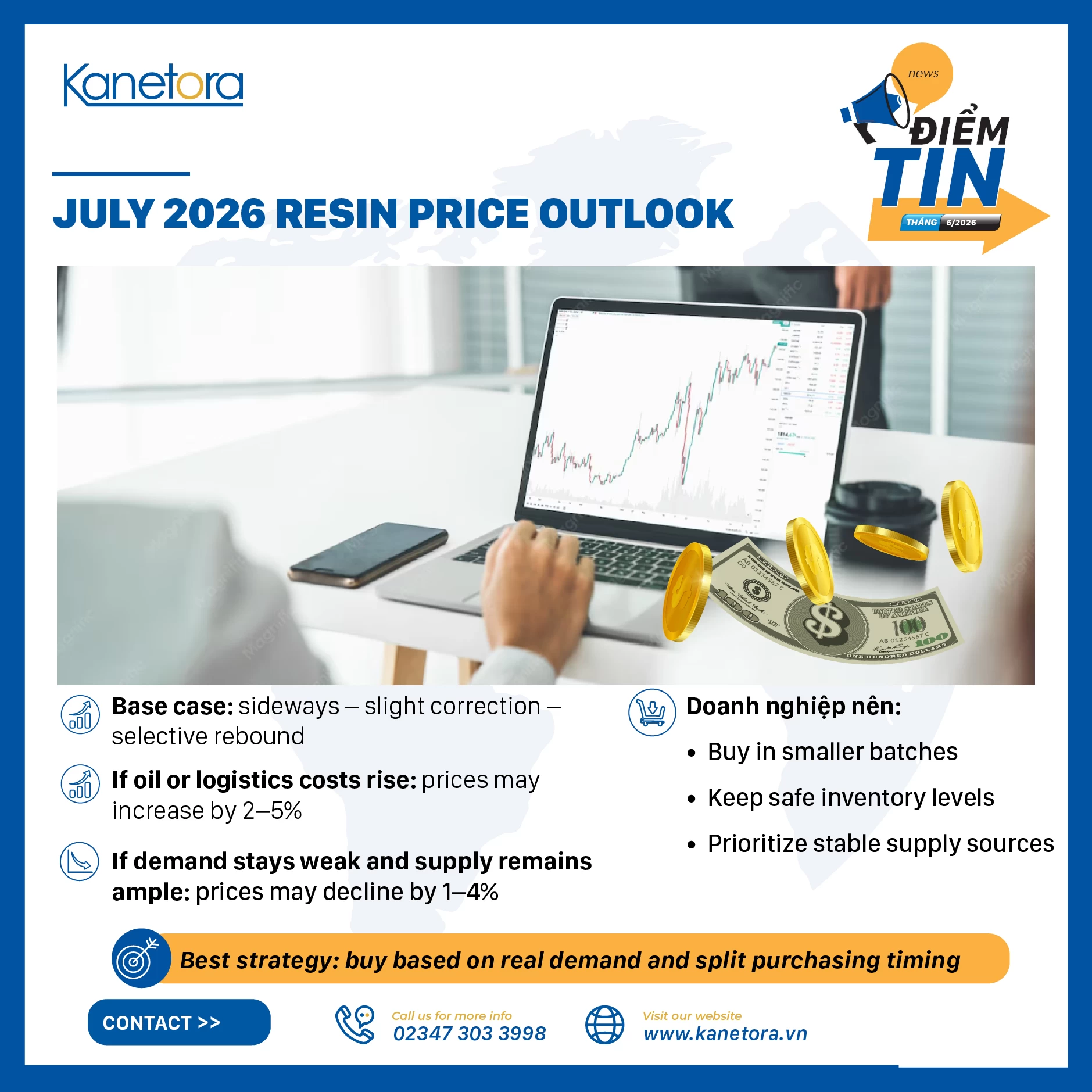
Plastic Resin Price Forecast for July 2026
In July 2026, the plastic resin market is more likely to follow a sideways-to-soft trend with selective rebounds, rather than a strong and broad-based increase.
Base Case: Prices Move Within a Narrow Range
This is currently the most likely scenario. PP and PE may remain under pressure in the first half of July due to inventory and cautious buying. However, the pace of decline may slow if converters begin restocking for new production orders.
Expected movements:
PP: mostly stable to slightly softer for common grades, with possible short-term rebounds if domestic supply tightens.
PE: LLDPE and LDPE may remain under pressure from film demand, while HDPE may vary by application.
PVC: dependent on construction demand and China futures signals.
PET: relatively more stable if beverage, food packaging and seasonal consumption provide demand support.
Upside Scenario: Oil and Logistics Costs Rebound
If Brent crude rebounds, naphtha costs increase, or Middle East shipping risks return, resin prices may rise again due to higher feedstock and logistics costs.
In this scenario, selected PP and PE import offers could increase by around 2–5%, depending on grade, origin, cargo availability and delivery schedule.
Downside Scenario: Weak Demand and Ample Supply Continue
If crude oil remains soft, Asian supply stays abundant and downstream buyers continue to purchase slowly, resin prices may fall further in July.
In this scenario, common commodity grades may decline by around 1–4%, especially grades with strong supply competition and limited short-term demand support.
What Should Manufacturers Do in July?
Instead of waiting for an absolute market bottom, manufacturers should build a layered procurement strategy.
First, classify raw materials by production importance. Grades used for export orders, technical applications or quality-sensitive products should be prioritized for supply stability. Grades that are easier to substitute can be purchased more flexibly based on spot market opportunities.
Second, divide purchasing plans by week or by shipment lot. Buying the entire monthly requirement at one time may increase price risk if the market continues to soften. Waiting too long, however, may expose the company to sudden price rebounds or cargo shortages.
Third, monitor three groups of indicators at the same time: crude oil and naphtha, China futures, and actual Vietnam market offers. A real market reversal usually requires signals from feedstock costs, trading sentiment and downstream demand.
Fourth, for manufacturers producing PP woven bags, FIBC, PE film, export packaging or plastic goods, price should not be the only consideration. Currency movement, freight cost, lead time, melt flow index, tensile strength, color consistency and product standards can directly affect production stability and final product quality.
July 2026 Resin Procurement Checklist
Before confirming resin purchases in July, manufacturers should review:
- Current offers compared with the average price over the last 2–4 weeks.
- Actual inventory and production demand for the next 30–45 days.
- Substitution options between grades and suppliers.
- Brent crude, naphtha, ethylene and propylene movements.
- PP, LLDPE and PVC futures in China.
- Freight cost, delivery schedule and logistics reliability.
- Technical requirements of export orders.
- Payment terms, exchange rate risk and supplier stability.
Conclusion
The plastic resin market in July 2026 has not yet formed a clear one-way trend. PP and PE remain under pressure from supply and cautious demand, while PVC and PET are more dependent on their downstream application sectors. Crude oil has cooled from previous highs, but geopolitical risk and logistics uncertainty still need close monitoring.
For manufacturers, the most practical strategy in July is to purchase based on real production needs, split buying timing, maintain safe inventory and prioritize stable supply sources. In a fast-moving market, the advantage does not only come from buying at the lowest price, but from making timely decisions while keeping production quality consistent.
FAQ – Plastic Resin Market July 2026
Will plastic resin prices increase in July 2026?
Plastic resin prices in July 2026 are more likely to move within a narrow range. Some PP and PE grades may remain slightly soft, but selective rebounds are possible if crude oil rises, supply tightens or buyers begin restocking.
Should manufacturers buy resin now or wait for lower prices?
Manufacturers should avoid waiting for an absolute bottom. A safer approach is to split purchasing volume, secure materials for short-term production needs and continue monitoring crude oil, China futures, domestic offers and inventory levels.
Which resin grades should manufacturers watch most closely in July?
PP, PE, PVC and PET should be watched closely. PP and PE are highly affected by Asian supply-demand conditions, PVC is linked to construction and China futures, while PET is influenced by beverage packaging, food packaging and seasonal consumption.
How does crude oil affect plastic resin prices?
Crude oil affects naphtha, ethylene, propylene and other petrochemical feedstocks. When crude oil rises sharply, resin production costs often increase, especially in naphtha-based production chains.
Does Kanetora supply plastic resin for manufacturers?
Kanetora provides industrial material and packaging solutions for manufacturers, exporters and trading companies. With experience in plastic resin and industrial packaging, Kanetora supports customers in selecting suitable supply options based on production needs, technical requirements and purchasing plans.