

Can FIBC Bags Be Reused?
As businesses increasingly focus on logistics optimization and sustainable packaging, one important question continues to emerge across industries:
Can FIBC jumbo bags actually be reused?
The answer is: Yes — but not all FIBC bags are designed for reuse.
Whether a jumbo bag can be reused depends on:
- Technical design
- Safety Factor (SF)
- Working environment
- Type of material stored
- Physical condition after use
- International safety regulations
In this article, Kanetora explains:
- The differences between Single Trip and Multi Trip FIBC bags
- When businesses should reuse jumbo bags
- Risks of improper reuse
- Global sustainable packaging trends in 2026
What Is an FIBC Bag?
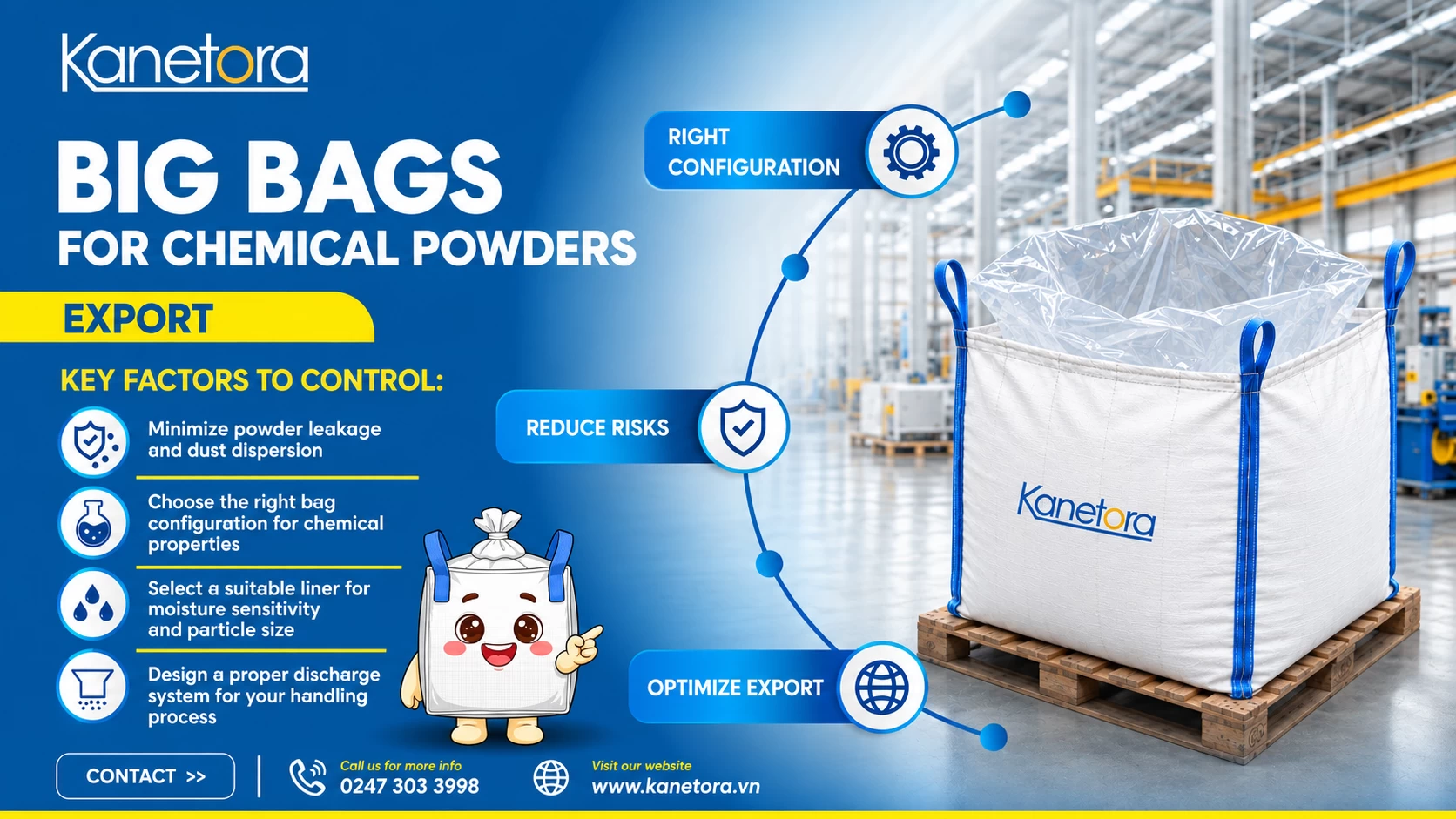
FIBC (Flexible Intermediate Bulk Container), commonly known as a jumbo bag or bulk bag, is an industrial packaging solution designed for transporting and storing large-volume materials such as:
- Plastic resins
- Minerals
- Cement
- Agricultural products
- Chemicals
- Food ingredients
- Industrial raw materials
Most FIBC bags are manufactured using woven polypropylene (PP) fabric with load capacities ranging from 500kg to over 2000kg depending on the design.
If you want to better understand different FIBC categories, you can also read:
- 4 Types of FIBC Bags Explained (Type A, B, C, D)
- How to Choose the Right Jumbo FIBC Bag for Different Industries
Can Jumbo Bags Be Reused?
The answer depends on the type of FIBC bag.
| FIBC Type | Reusability |
|---|---|
| Single Trip FIBC | Not recommended for reuse |
| Multi Trip FIBC | Designed for multiple uses |
| UN Certified FIBC | Reusable under strict conditions |
Not all bulk bags are engineered for multiple loading cycles.
Improper reuse may lead to:
- Bottom failure
- Broken lifting loops
- Transportation accidents
- Product contamination
- Workplace injuries
- Export compliance issues
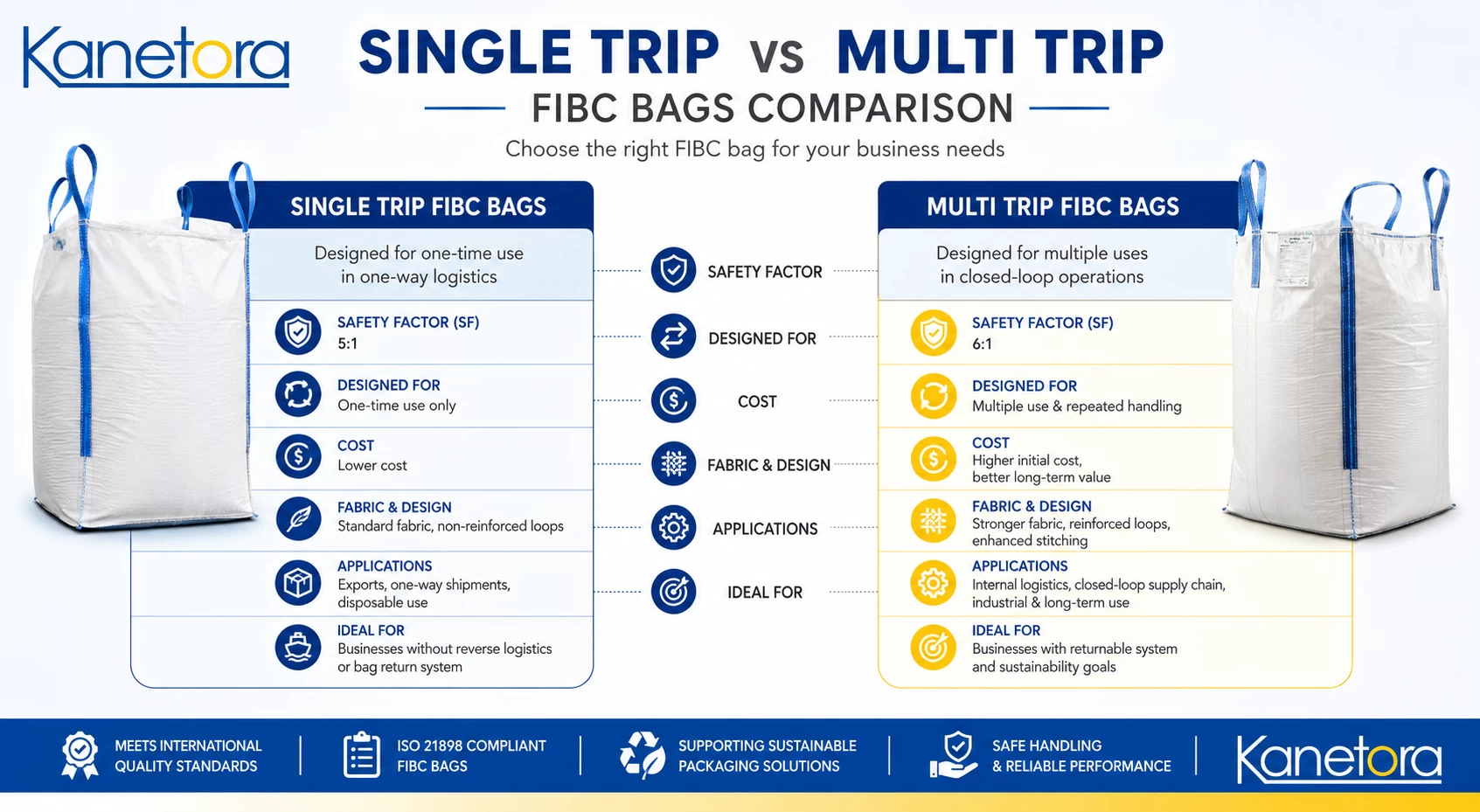
Single Trip vs Multi Trip FIBC Bags
1. What Is a Single Trip FIBC Bag?
A Single Trip FIBC is designed for:
- One transportation cycle
- One lifting cycle
- One logistics journey
These bags typically feature:
- Safety Factor 5:1
- Lower production cost
- Optimized design for one-way export operations
Common Applications
- Plastic resin exports
- Cement
- Minerals
- Agricultural products
Businesses can also explore real industrial applications here:
Top 5 Industries Using Jumbo FIBC Bags The Most in 2026
2. What Is a Multi Trip FIBC Bag?
A Multi Trip FIBC is specifically engineered for:
- Multiple reuse cycles
- Repeated lifting operations
- More demanding industrial environments
These bags generally include:
- Safety Factor 6:1
- Stronger woven fabric
- Reinforced lifting loops
- Stricter quality control standards
Common Applications
- Closed-loop logistics systems
- Internal factory circulation
- Industrial warehouses
- Circular supply chains
What Is Safety Factor (SF) in FIBC Bags?
Safety Factor represents the strength ratio between the bag’s Safe Working Load (SWL) and its tested breaking capacity.
For example:
If an FIBC bag has a SWL of 1000kg:
- SF 5:1 → tested up to 5000kg
- SF 6:1 → tested up to 6000kg
Common Standards
| Safety Factor | Typical Usage |
|---|---|
| 5:1 | Single Trip |
| 6:1 | Multi Trip |
| 8:1 | Special Applications |
Why Is Safety Factor Important?
Safety Factor directly affects:
- Lifting safety
- Product protection
- Reusability
- Transportation risk
- Operational reliability
Many businesses mistakenly assume:
“If the bag still looks good, it can still be reused.”
However:
- PP fibers degrade over time
- UV exposure weakens material strength
- Lifting loops suffer fatigue
- Structural integrity decreases after repeated use
Even visually intact bags may become unsafe.
When Should Businesses Reuse Jumbo Bags?
Businesses should only reuse FIBC bags when:
1. The Bag Is Designed for Multi Trip Usage
This is the most important requirement.
2. Regular Inspections Are Conducted
The bag should be checked for:
- Loop integrity
- Stitching quality
- Fabric damage
- Bottom stability
3. Stored Materials Do Not Damage the Bag
Certain chemicals or products may:
- Corrode materials
- Accelerate PP degradation
- Cause contamination
4. A Proper Logistics Management System Exists
Especially for:
- Internal factory operations
- Palletized handling systems
- Closed-loop supply chains
Businesses should also consider integrated packaging strategies such as:
Risks of Reusing FIBC Bags Improperly
Lifting Accidents
This is the most serious risk.
Weak or damaged bags may:
- Tear during lifting
- Fail at the bottom
- Drop heavy loads unexpectedly
Especially dangerous in:
- Ports
- Warehouses
- Container stuffing operations
- High-load industrial environments
Product Damage
Common issues include:
- Powder leakage
- Contamination
- Moisture exposure
- Product quality loss
International Compliance Problems
Many customers in:
- The United States
- Europe
- Japan
now require strict compliance regarding:
- Traceability
- Packaging lifecycle
- Reuse policies
- Safety documentation
International Standards Related to Reusable FIBC Bags
Several major standards apply to reusable FIBC packaging:
ISO 21898
International standard for FIBC bags.
UN Recommendations
Required for dangerous goods transportation.
BRC Packaging Standards
Important for food-grade applications.
FDA Compliance
Relevant for food-contact packaging materials.
Exporters should carefully verify:
- Load testing reports
- UV resistance certification
- Safety Factor documentation
- Batch traceability systems
You may also explore more packaging industry insights here:
Global Sustainable Packaging Trends in 2026
The packaging industry is rapidly shifting toward:
- Reusable packaging
- Circular economy models
- Carbon reduction strategies
- Sustainable logistics systems
Within the FIBC industry:
- Reusable bulk bags are becoming increasingly popular
- Recyclable liners are gaining attention
- Container loading optimization helps reduce transportation emissions
However:
Sustainability should never compromise operational safety.
Modern packaging solutions must balance:
- Durability
- Safety
- Efficiency
- Environmental responsibility
Businesses are also investing more in:
- FIBC + PE liner solutions
- Stretch hood film systems
- Optimized container loading packaging
Related reading:
Should Your Business Choose Single Trip or Multi Trip FIBC Bags?
Single Trip FIBC Is Suitable When:
- Exporting one-way shipments
- Cost optimization is the priority
- No reverse logistics system exists
- Packaging recovery is impractical
Multi Trip FIBC Is Suitable When:
- Operating closed-loop logistics
- Running continuous industrial operations
- Reducing packaging waste
- Maintaining strict quality control systems
Conclusion
FIBC jumbo bags can absolutely be reused — but only when they are properly designed, tested, and managed according to international safety standards.
Understanding:
- Single Trip vs Multi Trip
- Safety Factor classifications
- Inspection requirements
- International compliance standards
helps businesses:
- Reduce operational risks
- Optimize packaging costs
- Improve sustainability performance
- Meet global customer expectations
In 2026, packaging is no longer just about lower costs.
It is about:
Safer operations – smarter logistics – and sustainable industrial growth.