

For export-oriented manufacturers, packaging is not only about holding products safely. It directly affects warehouse space, container utilization, handling efficiency and total logistics cost.
This is especially true for dry bulk materials such as plastic resin, food ingredients, minerals, chemical powders and construction materials. When standard bulk bags expand outward after filling, they may lose their square shape, create wasted space inside containers and make stacking less stable.
That is where baffle bulk bags become a practical solution.
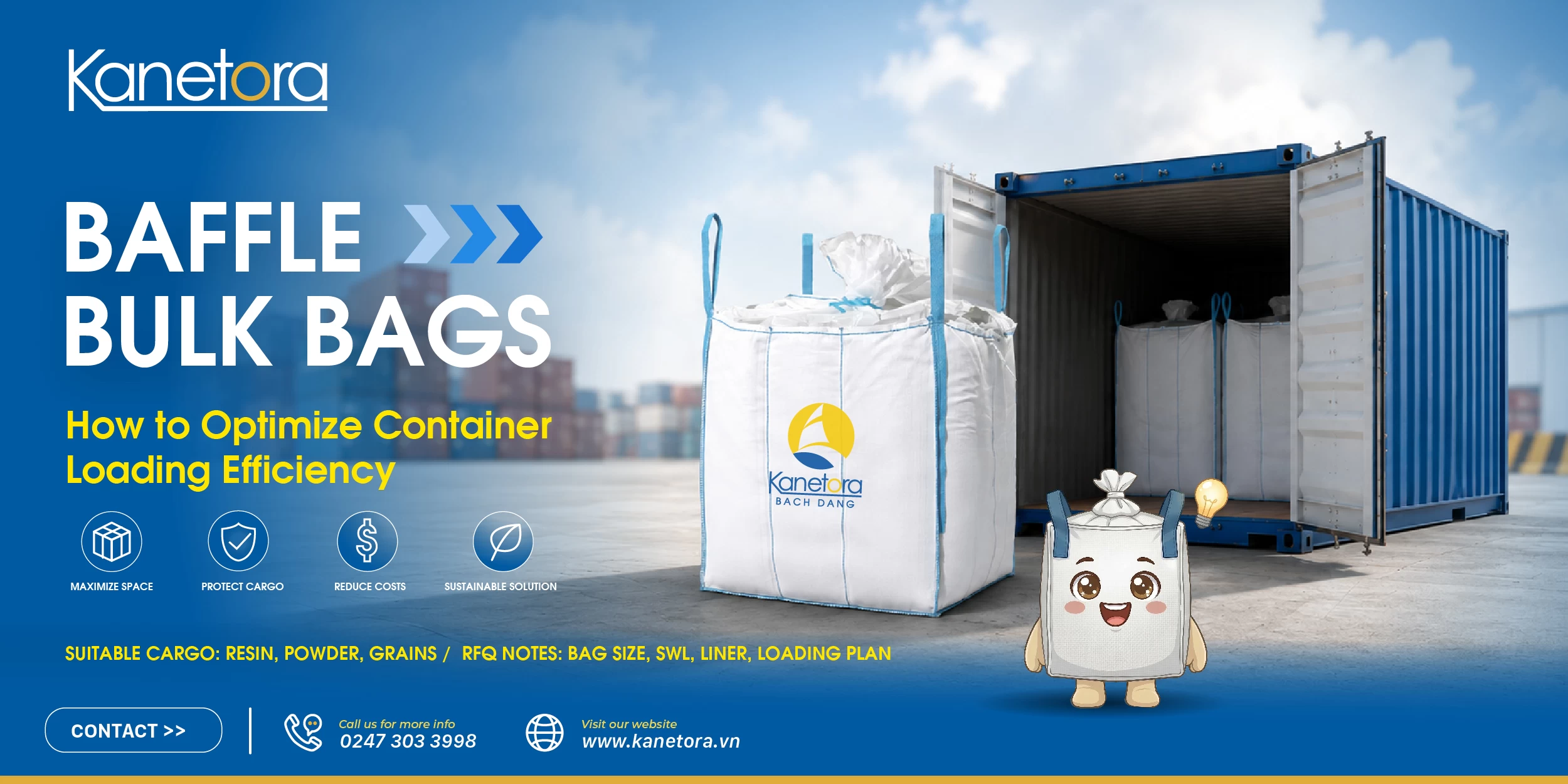
Also known as baffle FIBC bags or square bulk bags, this bag design helps maintain a more compact, box-like shape after filling. For exporters, the result can be better container loading efficiency, improved warehouse organization and more stable cargo handling throughout the supply chain.
Quick Answer: What Are Baffle Bulk Bags?
Baffle bulk bags are FIBC bags designed with internal fabric panels sewn into the corners of the bag. These panels help control side bulging and maintain a square shape when the bag is filled.
Unlike standard bulk bags, which often become rounded after loading, baffle bags keep a more structured form. This makes them suitable for export shipments where container space, pallet arrangement and stable stacking are important.
At Kanetora Packaging, baffle bulk bags can be customized based on product type, filling weight, bag dimensions, liner requirements, coating, lifting loops and discharge design.
Why Container Loading Efficiency Matters in Bulk Packaging
International shipping costs are influenced by both cargo weight and cargo volume. For many dry bulk products, poor packaging design can waste valuable container space even when the cargo weight has not reached the container’s limit.
Common loading issues include:
- Bag sides bulging after filling
- Irregular bag shape during stacking
- Gaps between bags inside the container
- Unstable pallet arrangement
- Higher handling risk during loading and unloading
- Reduced warehouse space efficiency before shipment
For exporters handling large volumes, even small improvements in container loading can make a meaningful difference across repeated shipments.
How Baffle Bulk Bags Improve Container Loading
The key feature of a baffle bulk bag is its internal baffle panels. These panels are usually sewn into the four corners of the bag, allowing product to flow through while supporting the bag walls.
This structure helps the bag maintain a more square shape instead of becoming rounded.
1. Maintaining a Square Shape
A standard FIBC bag may expand outward when filled, especially with free-flowing materials such as resin pellets, grains, flakes or powders. Baffle panels reduce this outward pressure and help the bag hold a cube-like structure.
This square shape allows bags to sit closer together during storage and container loading.
2. Reducing Wasted Space
When bags are rounded, empty gaps often appear between units. In container shipping, these gaps reduce space utilization.
Baffle bulk bags help reduce dead space by creating a more uniform footprint. This can support better loading plans for 20ft and 40ft containers, depending on bag dimensions, cargo density and pallet or non-pallet loading methods.
3. Improving Stacking Stability
Better shape retention can also improve stacking performance in warehouses and containers. A more stable bag shape helps reduce shifting during handling and transportation.
This is particularly important for export shipments that involve multiple logistics stages, including factory loading, inland trucking, port handling, sea freight and destination unloading.
4. Supporting Cleaner Warehouse Operations
For powders, granules and food ingredients, bag deformation may increase the risk of leakage or contamination if the wrong liner, seam or discharge design is used. Baffle bags can be combined with PE liners, coated fabric or dust-proof sewing to improve product protection.
For more information about liner options, read: What is an FIBC Liner? The Essential Protection Layer Inside Jumbo Bags.
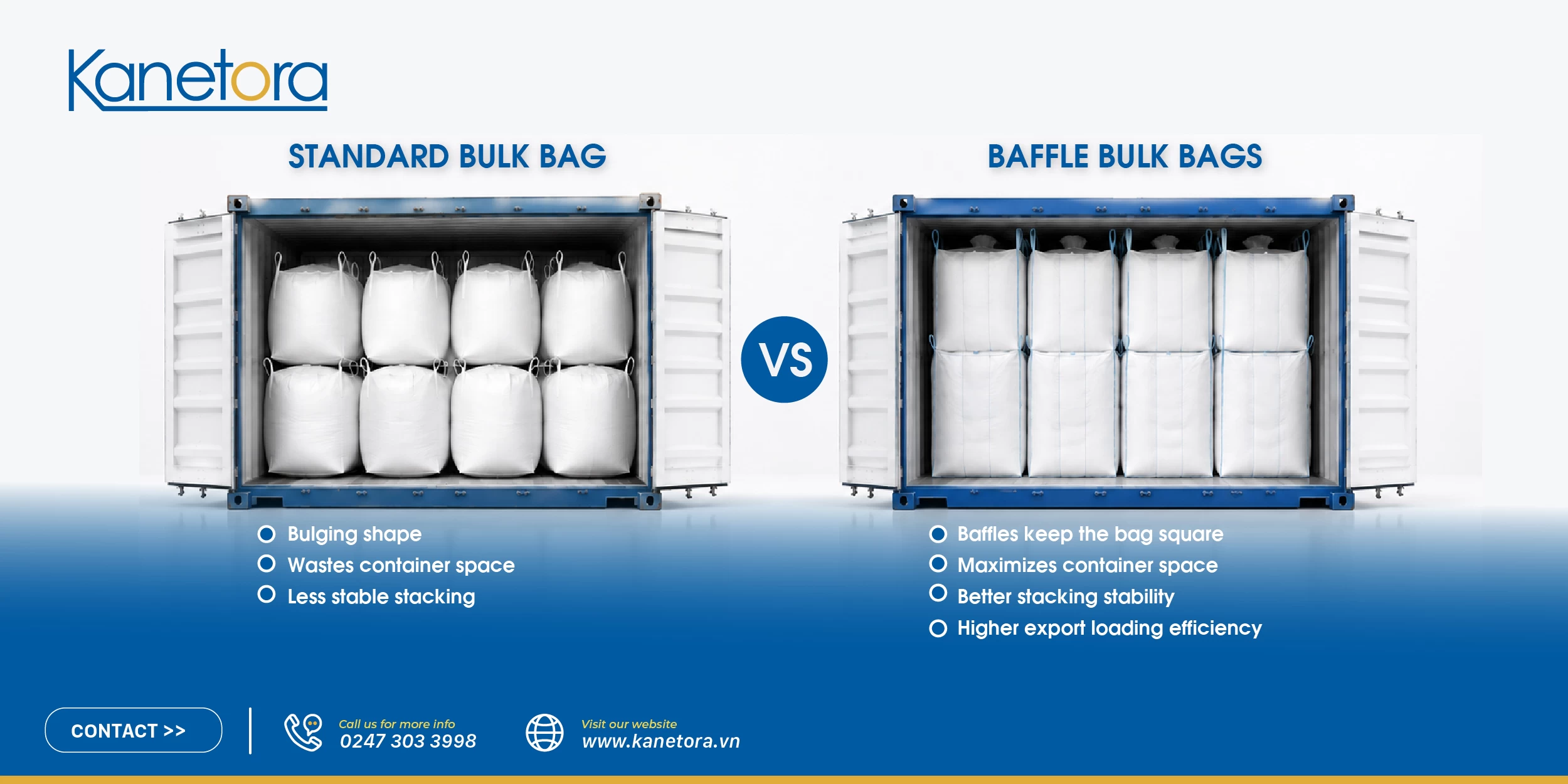
Baffle Bulk Bags vs. Standard Bulk Bags
| Criteria | Standard Bulk Bags | Baffle Bulk Bags |
|---|---|---|
| Shape after filling | More rounded | More square and compact |
| Container loading | May create empty gaps | Better space utilization |
| Stacking stability | Depends on material and filling level | Usually more stable |
| Cost | More economical | Higher unit cost but better logistics efficiency |
| Best use | General bulk handling | Export cargo, palletized storage, container optimization |
| Common cargo | Sand, general granules, low-cost materials | Resin, food ingredients, minerals, powders, high-value cargo |
A baffle bulk bag is not always necessary for every shipment. For low-cost cargo where shape optimization is not important, a standard U-panel or circular bag may still be sufficient. However, for exporters who need better storage efficiency and container planning, baffle bags are often worth considering.
Suitable Products for Baffle Bulk Bags
Baffle bulk bags are widely used across industries where cargo shape, cleanliness, storage efficiency and export handling are important.
Plastic Resin and Polymer Materials
Plastic resin exporters often need packaging that protects product quality while improving handling and container loading. Baffle bulk bags are suitable for PP, PE, PET, EVA, ABS, HIPS, recycled resin, pellets, flakes and regrind materials.
For resin packaging details, see: Bulk Bags for Plastic Resin Export: Safe Packaging for PP, PE & PET.
Food and Agriculture Products
Food ingredients such as rice, sugar, flour, starch, grains and feed materials may benefit from baffle bulk bags when clean handling, stable stacking and space-saving storage are required.
For sensitive food applications, buyers should consider food-grade materials, clean production conditions, liner options and relevant documentation. Read more: Food Grade FIBC Bags: Standards & Requirements.
Minerals and Construction Materials
For cement, calcium carbonate, fly ash, dry sand, gypsum and mineral powders, packaging must handle heavy loads, dust control and export transportation conditions.
Baffle bags can help improve container loading efficiency while supporting more stable stacking for dense materials. Related guide: FIBC Bags for Cement & Construction Materials.
Chemicals and Hazardous Materials
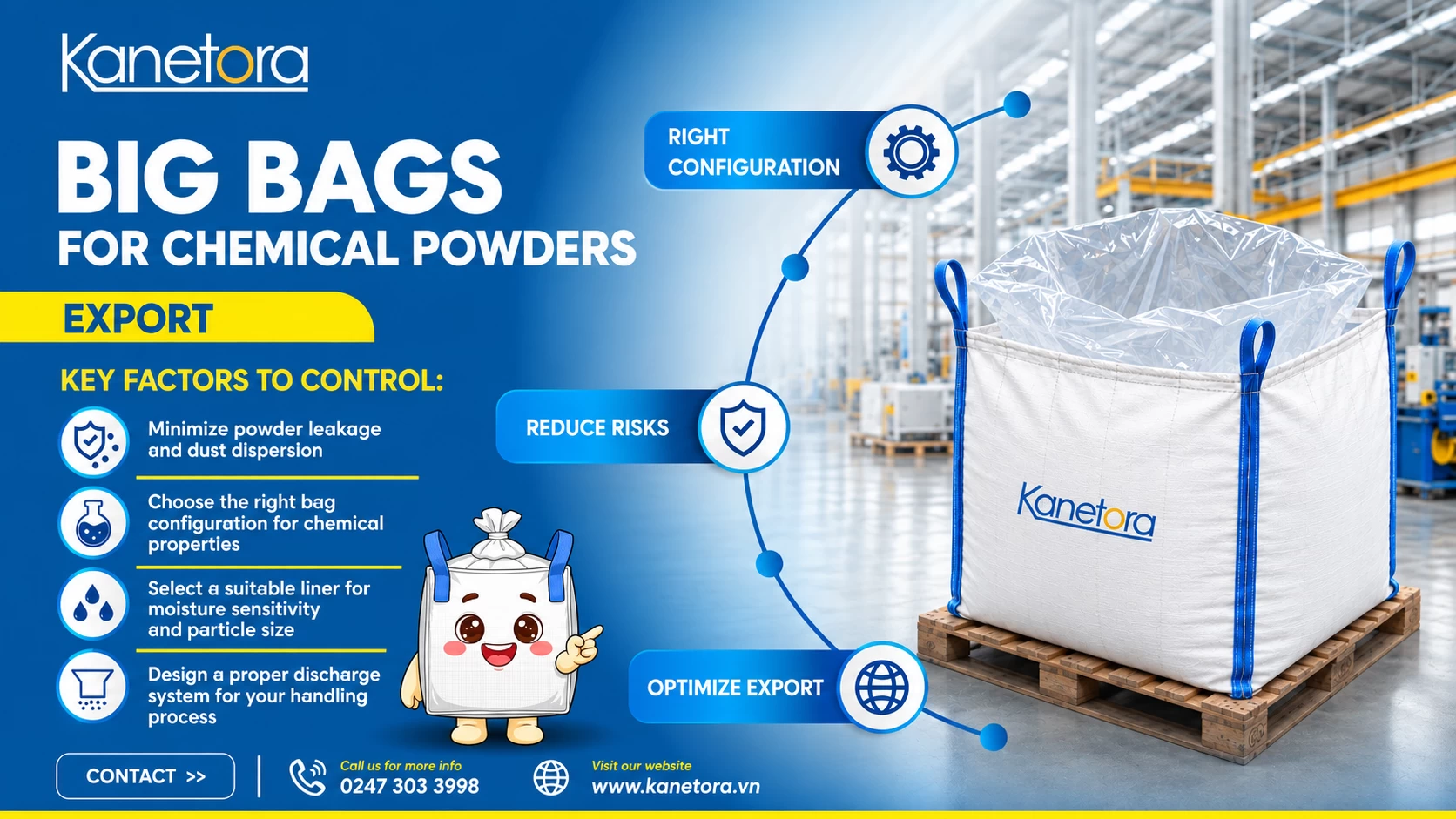
Some chemical products require anti-static properties, special liners, dust-proof seams or UN-certified packaging. In these cases, baffle construction should be specified together with the required safety standard.
For hazardous cargo, see: UN Certified FIBC Bags for Hazardous Materials Export.
Key Specifications Buyers Should Confirm
To get the best result from baffle bulk bags, buyers should provide clear technical information before requesting a quotation.
Important RFQ details include:
- Product type: powder, pellet, granule, flake or regrind
- Bulk density
- Target filling weight
- Required bag dimensions
- Container type: 20ft, 40ft or 40HQ
- Palletized or non-palletized loading
- Filling method: manual, semi-automatic or automatic
- Discharge method: flat bottom, discharge spout, conical bottom or full open bottom
- Liner requirement: standard PE liner, form-fit liner, baffle liner or aluminum barrier liner
- Coating requirement: uncoated, coated, anti-skid or moisture-resistant
- Safety Factor: commonly 5:1 or 6:1 depending on use
- Safe Working Load: based on cargo weight and handling method
- Certification or test requirements for destination markets
The more accurate the input data, the easier it is to design a bag that fits both product protection and logistics performance.
When Should Exporters Choose Baffle Bulk Bags?
Baffle bulk bags are especially recommended when:
- The cargo tends to make standard bags bulge
- Container space utilization is a key concern
- The shipment uses palletized loading
- The product needs better shape stability during storage
- The buyer wants cleaner and more organized warehouse handling
- The cargo is high-value, moisture-sensitive or contamination-sensitive
- The exporter wants to reduce logistics cost per ton over repeated shipments
However, if the product is very low-cost, not sensitive to deformation, or loaded in a way where container space is not a major issue, a standard FIBC bag may still be more cost-effective.
Kanetora’s Approach to Baffle FIBC Solutions
Kanetora provides customized FIBC packaging solutions for international buyers across plastics, chemicals, food, agriculture, minerals and construction materials.
For baffle bulk bags, Kanetora can support:
- Baffle bag construction based on cargo density and loading plan
- U-panel, 4-panel, circular and baffle FIBC designs
- Food-grade and industrial-grade options
- PE liner and baffle liner integration
- Coated or uncoated fabric
- Dust-proof sewing options
- Customized top and bottom design
- Export packing and container loading consultation
With integrated packaging capabilities, Kanetora can help buyers select not only the bag itself, but also the right combination of liner, coating, sewing style, lifting loops and discharge system.
Learn more about Kanetora’s packaging capability here: Kanetora Packaging.
Buyer Checklist Before Ordering Baffle Bulk Bags
Before confirming a baffle FIBC order, buyers should check:
- Does the product need a square bag shape for container loading?
- What is the bulk density of the material?
- Will the bag be stacked in warehouse or container?
- Is moisture protection required?
- Is product leakage or dust control a concern?
- Does the destination market require food-grade, UN or anti-static specifications?
- What filling and discharge equipment will be used?
- What container loading plan should the bag dimensions support?
A baffle bulk bag works best when it is designed around real handling conditions, not only around target capacity.
Conclusion
Baffle bulk bags are an effective packaging solution for exporters who want to improve container loading efficiency, reduce bag bulging and maintain more stable cargo handling.
By keeping a square shape after filling, baffle FIBC bags help optimize warehouse space, pallet arrangement and container utilization. For products such as plastic resin, food ingredients, minerals, powders and chemicals, this design can support safer and more efficient export operations.
Looking for customized baffle bulk bags for export cargo?
Contact Kanetora to discuss your product type, filling weight, bag dimensions, liner requirements and container loading plan. Our team can help you select a suitable FIBC solution for your supply chain.
FAQ
What is a baffle bulk bag?
A baffle bulk bag is an FIBC bag with internal fabric panels designed to maintain a square shape after filling. This helps reduce bulging and improve space utilization during storage and container loading.
Do baffle bags increase container loading efficiency?
Yes. By keeping a more compact and square shape, baffle bags can reduce empty gaps between bags and support better container space utilization.
Are baffle bulk bags suitable for plastic resin?
Yes. Baffle bulk bags are commonly used for plastic resin pellets, flakes, regrind and other polymer materials, especially when export loading efficiency and product protection are important.
Do baffle FIBC bags need inner liners?
Not always. However, liners are recommended for moisture-sensitive, contamination-sensitive or fine powder products. A baffle liner may also be used when both shape retention and product protection are required.
Are baffle bulk bags more expensive than standard FIBC bags?
Usually yes, because they require additional internal panels and more sewing work. However, the improved container loading efficiency and stacking stability may help reduce total logistics costs for suitable export shipments.