

In global food and agricultural supply chains, packaging is no longer only a container. It is part of product safety, export compliance, storage protection and brand reliability.
For products such as rice, grains, flour, starch, sugar, seeds, animal feed, whey protein and food ingredients, the wrong bulk packaging can lead to moisture damage, contamination risk, shipment rejection, product loss or customer claims.
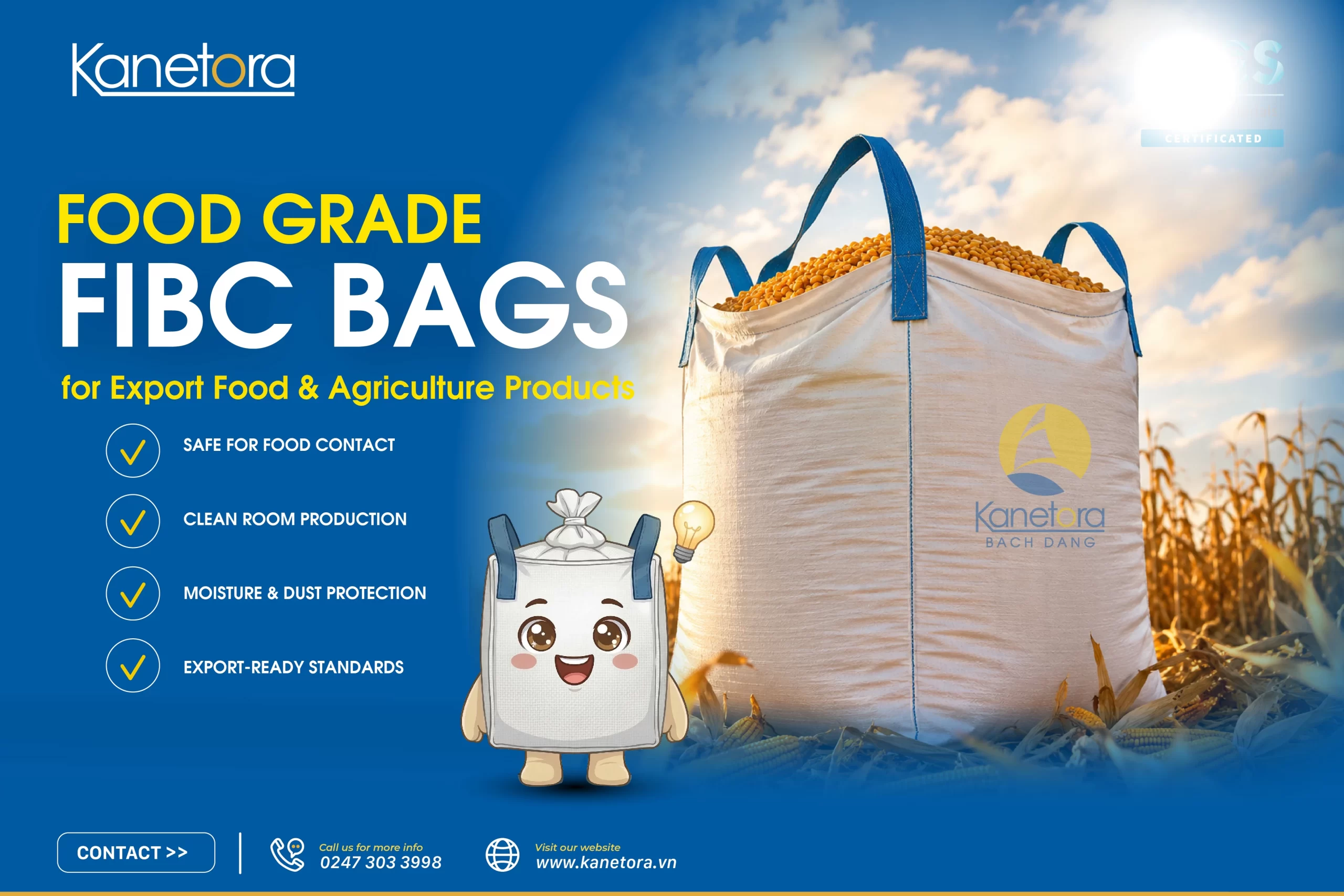
That is why food grade FIBC bags have become an important packaging solution for manufacturers, exporters, traders and international buyers handling bulk food and agricultural products.
Quick Answer: What Are Food Grade FIBC Bags?
Food grade FIBC bags are bulk bags designed for storing, handling and transporting food-related or food-contact products under controlled hygiene, material safety and quality requirements.
Compared with standard industrial FIBC bags, food grade FIBCs require stronger control over:
- Raw material quality
- Production cleanliness
- Contamination prevention
- Inner liner compatibility
- Traceability and documentation
- Export packing and handling safety
For buyers who need a deeper technical explanation of standards, certifications and cleanroom requirements, Kanetora has also prepared a detailed guide here: Food Grade FIBC Bags: Standards & Requirements.
Why Food and Agriculture Exporters Need Food Grade FIBC Bags
Food and agricultural products are often shipped across long distances, stored in warehouses, loaded into containers and exposed to changes in temperature and humidity.
During export, several risks may occur:
| Export Risk | Possible Impact on Products |
|---|---|
| Moisture and condensation | Caking, mold, fermentation, quality loss |
| Dust and foreign particles | Contamination and rejected shipments |
| Weak bag structure | Leakage, tearing or unsafe handling |
| Poor liner fixing | Filling and discharge problems |
| No traceability | Difficulty in quality investigation |
| Non-compliant materials | Food-contact compliance issues |
For many export-oriented businesses, choosing the right FIBC bag is not only a purchasing decision. It is a risk-control decision for the entire supply chain.
Common Food and Agriculture Products Packed in FIBC Bags
Food grade FIBC bags can be customized for a wide range of dry bulk products.
1. Rice, Grains and Cereals
Rice, corn, wheat, barley, beans and other grains require packaging that can support large-volume storage, forklift handling and containerized export.
Common solutions include:
- U-panel or circular FIBC bags
- Duffle top or inlet spout
- Flat bottom or discharge spout
- PE liner when moisture protection is required
- Food-grade production control
2. Flour, Starch and Powdered Ingredients
Powdered products are sensitive to dust leakage, moisture and contamination. For this category, buyers should consider:
- Food grade FIBC with clean finishing
- Coated fabric or dustproof seams
- PE inner liner or aluminum barrier liner
- Secure filling and discharge design
- Metal detection and final inspection
For moisture-sensitive powders, buyers can learn more from Kanetora’s guide on Moisture-Proof FIBC Bags.
3. Sugar, Salt and Food Additives
Sugar, salt and food additives can be affected by humidity, caking and hygiene risks. A suitable FIBC specification may include:
- 100% virgin polypropylene fabric
- Food-contact liner
- Moisture-resistant structure
- Clean packing method
- Strong lifting loops for warehouse handling
4. Seeds, Animal Feed and Agricultural Inputs
Seeds, feed ingredients and agricultural materials may not always require the same food-contact level as direct food ingredients. However, they still need stable packaging to protect against dust, moisture, pests and handling damage.
Recommended structures may include:
- Standard FIBC for dry agricultural inputs
- Food grade FIBC for sensitive feed or ingredient applications
- UV-resistant fabric for outdoor exposure
- Liner for moisture-sensitive cargo
- Custom printing and labeling for export shipments
5. Dairy Powders, Whey Protein and High-Value Ingredients
High-value food ingredients require stricter protection because even small contamination or moisture issues can lead to significant financial loss.
For these products, buyers should evaluate:
- Food grade production environment
- Suitable liner type
- Barrier performance
- Sealing quality
- Testing and documentation
- Export packing method
Food-Contact Requirements Buyers Should Check
Not all white bulk bags are food grade. A food grade FIBC should be evaluated based on material, production environment, documentation and final inspection.
1. 100% Virgin Polypropylene
Food grade FIBC bags should be made from 100% virgin polypropylene, not recycled or mixed material. Virgin PP helps ensure cleaner material control, stable mechanical performance and better compatibility with food-contact requirements.
For the U.S. market, food-contact polypropylene is commonly evaluated under FDA 21 CFR 177.1520, which covers olefin polymers including polypropylene. For the EU market, plastic materials intended to come into contact with food are regulated under Commission Regulation (EU) No 10/2011.
2. Certified Manufacturing System
International buyers often request evidence that the factory has a controlled manufacturing system. Important references may include:
- BRCGS / BRC Grade A for packaging material safety
- ISO 22000 for food safety management
- ISO 9001 for quality management
- ISO 14001 for environmental management
BRCGS describes its role as a global supply chain assurance program focused on protecting product integrity.
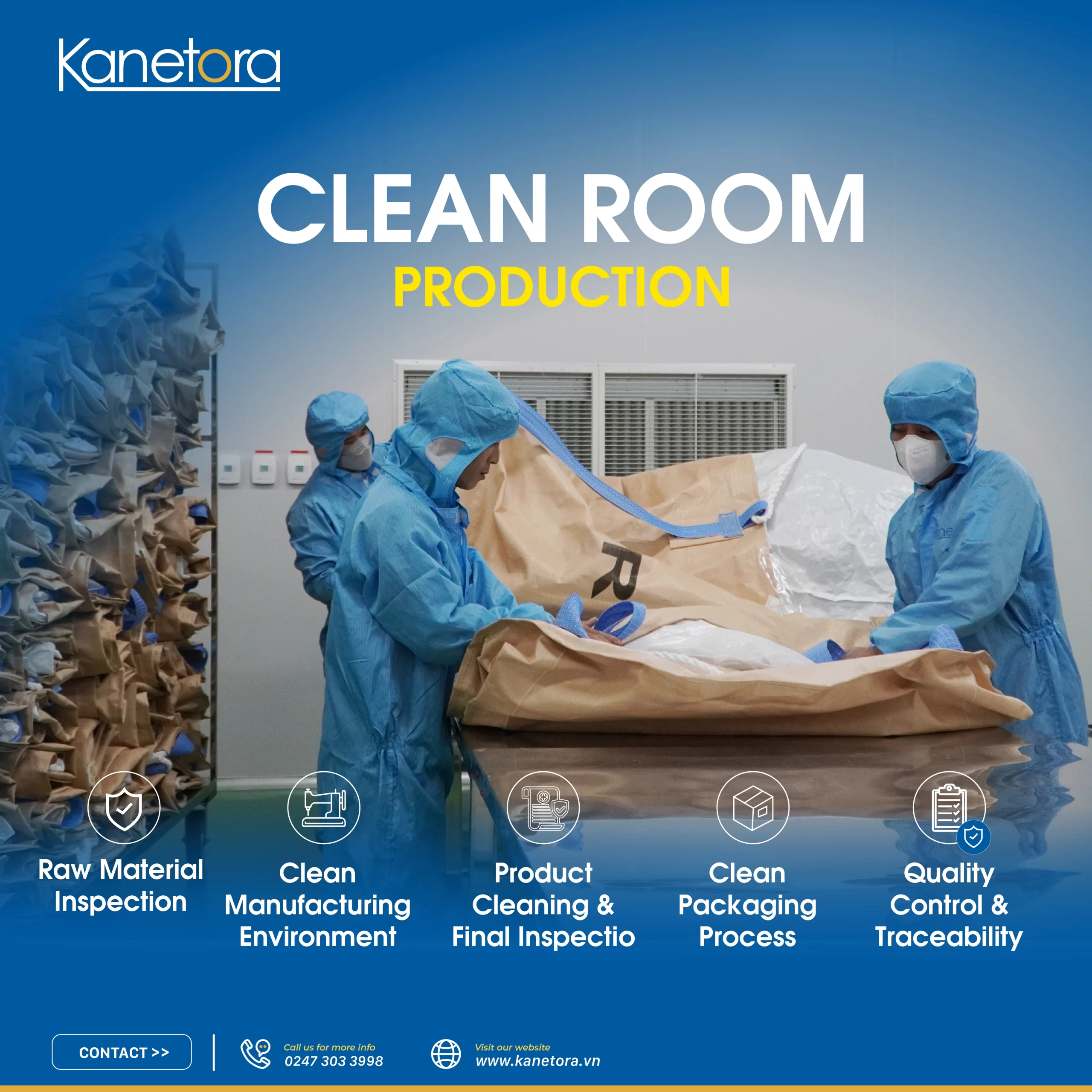
3. Controlled Production and Packing Environment
Food grade FIBC bags should be produced and packed in a controlled environment to reduce dust, loose threads, foreign particles and contamination risks.
At Kanetora, final packing for food grade FIBC bags is conducted in Cleanroom Class 10,000, with cleaning and inspection steps such as air blowing, micro-dust cleaning, metal detection and final visual inspection.
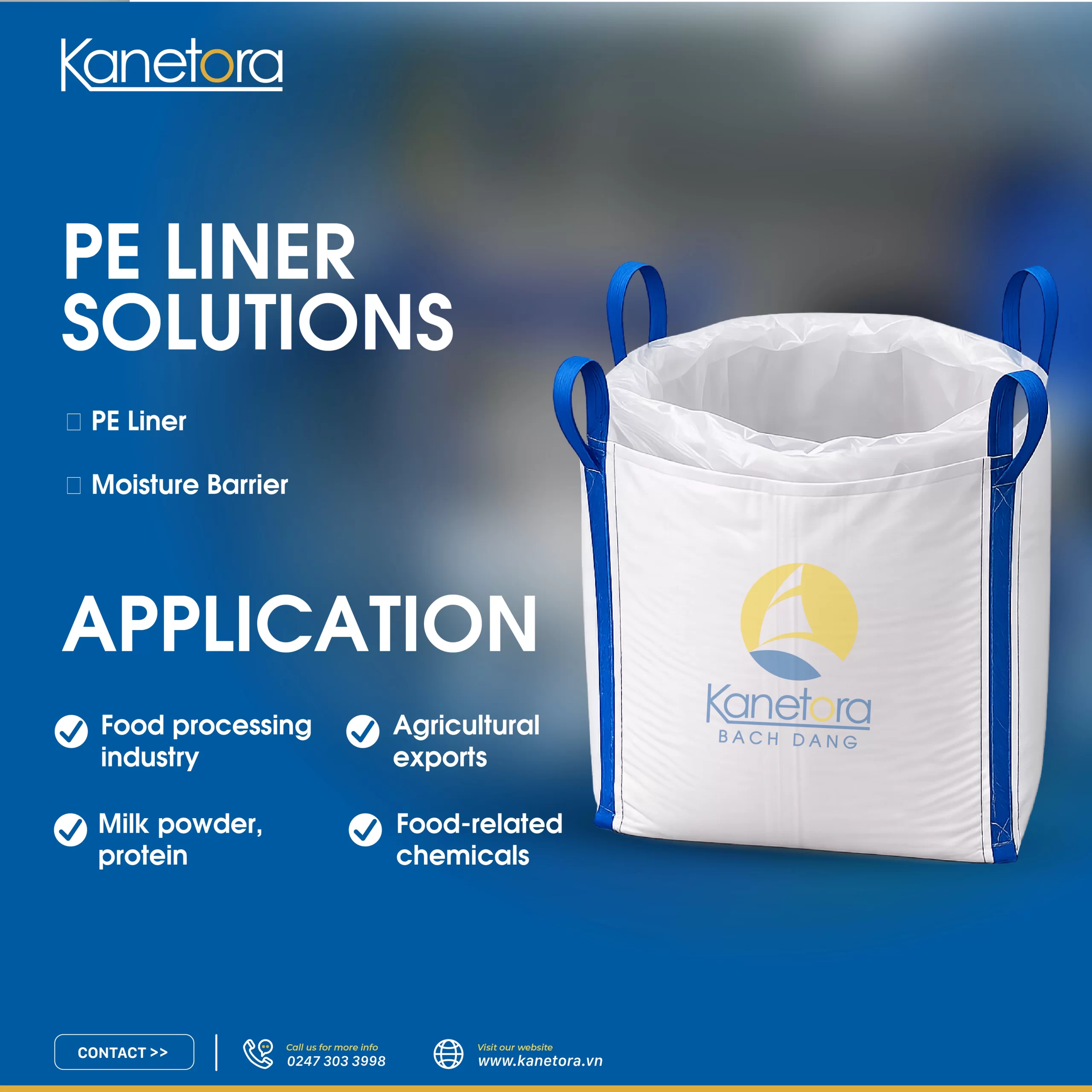
4. Inner Liner Selection
An FIBC liner is a plastic inner bag inserted into a jumbo bag to help protect products from moisture, contamination and product loss during storage and transportation.
For food and agriculture exports, liner selection depends on the product:
| Product Type | Suggested Liner Option |
|---|---|
| Rice, grains, seeds | PE liner when moisture control is required |
| Flour, starch, powders | PE liner or form-fit liner |
| Whey protein, milk powder | Food-contact liner with strong sealing control |
| Sugar and hygroscopic products | PE liner or barrier liner |
| High-value ingredients | Aluminum barrier liner for stronger moisture, oxygen and odor protection |
For a deeper explanation, read: What is an FIBC Liner?
5. Traceability and Quality Records
Food and agriculture buyers should ask suppliers about:
- Batch control
- Raw material records
- Production records
- QC inspection reports
- Final packing labels
- Container loading information
Traceability helps buyers investigate issues quickly and maintain confidence in repeated export orders.
How to Choose the Right Food Grade FIBC Bag
The right specification depends on the product, filling method, handling process and destination market.
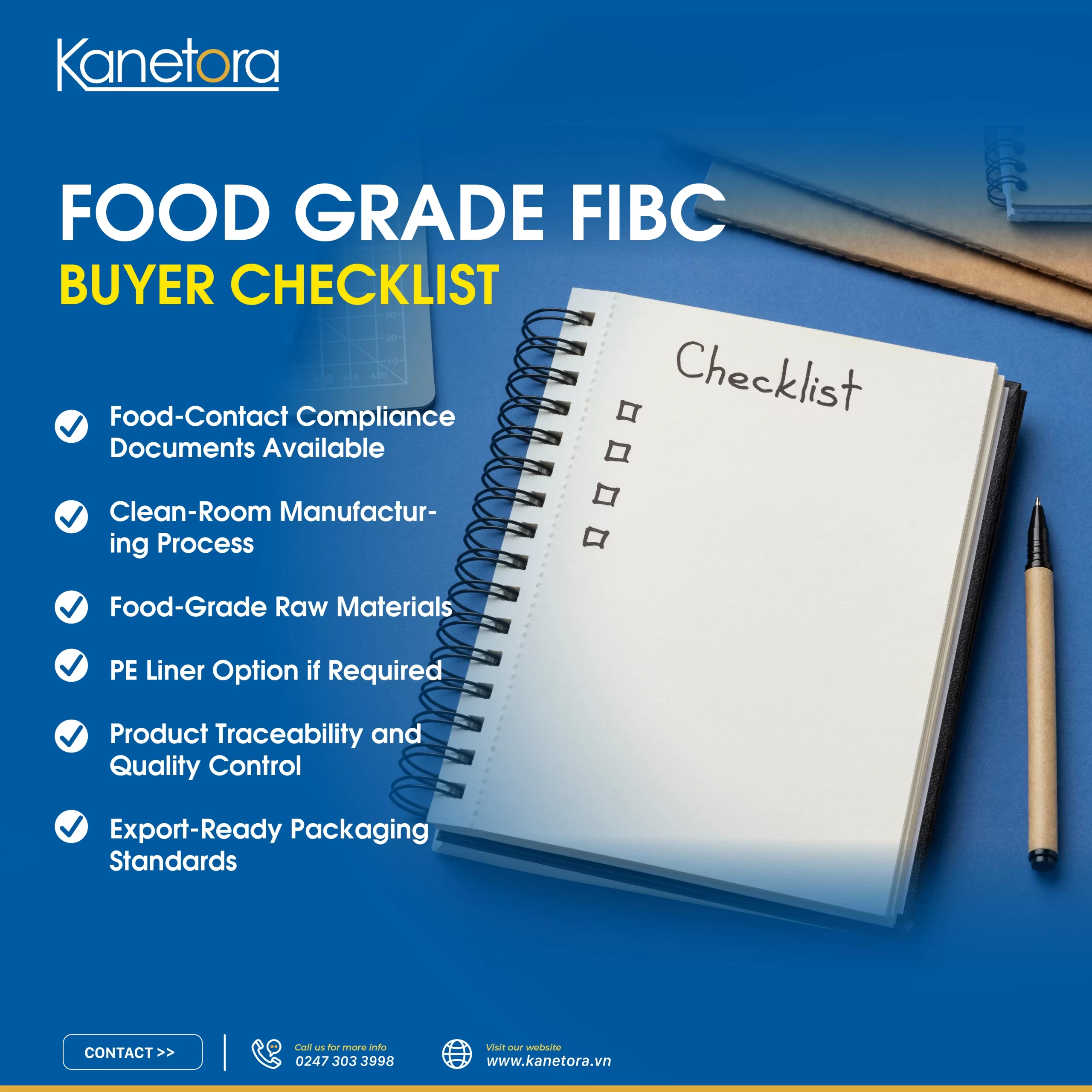
Buyer Checklist Before Ordering
Before requesting a quotation, buyers should prepare:
- Product name and characteristics
Powder, granule, flake, grain, seed, hygroscopic material or food ingredient. - Filling weight
Common FIBC loading weights include 500 kg, 1,000 kg, 1,250 kg, 1,500 kg or 2,000 kg depending on product density and handling method. - Required bag construction
U-panel, 4-panel, circular or baffle bag. - Top design
Open top, duffle top or inlet spout. - Bottom design
Flat bottom, discharge spout, conical discharge or full open discharge. - Liner requirement
No liner, PE liner, form-fit liner, conductive liner or aluminum barrier liner. - Coating requirement
Uncoated or coated fabric depending on dust control and moisture protection needs. - Food-contact requirement
BRC, ISO 22000, FDA-related, EU-related or other buyer-specific requirements. - Safety factor and safe working load
SWL and SF should match the cargo weight and lifting conditions. For more details, read SWL & SF: The Critical Numbers for Jumbo Bag Safety. - Export packing method
Bale quantity, pallet requirement, container loading plan and shipping destination.
For customized or private-label FIBC orders, buyers can also refer to: OEM/ODM Jumbo FIBC Bags: What Should Businesses Prepare Before Placing a Production Order?
Example Specification for Food and Agriculture Export
A typical food grade FIBC specification may include:
- Material: 100% virgin polypropylene
- Construction: U-panel, circular, 4-panel or baffle
- SWL: 500–2,000 kg depending on product and handling
- Safety Factor: 5:1 or 6:1 depending on usage
- Top: Duffle top or inlet spout
- Bottom: Flat bottom or discharge spout
- Liner: PE liner or aluminum barrier liner if required
- Coating: Optional coating for dust or moisture control
- Loops: Corner loops or cross-corner loops
- Printing: Customer logo, batch code or product identification
- Packing: Bale or palletized packing for export
- Documentation: Certificate, test report or QC record based on buyer requirement
Why Work With Kanetora for Food Grade FIBC Bags?
Kanetora supports international buyers with both trading capability and manufacturing-backed packaging expertise.
Through Kanetora Packaging, the company operates packaging production facilities in Northern Vietnam with a product portfolio including FIBC bags, sling bags, block-bottom valve bags and multilayer plastic films. The Kanetora Bach Dang factory has a listed FIBC capacity of 300,000 pcs/month and certifications including BRC Grade A, ISO 9001:2015, ISO 14001:2015 and ISO 22000:2018.
Key advantages include:
- Direct FIBC manufacturing capability
- Food grade packaging experience
- In-house liner and semi-finished component production
- Controlled production and packing process
- Customizable bag structure, liner, coating and printing
- Export-oriented consultation for global buyers
- Practical understanding of food, agriculture, plastics and industrial supply chains
For buyers handling food and agricultural products, this means the packaging solution can be selected based on real product behavior, filling conditions, export route and buyer requirements — not only based on bag price.
Practical Recommendation for Export Buyers
When buying food grade FIBC bags, do not start with the question:
“How much is one jumbo bag?”
A better question is:
“What FIBC specification will protect our product, meet our buyer’s hygiene requirements, fit our filling system and reduce export risks?”
For food and agricultural exports, the right packaging should support:
- Product cleanliness
- Moisture protection
- Safe lifting and handling
- Stable storage
- Efficient container loading
- Compliance documentation
- Long-term buyer confidence
Conclusion
Food grade FIBC bags play a critical role in export supply chains for food and agriculture products. From rice, grains, flour, starch and sugar to seeds, animal feed and high-value food ingredients, the right FIBC structure helps protect product quality, reduce contamination risk and improve shipment reliability.
For international buyers, food grade FIBC selection should consider not only material and price, but also clean production control, liner compatibility, safety factor, traceability, documentation and export packing.
Kanetora provides customized food grade FIBC bag solutions for businesses that need reliable, clean and export-ready bulk packaging for food and agricultural products.
Request a Packaging Consultation
Looking for food grade FIBC bags for rice, flour, sugar, grains, seeds, animal feed or food ingredients?
Contact Kanetora to discuss your product type, filling weight, liner requirement, export destination and buyer standards.
Contact Kanetora for technical consultation and a suitable packaging recommendation.
FAQ
Are all white FIBC bags food grade?
No. A white FIBC bag is not automatically food grade. Food grade FIBC bags require controlled raw materials, hygiene management, production control, inspection, documentation and suitable packing conditions.
What products can be packed in food grade FIBC bags?
Food grade FIBC bags can be used for products such as rice, grains, flour, starch, sugar, whey protein, dairy powders, seeds, animal feed ingredients and food additives, depending on the exact specification.
Do food grade FIBC bags need an inner liner?
Not always. Dry grains or less sensitive products may not require a liner, but powders, hygroscopic products and high-value food ingredients often benefit from PE liners, form-fit liners or aluminum barrier liners.
What is the best FIBC structure for agricultural products?
It depends on the product density, filling method and handling process. U-panel and circular bags are common choices, while baffle bags can help improve shape stability and container loading efficiency.
What should buyers prepare before ordering food grade FIBC bags?
Buyers should prepare product type, filling weight, bag dimensions, top and bottom design, liner requirement, coating requirement, SWL, safety factor, destination market and required documentation.
Can Kanetora customize food grade FIBC bags?
Yes. Kanetora can support customized food grade FIBC specifications based on product characteristics, hygiene requirements, liner needs, lifting method, printing, packing and export requirements.