

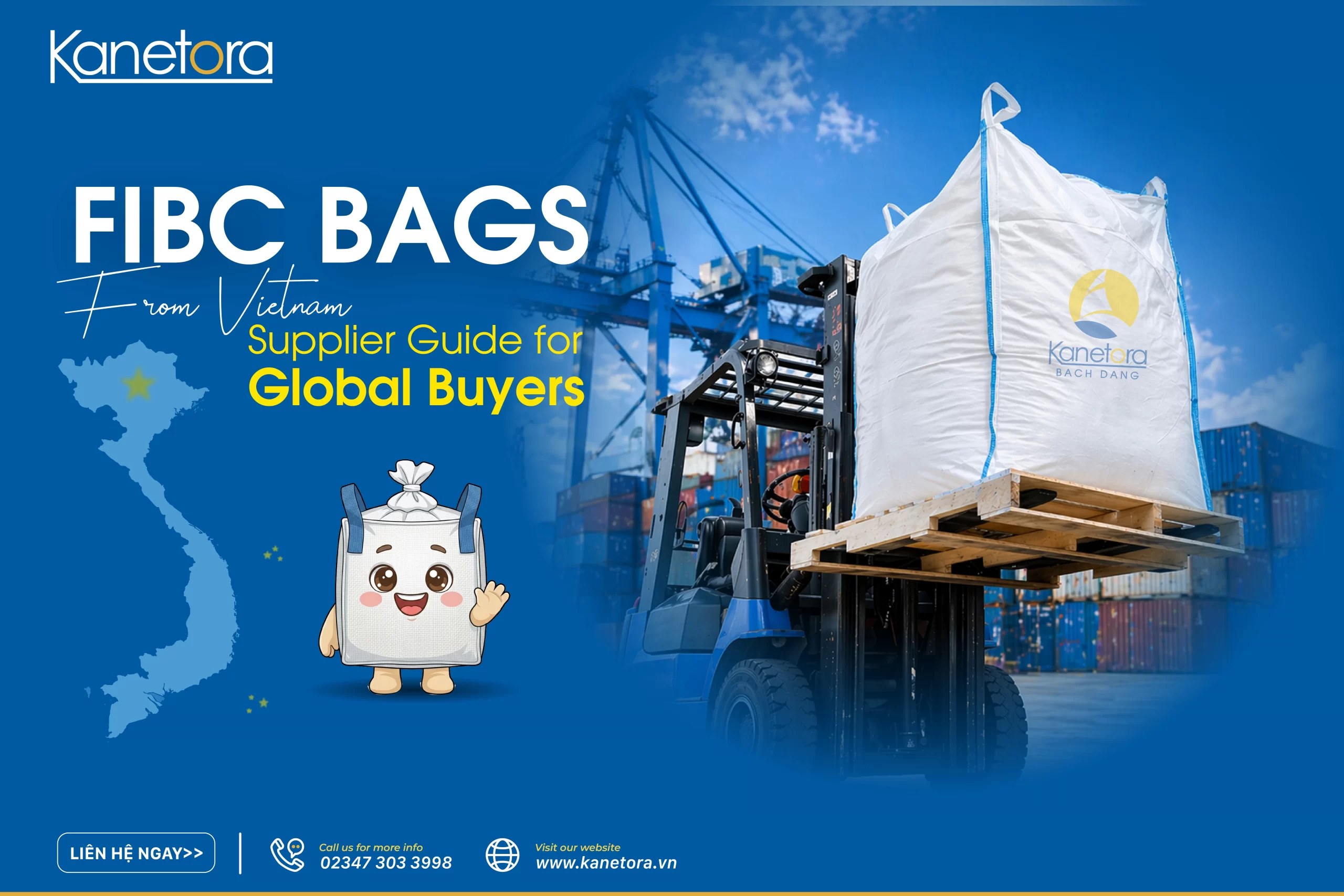
Vietnam is becoming an increasingly attractive sourcing destination for international buyers looking for reliable FIBC bags, also known as bulk bags or jumbo bags. With competitive manufacturing costs, improving production standards, and strong export capability, Vietnam offers a practical alternative for companies that require stable quality, flexible customization, and long-term supplier support.
For global buyers, choosing an FIBC supplier is not only about price. A suitable supplier should be able to understand product requirements, recommend the right bag structure, provide relevant certifications, maintain consistent quality, and support export documentation. This guide outlines the key factors buyers should consider when sourcing FIBC bags from Vietnam.
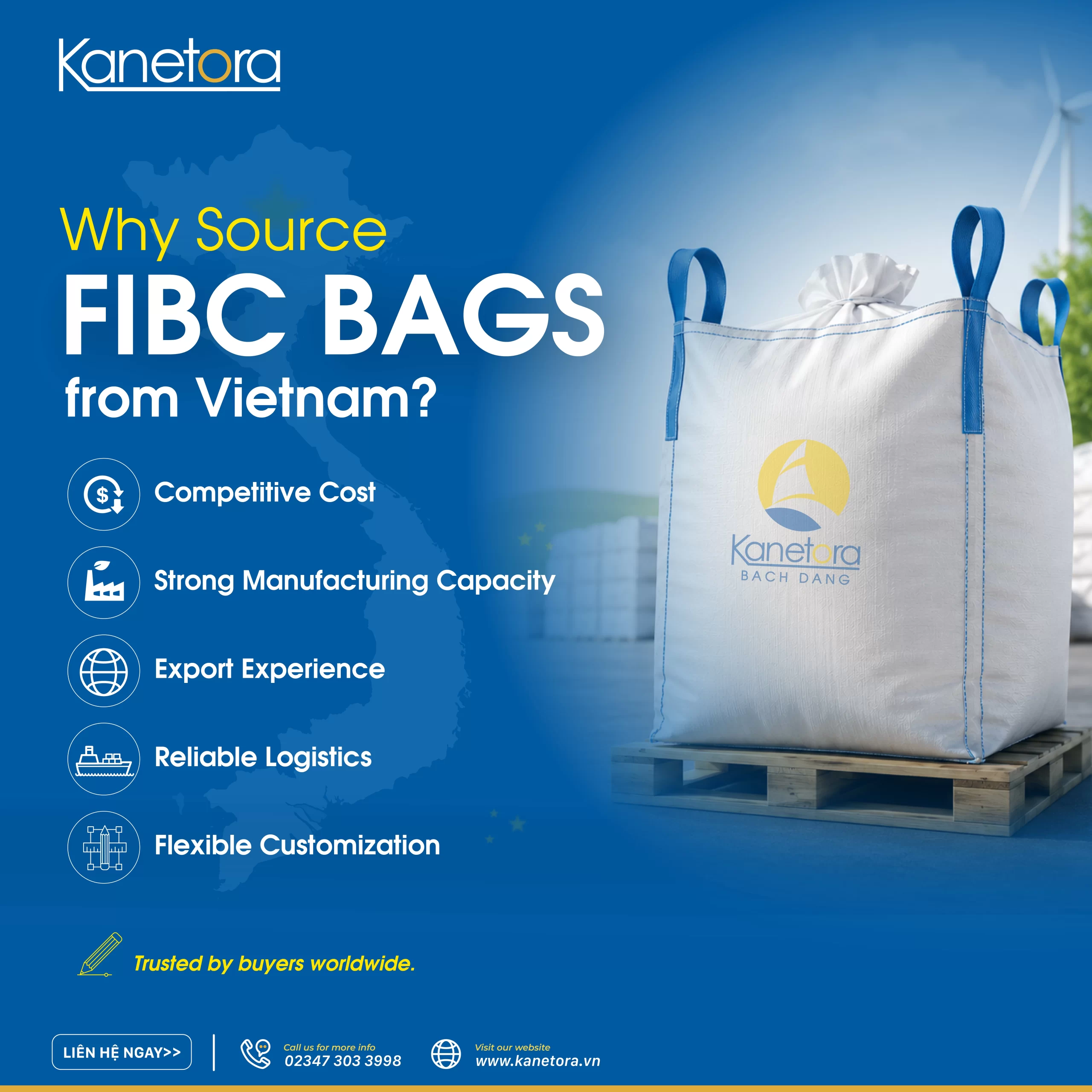
Why Source FIBC Bags from Vietnam?
Vietnam has developed a strong industrial packaging manufacturing base, especially for woven polypropylene packaging products such as FIBC bags, PP woven bags, block bottom valve bags, and flexible film solutions.
For international buyers, Vietnam offers several sourcing advantages:
First, Vietnam provides competitive production costs while maintaining reliable quality standards. This is important for buyers who need stable packaging supply without compromising product safety.
Second, many Vietnamese manufacturers have experience serving export markets. This allows them to better understand international requirements related to quality inspection, packaging, labeling, documentation, and container loading.
Third, Vietnam’s manufacturing ecosystem is increasingly flexible. Buyers can source standard FIBC bags as well as customized bags with liner, coating, printing, baffle, anti-UV treatment, dustproof design, or food-grade specifications.
At Kanetora Bach Dang, FIBC bags are manufactured through a standardized 8-step production process including extrusion, belt weaving, fabric weaving, laminating, cutting/printing, sewing, inspection, and packing. This production flow helps ensure product durability, safety, and international quality compliance.
Key FIBC Bag Types Global Buyers Should Know
Choosing the right FIBC bag depends on the product being packed, filling method, discharge method, storage condition, transportation requirement, and safety standard.
1. U-Panel FIBC Bags
U-panel bags are made from one U-shaped fabric panel combined with two side panels. This structure reduces the number of seams compared with 4-panel bags and offers good strength for many industrial applications.
They are commonly used for minerals, agricultural products, plastic resin, chemicals, and construction materials.
2. 4-Panel FIBC Bags
4-panel FIBC bags are constructed from four side panels and one base panel. When filled, they usually maintain a more square shape than circular bags, making them suitable for palletizing, stacking, and container loading.
This type is often selected when dimensional stability and storage efficiency are important.
3. Circular / Tubular FIBC Bags
Circular FIBC bags are made from tubular woven fabric with fewer side seams. They are suitable for many dry bulk products and are often used when buyers need a simple, cost-effective structure.
4. Baffle FIBC Bags
Baffle bags are designed with internal baffle panels that help the bag maintain a square shape after filling. This improves stacking stability and container utilization.
They are especially useful for export shipments where space optimization can directly affect logistics costs.
5. FIBC Bags with Liner
FIBC bags with inner liners provide additional protection against moisture, dust, contamination, and leakage. Liners may be lay-flat, gusseted, fixed with tabs, conductive, aluminum barrier, or customized according to product sensitivity.
Kanetora Bach Dang provides multiple liner solutions, including standard liners, liners on roll, liner top and bottom flanges, reinforced side seal flange liners, conductive liners, aluminum barrier film, and baffled liners.
6. Food-Grade FIBC Bags
Food-grade FIBC bags are used for sensitive products such as rice, flour, sugar, starch, whey protein, and food ingredients. These bags require stricter production control, hygiene management, cleaning procedures, and traceability.
For buyers in the food, pharmaceutical, and ingredient industries, food safety certification is one of the most important supplier selection criteria.
Common Applications of FIBC Bags
FIBC bags are widely used across many industries because they are strong, flexible, and efficient for dry bulk handling.
Common applications include:
| Industry | Typical Products |
|---|---|
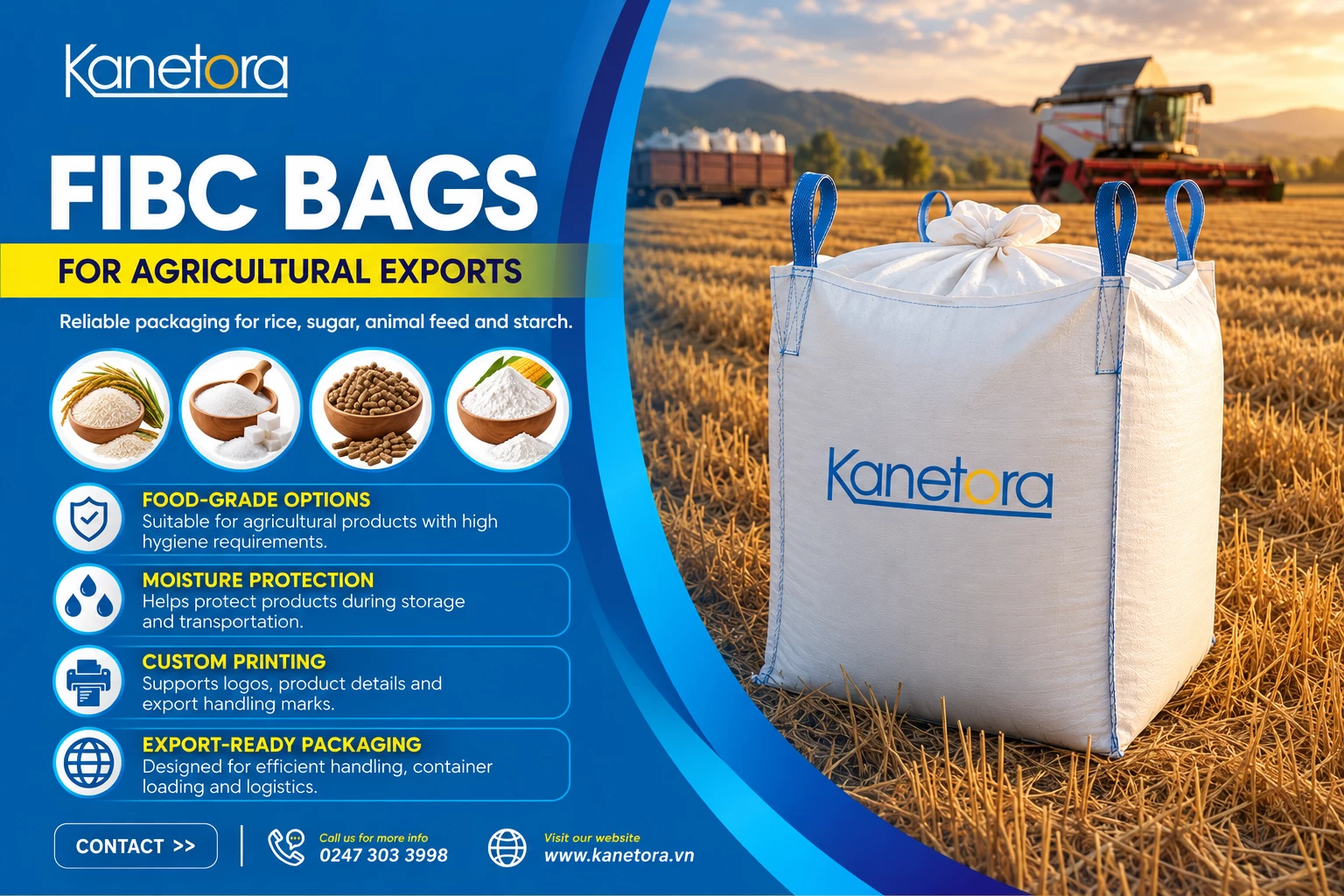
| Agriculture | Rice, seeds, animal feed, starch, fertilizer |
| Food ingredients | Flour, sugar, whey powder, food additives |
| Plastics & chemicals | PP, PE, PET resin, powders, granules |
| Minerals & construction | Sand, cement, calcium carbonate, minerals |
| Industrial materials | Recycled materials, pellets, flakes, compounds |
According to Kanetora Bach Dang’s application segmentation, FIBC bags serve multiple sectors including food, mineral and building materials, plastic and chemical, and other industries.
Supplier Checklist: How to Choose an FIBC Bag Manufacturer in Vietnam
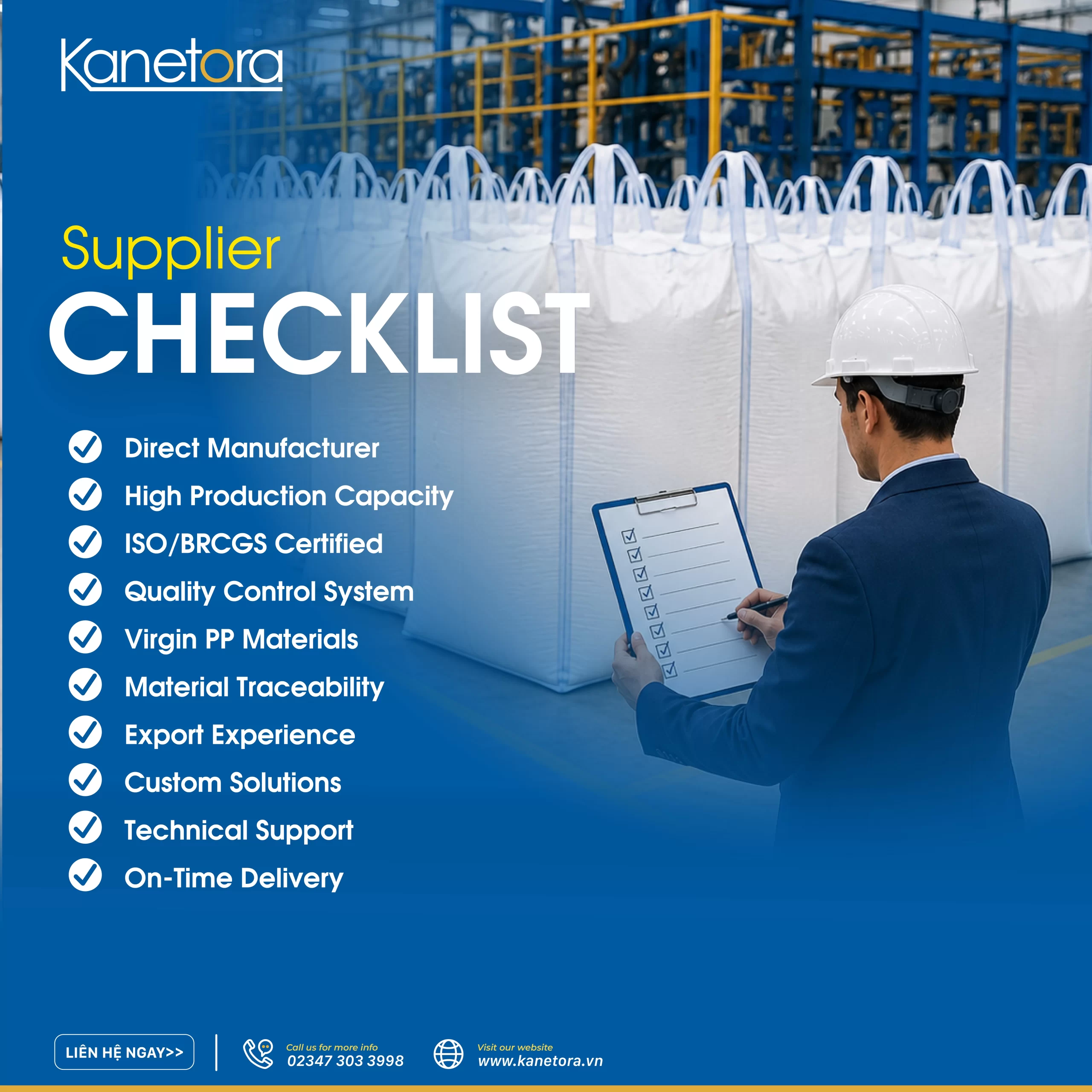
Before selecting a Vietnamese FIBC supplier, global buyers should evaluate both production capability and quality management system.
1. Manufacturing Capacity
A reliable supplier should have sufficient production capacity to handle regular orders, seasonal demand, and urgent shipments.
Buyers should check:
- Monthly FIBC bag capacity
- Number of sewing lines and workers
- In-house production of fabric, belt, liner, label, and document pouch
- Ability to handle customized specifications
- Container loading and packing capability
Kanetora Bach Dang has a production capacity of approximately 300,000 FIBC bags per month, along with block bottom valve bags and multilayer plastic film production capability.
2. Production Equipment
Modern equipment helps improve consistency, lead time, and product quality.
Important equipment includes:
- Yarn extrusion machines
- Loom weaving machines
- Belt weaving machines
- Coating machines
- Automatic cutting machines
- Printing machines
- Sewing machines
- Liner blowing machines
- Cleaning machines
- Metal detectors
- Tensile and UV testing machines
Kanetora Bach Dang’s production system includes PP/mono yarn extruders, loom weaving machines, coating machines, automatic cutting machines, sewing machines, blowing machines, cleaning machines, metal detectors, UV testing machine, tensile testing machine, and top lift test equipment.
3. Quality Control and Quality Assurance
For FIBC bags, quality control must cover every stage of production, not only final inspection.
Buyers should ask whether the supplier controls:
- Yarn denier and tensile strength
- Fabric GSM and weaving density
- Belt strength
- Seam strength
- Loop attachment quality
- Coating thickness
- Liner sealing quality
- Printing accuracy
- Metal contamination risk
- Final bag dimensions
- Safe working load and safety factor
Kanetora Bach Dang applies both in-process QC and final QA inspection. QC staff are assigned to sewing lines, while the QA department conducts final inspections before shipment.
Certifications Global Buyers Should Request
Certifications are essential when sourcing FIBC bags for export, especially for food, chemical, pharmaceutical, and hazardous material applications.
Depending on the application, buyers may request:
ISO 9001:2015
ISO 9001 confirms that the supplier operates a quality management system. This is a basic requirement for many international buyers.
ISO 14001:2015
ISO 14001 demonstrates environmental management commitment, which is increasingly important for global supply chains.
ISO 22000:2018
ISO 22000 is important for food-contact packaging and food-related supply chains.
BRCGS / BRC Grade A
BRC certification is highly relevant for food-grade FIBC bags, as it reflects strict hygiene, safety, and quality management.
Kanetora Bach Dang holds certifications including ISO 9001:2015, ISO 14001:2015, ISO 22000:2018, and BRC Grade A.
Food Contact Test Reports
For food-grade applications, buyers may also request test reports related to food contact regulations, such as EU Regulation No. 10/2011 or US FDA requirements.
Kanetora Bach Dang’s company introduction includes PASS conclusions for EU Regulation No. 10/2011 food contact plastic testing and US FDA 21 CFR 177.1520 for polypropylene homopolymer.
RFQ Information: What Buyers Should Prepare
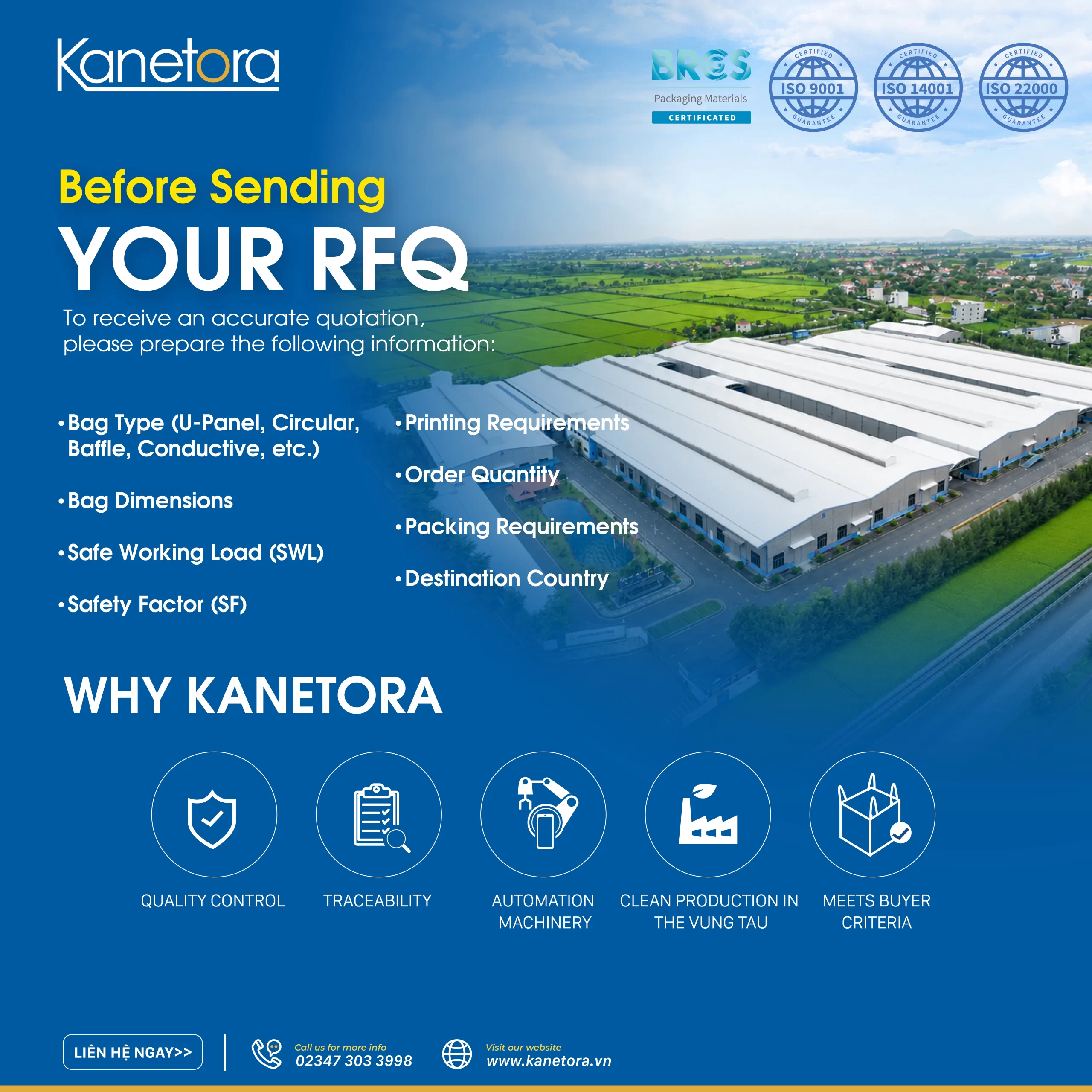
A clear RFQ helps suppliers quote accurately and recommend the right FIBC structure. Incomplete information often leads to incorrect pricing, unsuitable bag design, or unnecessary back-and-forth communication.
When sending an RFQ, buyers should prepare the following information:
| RFQ Item | Information Needed |
|---|---|
| Product packed | Powder, granule, pellet, flakes, food ingredient, chemical, mineral |
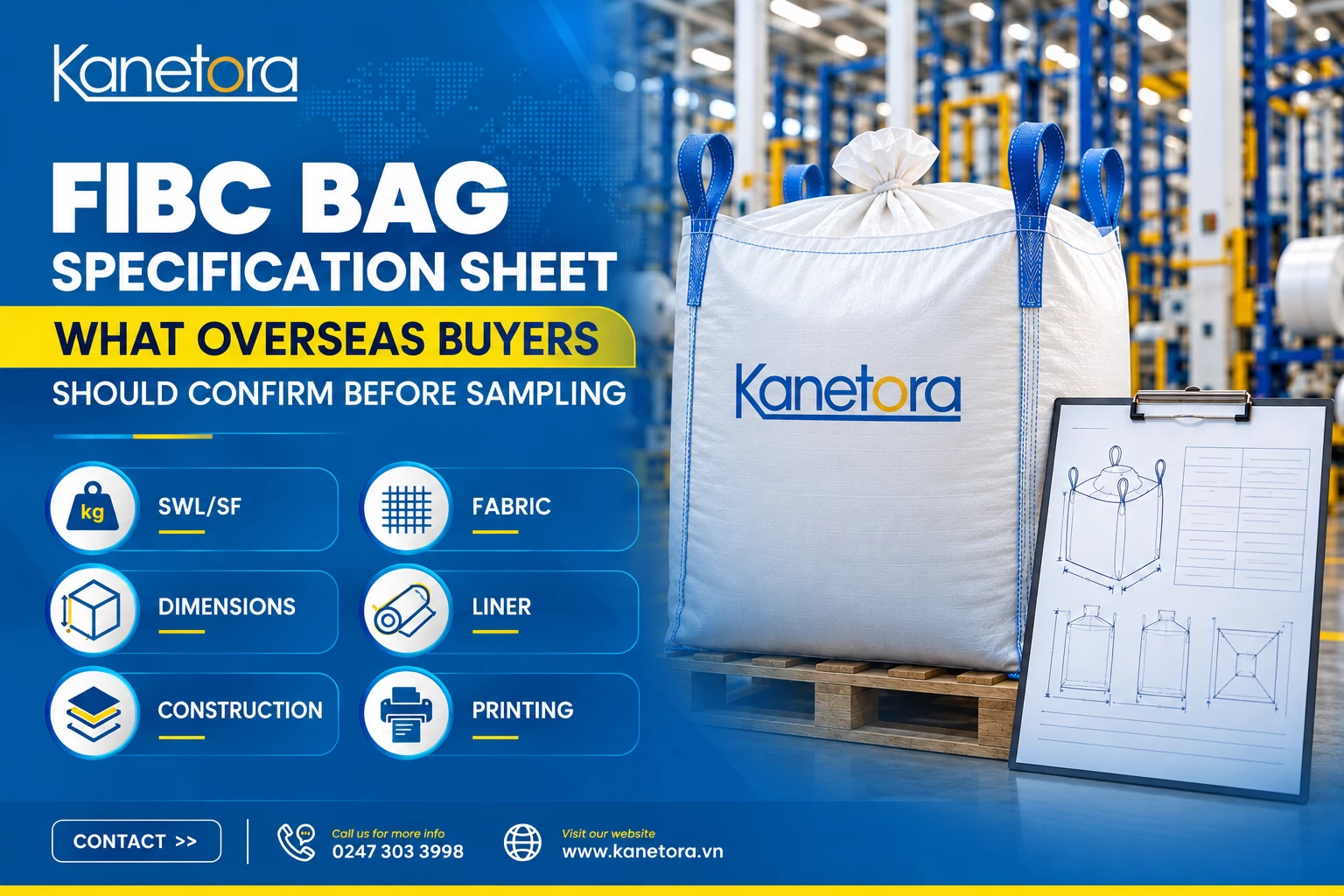
| Bag dimension | Width × length × height |
| Safe Working Load | 500 kg, 1,000 kg, 1,500 kg, 2,000 kg or customized |
| Safety Factor | 5:1, 6:1, or other requirement |
| Bag construction | U-panel, 4-panel, circular, baffle |
| Fabric | GSM, coated or uncoated, anti-UV if required |
| Top design | Open top, duffle top, filling spout |
| Bottom design | Flat bottom, discharge spout, full open discharge |
| Lifting option | Corner loops, cross-corner loops, stevedore loops, sling bag |
| Liner | No liner, PE liner, conductive liner, aluminum barrier, baffle liner |
| Printing | Logo, handling marks, product information |
| Certification | Food grade, BRC, ISO, UN, FDA, EU food contact |
| Quantity | Trial order or commercial order |
| Delivery term | FOB, CIF, CFR, EXW |
| Destination port | Required for freight estimation if needed |
The more detailed the RFQ, the more accurate the technical recommendation and quotation.
Common Mistakes When Sourcing FIBC Bags
Many buyers compare FIBC bags only by unit price. However, the cheapest option is not always the most cost-effective.
Common mistakes include:
Choosing the Wrong Bag Structure
A circular bag may be economical, but a baffle bag may provide better container utilization. A flat bottom may be simple, but a discharge spout may save unloading time.
Ignoring Product Characteristics
Powder, granules, flakes, and moisture-sensitive materials require different bag designs. For example, fine powder may require dustproof seams or liner, while food ingredients may require food-grade production control.
Not Checking Certifications
For food-grade or regulated products, certificates and test reports are not optional. Buyers should verify certification scope, validity, and relevance to the product application.
Underestimating Quality Inspection
A good supplier should provide inspection control from raw material to final packing. Final inspection alone may not be enough for consistent export quality.
Sending an Incomplete RFQ
Missing information about SWL, dimensions, liner, coating, or filling/discharge method may result in inaccurate pricing or unsuitable design.
Why Choose Kanetora Bach Dang as Your FIBC Bag Supplier in Vietnam?
Kanetora Bach Dang is a Vietnam-based FIBC bag manufacturer and a key part of Kanetora Corporation. The company carries forward the experience of But Son Packaging, which was established in 1996, giving the organization nearly 30 years of packaging manufacturing experience.
For global buyers, Kanetora Bach Dang offers several strengths:
Strong Manufacturing Capacity
With FIBC bag capacity of approximately 300,000 pieces per month, Kanetora Bach Dang can support both regular export orders and customized packaging projects.
In-House Semi-Finished Production
Many semi-finished components are produced internally, including sling belts, webbings, labels, document pouches, liners, and other parts used in FIBC bag production. This helps improve quality consistency and lead time.
Comprehensive Product Range
The company provides FIBC bags, sling bags, block bottom valve bags, and multi-layer PE film. FIBC options include Type A, Type B, Type C, UN, food-grade bags, bags with inner liner, baffle bags, and dustproof bags.
Export-Oriented Quality Standards
Kanetora Bach Dang operates with international certifications and testing systems, supporting buyers who require reliable export packaging for food, chemical, plastic resin, agricultural, mineral, and industrial applications.
Flexible Customization
Buyers can customize bag construction, dimensions, fabric GSM, coating, liner, loop style, top and bottom design, printing, labels, packing, and documentation according to their application.
Final Thoughts
Sourcing FIBC bags from Vietnam can be a strong choice for global buyers looking for a balance of cost efficiency, manufacturing capability, customization, and export readiness. However, supplier selection should be based on more than price.
A reliable FIBC supplier should understand technical requirements, offer suitable bag design, provide relevant certifications, maintain strict QC/QA control, and support buyers throughout the RFQ, sampling, production, inspection, packing, and shipment process.
With strong production capacity, international certifications, in-house component production, and experience in industrial packaging, Kanetora Bach Dang is ready to support global buyers with reliable FIBC bag solutions from Vietnam.
FAQ
1. What are FIBC bags used for?
FIBC bags are used for packing, storing, and transporting dry bulk materials such as plastic resin, rice, flour, sugar, chemicals, minerals, fertilizer, animal feed, and construction materials.
2. Why should global buyers source FIBC bags from Vietnam?
Vietnam offers competitive manufacturing costs, growing production capability, export experience, and flexible customization for FIBC bags and industrial packaging products.
3. What information should I provide for an FIBC bag quotation?
Buyers should provide bag dimensions, safe working load, safety factor, bag structure, fabric GSM, top and bottom design, lifting loop type, liner requirement, coating, printing, certification needs, order quantity, and delivery term.
4. What certifications are important for FIBC bags?
Common certifications include ISO 9001, ISO 14001, ISO 22000, BRCGS or BRC Grade A, food contact test reports, and UN certification for hazardous material packaging when required.
5. Does Kanetora Bach Dang provide customized FIBC bags?
Yes. Kanetora Bach Dang provides customized FIBC bag solutions including U-panel, 4-panel, circular, baffle, liner, coated, food-grade, dustproof, and application-specific designs.
Looking for a reliable FIBC bag supplier from Vietnam?
Send your RFQ to Kanetora Bach Dang with your bag specifications, product application, required certifications, and target quantity. Our team will support you with suitable design recommendations and export-ready packaging solutions.