

In the supply chain for bulk solids and dry products, transportation and handling are always the two largest cost components. Many manufacturing enterprises often assume these are fixed costs that are difficult to optimize. However, reality shows that logistics expenses can increase by 10% to 30% simply due to poor packaging choices—specifically in how Flexible Intermediate Bulk Containers (FIBC), also known as Jumbo bags, are utilized.
Why does a single piece of packaging have such a significant impact on your freight budget? Let’s analyze 6 common mistakes and their solutions to optimize your business’s cash flow.
Why does FIBC help reduce Logistics costs?
An FIBC is not merely a storage container; it is a decisive factor in the efficiency of the entire process:
- Space Optimization: Determines how much cargo you can load per trip.
- Operational Speed: Directly affects loading and unloading times at warehouses and delivery points.
- Cargo Safety: Minimizes the risk of damage, thereby avoiding fines or compensation claims.
Small decisions at the packaging stage, when multiplied across hundreds of shipments annually, create a massive difference in profit.
-
Choosing Incompatible Bag Sizes or Designs
This is a classic error occurring when businesses fail to calculate the compatibility between packaging and the transport vehicle.
- Bags too small: Forces you to use more pallets, increasing labor costs and the number of lifting cycles.
- Non-optimized capacity: Creates empty gaps in trucks or containers, meaning you pay extra for shipping “air.”
- Overloading: Increases the risk of bag failure, leading to process disruptions and product loss.
Solution: Switching to FIBC sizes tailored to the product volume and vehicle dimensions helps reduce the total number of trips and accelerates the packing process.
-
Overlooking Load Stability and Securing Techniques
Even if you choose the highest quality bag, the cargo can become unstable if not properly secured on the pallet.
- The Mistake: Uneven pallet stacking, lack of slip sheets, or failure to use stretch wrap and strapping.
- The Consequence: Cargo shifts or collapses during transit. This leads to claims, heavy fines from carriers, or shipments being rejected by customers.
-
Failure to Protect Cargo from Moisture and Contamination
For specialized industries like Food, Agriculture, or Chemicals, product safety is the top priority.
- The Risk: Using standard FIBCs without appropriate liners or barrier films.
- The Reality: A contaminated or moldy shipment is often only discovered upon arrival. At that point, the costs for compensation, reverse logistics, and loss of reputation are far higher than the initial investment in a protective liner.
-
Selecting FIBC Suppliers Based Solely on the Lowest Price
Saving on packaging costs is necessary, but choosing the lowest price regardless of quality is a costly mistake. Cheap bags often come with:
- Fabric weight below safety standards.
- Poor stitching that has not been certified for durability (Safety Factor).
When a bag fails during lifting, the product loss and workplace safety risks make the initial savings completely irrelevant.
-
Incompatibility Between Bag Design and Handling Equipment
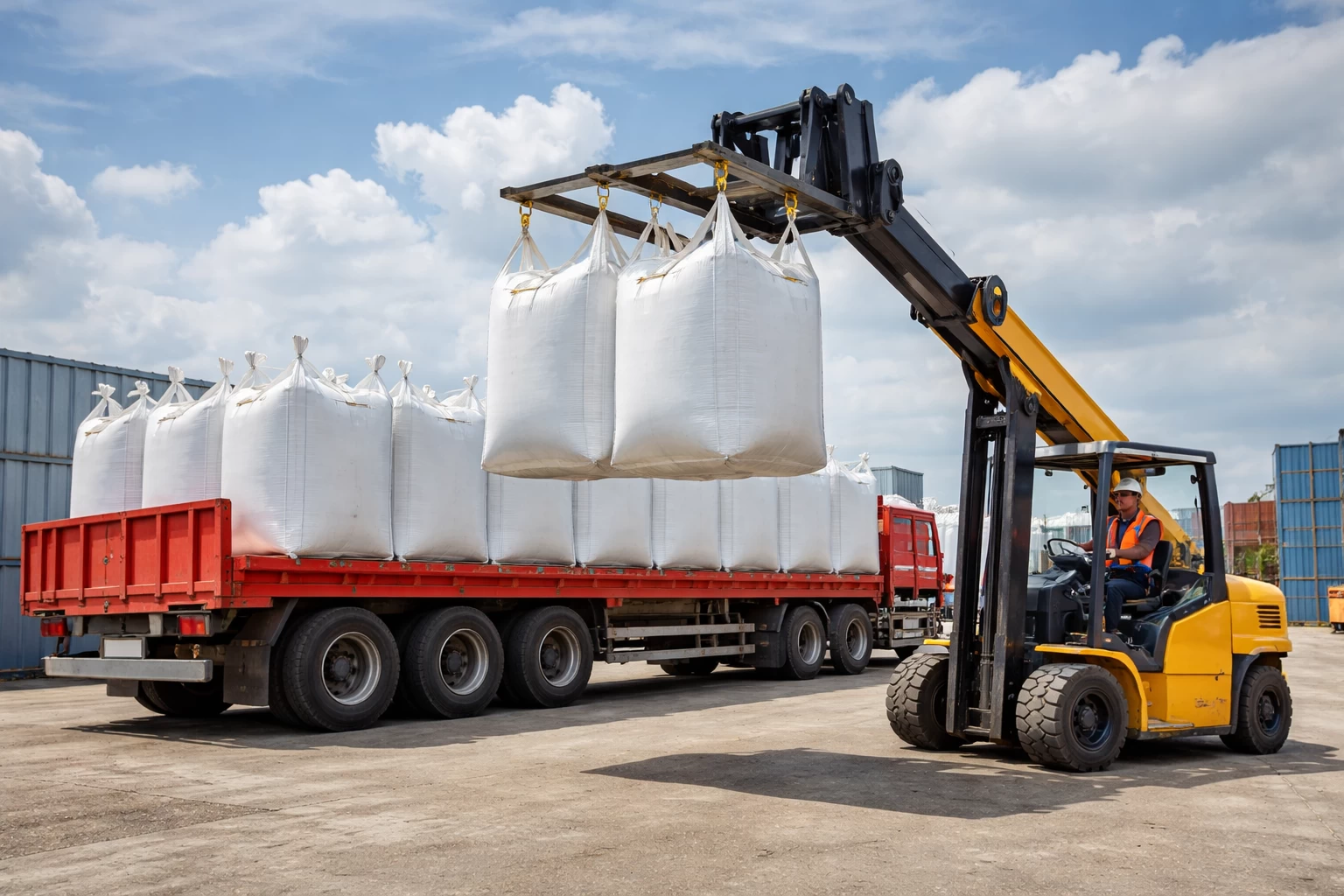
FIBCs must be synchronized with the forklift and crane systems at the facility.
- The Mistake: Lift loops that do not fit forklift tines or crane hooks.
- The Consequence: Operators take more time to handle each bag, increasing labor costs and causing yard congestion. Forced handling with incompatible equipment can damage loops and cause accidents.
-
Lack of Process Standardization
Constantly changing bag specifications for individual orders makes operations complex and fragmented.
- The Consequence: Increases error rates in packing and handling, while generating hidden warehouse management costs.
- The Benefit of Standardization: When you standardize your FIBC specifications, the process becomes stable, allowing for better cost control and enhanced professionalism.
Checklist: Optimizing FIBC to Reduce Shipping Costs
Businesses should review the following factors:
- Bag Capacity: Must perfectly suit the product characteristics and transport method.
- Pallet Configuration: Ensure maximum space utilization and even load distribution.
- Protection: Use moisture-proof liners for sensitive goods.
- Compatibility: Ensure lift loops match the warehouse lifting equipment.
- Reliable Partners: Collaborate with experienced suppliers for a total packaging solution.
Regularly reviewing and optimizing FIBC usage not only reduces direct costs but also protects brand reputation through safe shipments. If your business is experiencing rising shipping costs, start by re-evaluating your packaging process. Kanetora is ready to help you find the most effective solution.